
John Olerud was one of the most consistent and disciplined hitters of his era, a rare first baseman who combined elite contact hitting, patience at the plate, and defensive excellence. Over a 17-year Major League Baseball career, Olerud played for the Toronto Blue Jays, New York Mets, Seattle Mariners, and briefly for the New York Yankees and Boston Red Sox. He became known for his smooth left-handed swing, his ability to get on base at an elite rate, and his calm demeanor on the field. He was a two-time All-Star, three-time Gold Glove winner, and an integral part of multiple playoff teams, including two World Series-winning Blue Jays teams in the early 1990s. Olerud’s unique approach to the game, highlighted by his disciplined batting eye and signature batting helmet worn in the field due to a life-threatening medical condition, made him one of the most fascinating and respected players of his generation.
John Garrett Olerud was born on August 5, 1968, in Seattle, Washington, into an athletic family. His father, John E. Olerud, was a college baseball player and later became a physician, instilling in young John both a love for the game and an appreciation for discipline and education. Olerud attended Interlake High School in Bellevue, Washington, where he excelled both academically and athletically, quickly emerging as a standout baseball player. His talent earned him a scholarship to Washington State University, where he played for the Cougars under legendary coach Bobo Brayton. It was at Washington State where Olerud truly began to gain national recognition, putting up staggering offensive numbers while also contributing as a pitcher.

Olerud’s collegiate career was nothing short of spectacular. In 1988, his sophomore season, he put together one of the greatest seasons in college baseball history, batting .464 with 23 home runs and 81 RBIs while also going 15-0 as a pitcher with a 2.49 ERA. He was named Baseball America’s College Player of the Year and was widely regarded as the best all-around player in the country. His success, however, was nearly derailed by a life-threatening brain aneurysm discovered in early 1989. Olerud suffered a seizure, leading doctors to find the condition that required surgery. The medical scare sidelined him for much of his junior year, but he returned to the field later that season, determined to continue his baseball career. The incident led to his most recognizable on-field characteristic—his decision to wear a batting helmet even while playing first base, a precaution he took for the rest of his career.
Despite the medical concerns, Olerud’s immense talent made him an attractive prospect, and the Toronto Blue Jays selected him in the third round of the 1989 MLB Draft. Unlike most players who spend time developing in the minor leagues, Olerud made the rare jump directly from college to the Major Leagues, debuting with the Blue Jays later that same year. His transition to the professional ranks was remarkably smooth, as his advanced hitting approach and calm demeanor allowed him to compete at the highest level almost immediately.
In his first full season in 1990, Olerud batted .265 with 14 home runs and 64 RBIs, showing flashes of the elite hitter he would become. His ability to draw walks and put the ball in play made him an asset to the Blue Jays’ lineup, and he continued to develop over the next few seasons. By 1992, Olerud had become a key contributor for Toronto as they embarked on their first-ever World Series championship run. That season, he hit .284 with 16 home runs and 66 RBIs while maintaining a strong .375 on-base percentage. Though he wasn’t yet a star, he was an integral piece of a Blue Jays team that featured legends like Roberto Alomar, Joe Carter, and Dave Winfield. Toronto won the 1992 World Series, giving Olerud his first championship ring.
The following season, 1993, would be Olerud’s breakout year and the best statistical season of his career. He started the season on a torrid pace, flirting with a .400 batting average well into the summer, an accomplishment that had not been achieved in the Major Leagues since Ted Williams in 1941. Though he eventually cooled off, he finished the season with a .363 batting average, 24 home runs, 107 RBIs, and an MLB-leading .473 on-base percentage. He also led the American League in doubles (54) and posted an incredible OPS of 1.072. His performance earned him his first All-Star selection and the American League batting title, making him one of the most feared hitters in baseball. The Blue Jays, powered by Olerud’s bat and a strong supporting cast, won their second consecutive World Series in 1993, cementing their place as one of the dominant teams of the early 1990s.
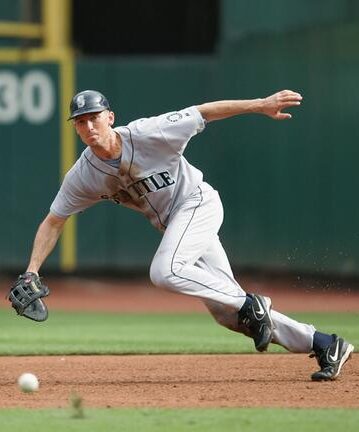
Despite his stellar 1993 season, Olerud’s offensive production declined slightly over the next few years. While he remained a high-contact, high-OBP hitter, his power numbers never quite reached the levels that some expected from a first baseman. After the 1996 season, the Blue Jays traded Olerud to the New York Mets, a move that many saw as a response to his declining power and rising salary demands.
With the Mets, Olerud experienced a career resurgence. His three-year stint in New York from 1997 to 1999 saw him return to elite form, particularly in 1998, when he hit .354 with 22 home runs, 93 RBIs, and a .447 on-base percentage. That season, he set a Mets franchise record for highest single-season batting average, a mark that still stands today. His ability to get on base, combined with his Gold Glove-caliber defense at first base, made him one of the most valuable players in the National League. He was a crucial part of the Mets’ playoff-bound teams in 1999, helping them reach the NLCS before falling to the eventual champion Atlanta Braves.
After his success with the Mets, Olerud returned home to the Pacific Northwest, signing with the Seattle Mariners before the 2000 season. His impact on the team was immediate, as he provided veteran leadership and elite production for a Mariners squad that would go on to win an MLB-record 116 games in 2001. That year, he batted .302 with 21 home runs, 95 RBIs, and a .401 on-base percentage. His contributions were a key part of the Mariners’ historic season, though they ultimately fell short in the postseason.
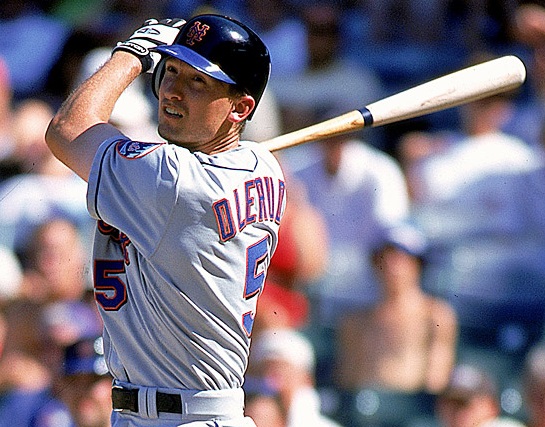
Olerud continued to be a productive hitter and elite defender into his late 30s, earning his third Gold Glove Award in 2003. However, as age began to take its toll, his offensive production started to decline. He was released by the Mariners in 2004 and finished his career with brief stints with the New York Yankees and Boston Red Sox before retiring after the 2005 season.
Over his 17-year career, Olerud amassed 2,239 hits, 500 doubles, 255 home runs, and 1,230 RBIs while maintaining a .295 career batting average and a .398 on-base percentage. His patient approach at the plate, combined with his elite defense, made him one of the most well-rounded first basemen of his time. Though he was never a flashy player, his consistency, professionalism, and ability to contribute to winning teams made him one of the most respected figures in baseball.
Olerud’s impact on the game extends beyond his statistics. He was a role model for young hitters, demonstrating the value of plate discipline and a high-contact approach. His ability to excel despite a life-threatening medical condition also inspired many, proving that determination and adaptability could overcome obstacles. While he has not yet been inducted into the Hall of Fame, his career remains a testament to the power of consistency, intelligence, and quiet excellence.
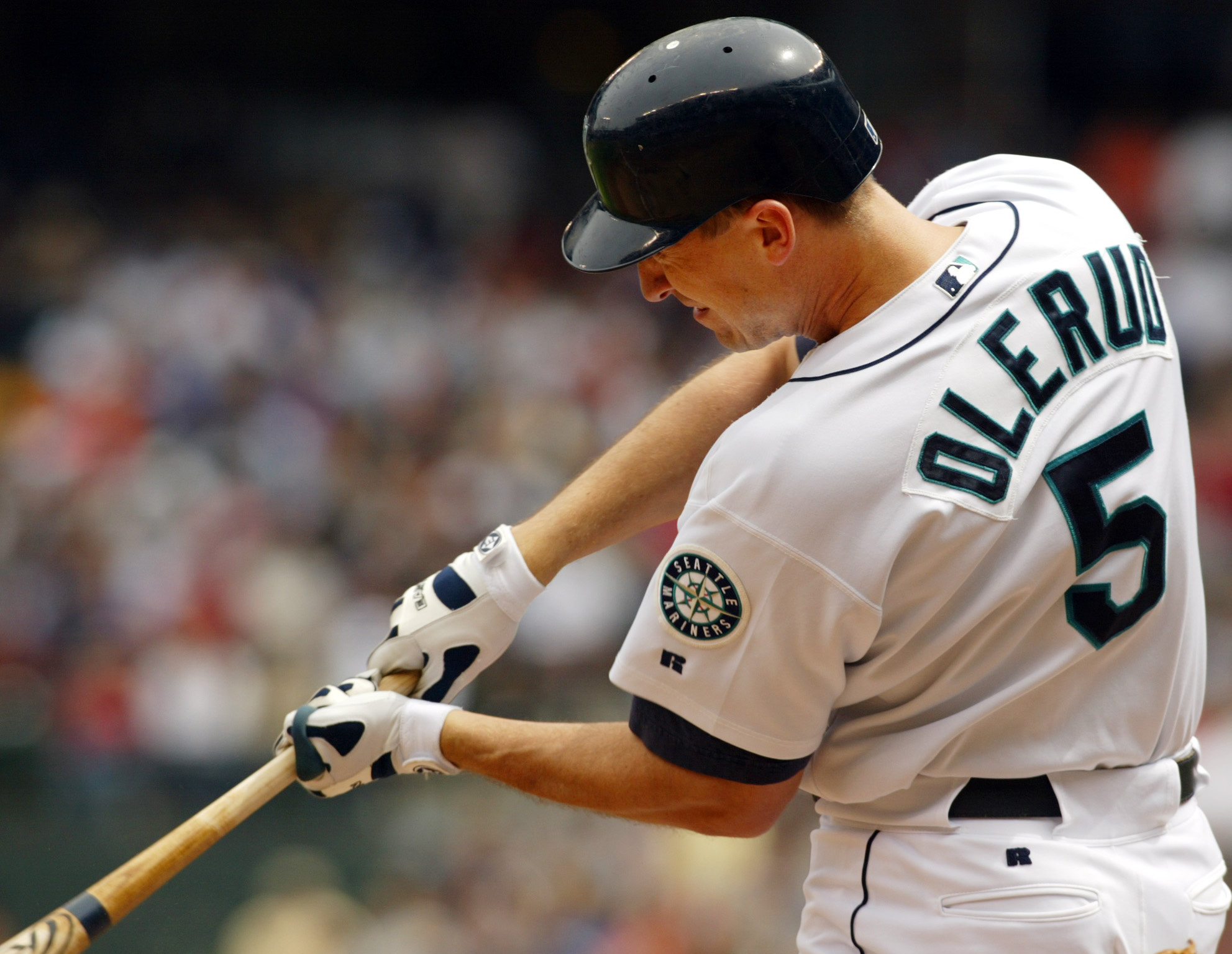
John Olerud’s legacy is one of quiet dominance. He may not have been the most celebrated player of his generation, but those who played alongside him and watched him compete understood just how valuable he was. He redefined what it meant to be an elite first baseman, proving that patience, defense, and pure hitting ability could be just as valuable as raw power. His contributions to multiple playoff teams, his two World Series titles, and his lasting influence on the game ensure that his place in baseball history is secure.



 The Baseball Scholar
Leave a comment