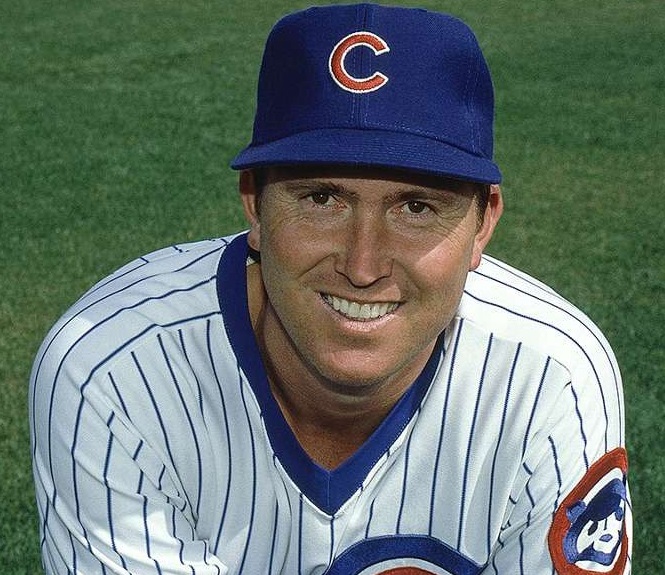
Rick Reuschel was one of the most durable and effective pitchers of his era, known for his ability to control games with precision rather than overpowering stuff. Over a 19-year career in Major League Baseball, he established himself as one of the most consistent and underrated pitchers of his time. While he never had the dominant fastball or gaudy strikeout numbers of some of his contemporaries, Reuschel relied on command, intelligence, and ground-ball-inducing pitches to become one of the most successful pitchers of the 1970s and 1980s. His career spanned multiple teams, including the Chicago Cubs, Pittsburgh Pirates, and San Francisco Giants, and his impact on baseball was far greater than the level of attention he received. A three-time All-Star and a World Series champion, Reuschel’s achievements stand as a testament to the value of durability, finesse, and adaptability in a sport that often prioritizes raw power.
Richard Dennis Reuschel was born on May 16, 1949, in Quincy, Illinois. Growing up in a small Midwestern town, he developed a love for baseball at an early age, often playing with his brother, Paul, who would also go on to play in the major leagues. Unlike many future professional pitchers, Reuschel was not a fireballer as a youth but rather a cerebral pitcher who relied on deception, movement, and a deep understanding of how to attack hitters. He attended Western Illinois University, where he honed his pitching skills and caught the attention of professional scouts. Despite not having the overpowering fastball that often attracted teams, the Chicago Cubs saw promise in his ability to generate weak contact and manage games effectively. They selected him in the third round of the 1970 MLB Draft, setting the stage for a career that would span nearly two decades.

Reuschel made his Major League debut with the Cubs on June 19, 1972, and quickly showed that he belonged at the highest level. In his rookie season, he posted a respectable 10-8 record with a 2.93 ERA over 36 games, including 18 starts. His ability to keep hitters off balance and induce ground balls was evident early on, and he soon became a staple of the Cubs’ pitching rotation. Over the next several seasons, Reuschel established himself as the most reliable pitcher on a Cubs team that struggled to contend in the National League. His 1977 season was particularly noteworthy, as he went 20-10 with a 2.79 ERA, earning his first All-Star selection. That year, he ranked among the league leaders in innings pitched and complete games, showcasing his incredible durability and stamina.
One of the defining aspects of Reuschel’s career was his ability to reinvent himself. In an era where many pitchers relied on velocity, Reuschel relied on movement and command. His signature pitch was a sinking fastball that induced a high number of ground-ball outs, allowing him to minimize damage even when facing the league’s best hitters. He was also known for his impeccable control, rarely issuing walks and forcing hitters to make weak contact. This skill set allowed him to remain effective well into his 30s, even as he dealt with injuries and changes in the game.
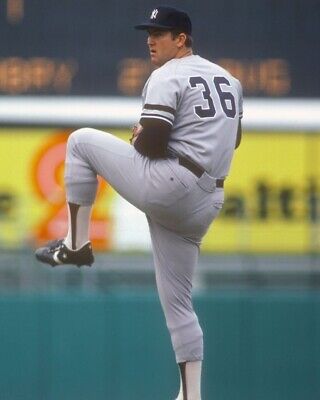
In 1981, after a decade with the Cubs, Reuschel was traded to the New York Yankees in a midseason deal. While his time in New York was short-lived, he gained valuable experience pitching for a high-profile team with championship aspirations. He was part of the Yankees’ rotation during their run to the 1981 World Series, though he did not play a major role in the postseason. Despite struggling with injuries during this period, Reuschel continued to refine his craft and prepare for the next phase of his career.
After briefly returning to the Cubs, Reuschel signed with the Pittsburgh Pirates in 1985, marking a resurgence in his career. At this stage, many pitchers his age would have seen a decline in their effectiveness, but Reuschel adapted by further refining his command and pitching strategy. In 1985, he posted a 14-8 record with a 2.27 ERA, proving that he could still compete at an elite level. His performance earned him the National League Comeback Player of the Year award, a testament to his resilience and work ethic.

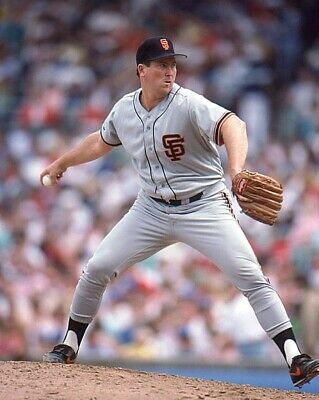
Reuschel’s career reached new heights when he joined the San Francisco Giants in 1987. At the age of 38, he delivered one of the best seasons of his career, going 13-9 with a 3.09 ERA and helping lead the Giants to the postseason. His presence in the rotation was instrumental in the Giants’ run to the National League Championship Series, where they ultimately fell to the St. Louis Cardinals. The following year, at 39 years old, Reuschel was even better, finishing with a 19-11 record and a 3.12 ERA. He was named to his second All-Star team and finished eighth in the Cy Young Award voting, a remarkable achievement for a pitcher in the twilight of his career.
One of the most memorable moments of Reuschel’s career came in 1989 when he helped lead the Giants to the World Series against the Oakland Athletics. Though the Giants were ultimately swept in the series, Reuschel’s leadership and veteran presence were invaluable to a young San Francisco team. His ability to compete at a high level even as he approached 40 years old was a testament to his skill and adaptability.
Reuschel continued pitching for the Giants through the 1991 season before retiring at the age of 42. He finished his career with a 214-191 record, a 3.37 ERA, and 2,015 strikeouts over 3,548.1 innings. While his statistics may not be as eye-popping as some of the dominant power pitchers of his era, his longevity, consistency, and ability to get outs efficiently made him one of the most valuable pitchers of his time.
Despite his impressive career, Reuschel often flew under the radar in discussions about the greatest pitchers of his generation. His lack of overpowering stuff and the fact that he played for teams that were often not in contention likely contributed to his relative lack of mainstream recognition. However, advanced metrics have helped paint a clearer picture of just how effective he was. His career WAR (Wins Above Replacement) of 69.5 is higher than many Hall of Fame pitchers, highlighting the immense value he brought to his teams over nearly two decades.
Beyond the numbers, Reuschel’s impact on baseball can be seen in the way he exemplified the importance of pitching intelligence and adaptability. He proved that a pitcher did not need to rely on velocity to be successful and that command and movement were just as valuable as raw power. His ability to reinvent himself multiple times over his career allowed him to remain effective well beyond the typical prime years for most pitchers.
Another unique aspect of Reuschel’s career was his work ethic and perseverance. He battled through injuries and setbacks, continually finding ways to refine his game and adjust to the demands of the league. His longevity and late-career resurgence with the Giants provided inspiration for many pitchers looking to extend their careers through skill rather than sheer physical ability.
Rick Reuschel’s career stands as a testament to consistency, durability, and the value of pitching acumen. Though he never received the widespread acclaim of some of his contemporaries, his contributions to the game were immense. His ability to keep hitters off balance, induce weak contact, and provide steady, reliable innings for nearly two decades made him one of the most valuable pitchers of his era. His influence on the game lives on in the way pitchers approach the craft today, proving that intelligence and precision can be just as effective as power. While he may not be a household name, his legacy as one of the most dependable and skilled pitchers in baseball history is secure.


 The Baseball Scholar
Leave a comment