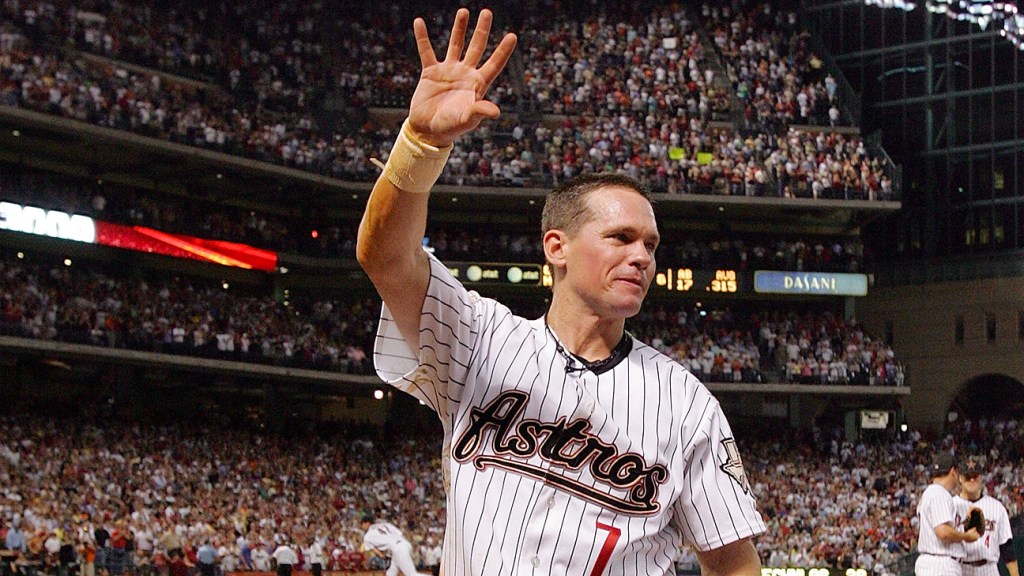
Craig Biggio was one of the most versatile, durable, and respected players in Major League Baseball history. Spending his entire 20-year career with the Houston Astros, Biggio left an indelible mark on the game as a player who excelled at multiple positions, recorded more than 3,000 hits, and played the game with an intensity and work ethic that made him one of the most beloved figures in franchise history. His ability to transition seamlessly between catcher, second base, and the outfield while maintaining offensive excellence set him apart as one of the most unique players of his generation. A seven-time All-Star, four-time Gold Glove winner, and a member of the 3,000-hit club, Biggio’s impact on baseball was both statistical and cultural, as he became the face of the Astros and helped lead them to their first World Series appearance in franchise history.
Born on December 14, 1965, in Smithtown, New York, Craig Alan Biggio grew up as a standout athlete with a particular talent for baseball. He attended Kings Park High School on Long Island, where he excelled as a multi-sport athlete but truly made his mark as a baseball player. His performance at the high school level earned him a scholarship to Seton Hall University, a program that was gaining prominence for developing high-level baseball talent. While at Seton Hall, Biggio honed his skills as a catcher under legendary coach Mike Sheppard. He became known for his strong work ethic, athleticism, and leadership behind the plate, traits that would carry over into his professional career.

Biggio’s college performance was strong enough to catch the attention of Major League scouts, and in the 1987 MLB Draft, the Houston Astros selected him in the first round with the 22nd overall pick. The Astros saw him as a potential long-term answer at catcher, impressed by his combination of defensive ability, speed, and hitting potential—rare qualities for a catcher at that time. He quickly moved through the Astros’ minor league system, demonstrating both his athleticism and offensive capabilities.
On June 26, 1988, Biggio made his Major League debut with the Houston Astros. Unlike many young catchers who struggle to adjust to the speed of the game at the highest level, Biggio made an immediate impact. He hit .211 in limited action in 1988 but improved significantly in his first full season in 1989, batting .257 with 13 home runs, 60 RBIs, and 21 stolen bases. His speed was a unique asset for a catcher, making him a threat on the basepaths, something rarely seen at that position. By 1990, Biggio was one of the most promising young catchers in baseball, earning his first All-Star selection. His ability to hit for average, get on base, and provide solid defense made him one of the cornerstones of the Astros’ future.
Despite his success behind the plate, the Astros made a surprising decision in 1992, moving Biggio from catcher to second base. The transition was unprecedented at the time, as very few players had ever successfully moved from such a physically demanding position behind the plate to the middle infield. The move was designed to extend Biggio’s career and capitalize on his athleticism. Though the switch was initially met with skepticism, Biggio worked tirelessly to learn the nuances of second base. His commitment paid off quickly, as he became not only competent at the position but one of the best defensive second basemen in the league. The transition also allowed Biggio to focus more on his offense, and his numbers began to rise as a result.
Throughout the 1990s, Biggio developed into one of the most consistent and dynamic players in baseball. From 1993 to 1999, he averaged more than 180 hits per season while also stealing bases at a high rate. His ability to get on base, combined with his speed and defensive excellence, made him one of the most valuable players in the game. In 1994, the strike-shortened season, he posted a .318 batting average with a .411 on-base percentage, demonstrating his ability to be an elite table-setter at the top of the lineup.
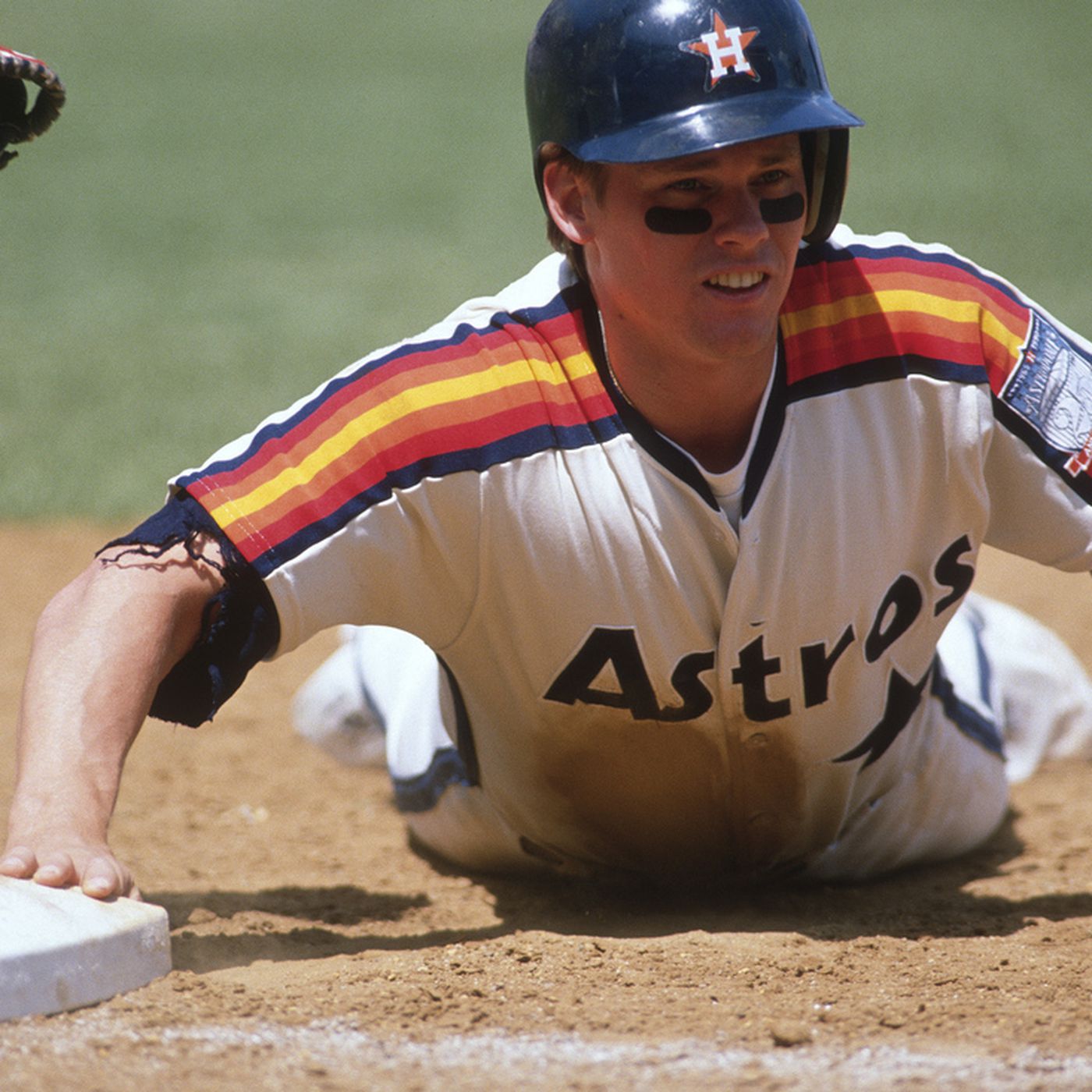
One of Biggio’s most significant seasons came in 1997, when he put together one of the most well-rounded statistical campaigns in baseball history. He batted .309 with 22 home runs, 81 RBIs, and 47 stolen bases while leading the National League with 146 runs scored. He also drew 84 walks, resulting in a stellar .415 on-base percentage. His combination of speed, power, and defensive excellence earned him his first Silver Slugger Award, recognizing him as the best offensive second baseman in the league.
In 1998, Biggio had another outstanding season, hitting .325 with 210 hits, 51 doubles, and 50 stolen bases. He became just the second player in MLB history, after Tris Speaker, to hit 50 doubles and steal 50 bases in the same season. His ability to contribute in so many different ways—hitting for average, power, speed, and defense—made him one of the most complete players in baseball. That year, he helped lead the Astros to the National League Central Division title, marking the beginning of a period of sustained success for the franchise.
Biggio was also part of one of the most feared duos in baseball history, teaming up with longtime teammate Jeff Bagwell to form the heart of the Astros’ offense. The two became known as the “Killer B’s,” terrorizing opposing pitchers for over a decade. Their ability to complement each other in the lineup made the Astros perennial contenders in the National League, and their leadership helped shape the culture of the organization.
In the early 2000s, as Biggio entered his mid-30s, he continued to produce at a high level. In 2003, he made another surprising transition, moving from second base to the outfield to accommodate the arrival of young second baseman Jeff Kent. While the move was challenging, Biggio approached it with his trademark work ethic and adapted quickly to his new role. After spending two seasons in the outfield, he returned to second base in 2005, helping lead the Astros to their first-ever World Series appearance.

The 2005 season was a historic one for Houston, as Biggio and the Astros finally broke through after years of playoff heartbreak. Alongside Bagwell, Lance Berkman, and a dominant pitching staff featuring Roger Clemens, Andy Pettitte, and Roy Oswalt, Biggio played a key role in Houston’s run to the World Series. Though the Astros were ultimately swept by the Chicago White Sox, the achievement of reaching the Fall Classic was a defining moment in Biggio’s career.
As he approached the latter stages of his career, Biggio’s chase for 3,000 hits became one of the biggest stories in baseball. On June 28, 2007, he reached the milestone in dramatic fashion, collecting five hits in a game against the Colorado Rockies. The moment was a testament to his longevity, consistency, and dedication to the game. He retired at the end of the 2007 season, finishing his career with 3,060 hits, 668 doubles, 291 home runs, 1,175 RBIs, and 414 stolen bases.
Biggio’s impact on baseball extended beyond his statistics. He was known for his toughness—he was hit by pitches 285 times, the second-most in MLB history—his leadership, and his unwavering commitment to his team. He spent his entire career with one franchise, something increasingly rare in modern baseball, and became the face of the Houston Astros. His influence on the game was officially recognized in 2015 when he was elected to the Baseball Hall of Fame, becoming the first player to be enshrined as an Astro.

Craig Biggio’s legacy is one of excellence, versatility, and professionalism. He was a player who could do it all—hit, run, field, and lead—while adapting to whatever role his team needed him to play. His dedication to the game and his impact on the Astros franchise make him one of the most iconic players in baseball history. His name remains synonymous with the golden era of Houston baseball, and his influence continues to inspire future generations of players.


 The Baseball Scholar
Leave a comment