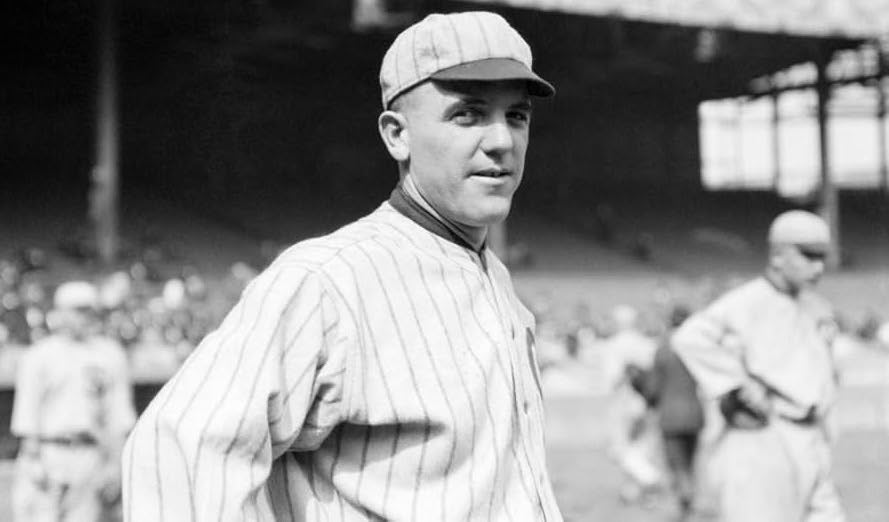
Eddie Cicotte was one of the most talented pitchers of his era, a master of control and deception who played a crucial role in the success of the Chicago White Sox during the 1910s. However, his legacy is forever marred by his involvement in the infamous Black Sox Scandal, in which eight members of the 1919 White Sox were accused of conspiring to throw the World Series. Cicotte’s story is one of brilliance and controversy, illustrating the fine line between greatness and infamy in baseball history. Despite his undeniable talent on the mound, his career ended in disgrace, and his impact on the game remains a complex topic of discussion.
Edward Victor Cicotte was born on June 19, 1884, in Springwells, Michigan, a small town just outside Detroit. Growing up in a working-class family, Cicotte developed a love for baseball at an early age, playing on local sandlots and refining his pitching mechanics. Unlike some of his contemporaries who relied primarily on raw power, Cicotte’s success as a pitcher came from his exceptional control and ability to keep hitters off balance. He possessed a deep understanding of the game, which allowed him to manipulate the flight of the ball in ways that confounded opposing batters.
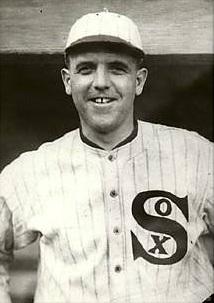
Cicotte’s professional baseball journey began in the early 1900s when he played in the minor leagues, developing his craft and gaining recognition for his sharp breaking pitches and deceptive delivery. He made his Major League debut in 1905 with the Detroit Tigers, appearing in a handful of games before being sent back to the minors. While his early stint in the majors was brief, it provided him with valuable experience and allowed him to further refine his pitching repertoire.
Cicotte resurfaced in the big leagues in 1908 with the Boston Red Sox, where he spent four seasons as a solid but unspectacular pitcher. During his time in Boston, he demonstrated flashes of brilliance but struggled to maintain consistency. It was during this period that he began to experiment with new pitches, most notably his famous “shine ball,” a pitch that involved rubbing one side of the ball with a foreign substance to create an unpredictable movement. While spitballs and other doctored pitches were common in the early 20th century, Cicotte became one of the true masters of the craft.
In 1912, Cicotte was acquired by the Chicago White Sox, a move that would define his career. Under the leadership of manager Pants Rowland and later Kid Gleason, Cicotte developed into one of the most effective pitchers in baseball. He became known not only for his shine ball but also for his ability to change speeds and hit his spots with pinpoint accuracy. His intelligence on the mound made him one of the toughest pitchers for hitters to figure out, as he could outthink opponents rather than overpower them.
Cicotte’s breakout season came in 1917, when he led the White Sox to a World Series championship. That year, he posted a remarkable 28-12 record with a league-leading 1.53 ERA and 150 strikeouts. His ability to dominate games with a mix of finesse and deception made him the ace of the White Sox staff. In the World Series against the New York Giants, he played a pivotal role, winning Game 1 with a masterful performance and later adding another strong outing to help secure the title for Chicago. His performance in 1917 solidified his reputation as one of the premier pitchers in baseball.

Following the World Series triumph, Cicotte remained a top-tier pitcher, continuing to put up strong numbers year after year. He was known for his work ethic and meticulous approach to pitching, often studying hitters to find weaknesses he could exploit. His ability to keep hitters off balance and induce weak contact allowed him to remain effective well into his 30s, a rarity for pitchers of that era.
By 1919, Cicotte was still one of the most dominant pitchers in the game, finishing the regular season with a 29-7 record, a 1.82 ERA, and 30 complete games. The White Sox entered the World Series as heavy favorites against the Cincinnati Reds, with Cicotte expected to be a key figure in their quest for another championship. However, unbeknownst to the public and most of his teammates, Cicotte had been drawn into a conspiracy that would forever change the course of baseball history.
The 1919 World Series remains one of the most controversial events in sports history due to the allegations that several White Sox players, including Cicotte, had agreed to throw the series in exchange for money from gamblers. Cicotte’s role in the scandal was significant, as he was the team’s ace and had the ability to directly influence the outcome of games. In Game 1 of the series, he hit the first batter he faced, a prearranged signal to the gamblers that the fix was on. His performance in the game was uncharacteristically poor, as he allowed six runs in a loss to the Reds. While he rebounded to pitch well in Game 7, the damage had already been done, and the White Sox lost the series in eight games.
In the aftermath of the World Series, rumors of a fix began to circulate, and by 1920, a formal investigation was launched. Cicotte, along with seven of his teammates, was eventually implicated in the scandal. Under questioning, he confessed to his involvement, admitting that he had accepted a bribe to throw games. His confession was a pivotal moment in the case, as it provided concrete evidence of the conspiracy. As a result, Cicotte and the other accused players were permanently banned from Major League Baseball by Commissioner Kenesaw Mountain Landis, marking the end of his professional career.

Cicotte’s banishment from baseball was a dramatic fall from grace for a player who had once been one of the game’s brightest stars. Unlike some of his fellow banned teammates, such as Shoeless Joe Jackson, Cicotte largely faded from the public eye after his playing days were over. He returned to his home in Michigan, where he lived a quiet life working as a farmer and later in the automotive industry. He rarely spoke publicly about the scandal, and while some of the other banned players sought reinstatement, Cicotte never made any serious attempts to return to baseball.
Despite his involvement in the Black Sox Scandal, Cicotte’s contributions to the game cannot be ignored. His mastery of the shine ball and his ability to outthink hitters made him one of the most effective pitchers of his era. His 209 career wins, 1,374 strikeouts, and 2.38 ERA remain impressive statistics, and his role in leading the White Sox to the 1917 World Series title ensures that he is remembered as one of the great pitchers of his time.
The legacy of Eddie Cicotte is a complicated one. On one hand, he was a brilliant pitcher who revolutionized aspects of the game with his innovative approach to pitching. On the other hand, his participation in the 1919 World Series fix left an indelible stain on his career and on baseball as a whole. His story serves as both a cautionary tale and a reminder of the fragile nature of a player’s legacy. While he will never be enshrined in the Hall of Fame due to his actions, his impact on the game is undeniable.
Cicotte’s involvement in the scandal also played a crucial role in shaping the future of baseball. The fallout from the Black Sox Scandal led to sweeping reforms, including the establishment of a powerful commissioner’s office with the authority to punish players involved in gambling. The scandal forced baseball to confront its relationship with gambling and led to the strict anti-gambling policies that remain in place today.

In the end, Eddie Cicotte’s career is a story of immense talent and deep controversy. He was one of the best pitchers of his generation, a key figure in a World Series championship, and a player who helped define an era of baseball. However, his decision to participate in the 1919 fix ultimately overshadowed his accomplishments and ensured that his name would forever be associated with one of the darkest chapters in the sport’s history. His story remains a fascinating study in the duality of greatness and downfall, a reminder that even the most talented players can be led astray by the temptations of money and external pressures.



 The Baseball Scholar
Leave a comment