
Samuel Earl Crawford, known to baseball fans as Sam Crawford, was one of the greatest power hitters and most prolific triples hitters in Major League Baseball history. His career, which spanned from 1899 to 1917, saw him establish himself as one of the most dominant offensive forces of the Deadball Era. Crawford’s exceptional ability to hit the ball to all fields, combined with his speed and power, made him a feared batter and a key contributor to the Detroit Tigers’ early success. His statistical achievements and lasting impact on the game have solidified his legacy as one of the all-time greats, and his unique career remains a subject of fascination among baseball historians.
Crawford was born on April 18, 1880, in Wahoo, Nebraska, a small town in the Midwest that was far removed from the professional baseball hubs of the time. Growing up in a rural setting, Crawford developed his athletic abilities through informal games and competitions, often playing baseball with friends and family. His prodigious talent was evident early on, and he quickly made a name for himself in local leagues as a powerful hitter with an innate ability to drive the ball great distances. His nickname, “Wahoo Sam,” became a moniker that would follow him throughout his career, emphasizing his Nebraska roots.

Crawford’s professional baseball journey began in the minor leagues, where he played for a variety of teams and quickly established himself as one of the most promising young players in the country. His performance in the Western League caught the attention of major league scouts, and in 1899, he made his debut with the Cincinnati Reds at the age of 19. It did not take long for Crawford to make an impact. He displayed an extraordinary ability to hit for both average and power, and his reputation as one of the game’s best hitters grew rapidly.
During his early years with the Reds, Crawford was known for his prodigious home runs, which were especially impressive in an era when the game was dominated by small ball and strategic play rather than power hitting. In 1901, he led the National League in home runs with 16, an astonishing number for the Deadball Era. His ability to hit for power in a time when home runs were a rarity set him apart from most of his contemporaries. In addition to his home run prowess, Crawford was an adept baserunner and a capable outfielder, making him a well-rounded player who contributed in multiple facets of the game.
Despite his success in Cincinnati, Crawford’s career took a significant turn when he joined the Detroit Tigers in 1903. This move proved to be the defining chapter of his career, as he would go on to spend the next 15 seasons with the Tigers, becoming one of the franchise’s most beloved and accomplished players. During his time in Detroit, Crawford formed a formidable offensive duo with Ty Cobb, another legendary hitter who would go on to become one of the most famous players in baseball history. The two had a complex relationship, often marked by tension and competitiveness, but together they created one of the most potent lineups in the game.
Crawford’s tenure with the Tigers coincided with one of the most successful periods in the team’s early history. He helped lead the Tigers to three consecutive American League pennants from 1907 to 1909, though the team fell short in the World Series each time. Despite the postseason disappointments, Crawford was a key reason for the Tigers’ sustained success, consistently ranking among the league leaders in batting average, extra-base hits, and RBIs. His ability to hit triples at an astonishing rate became his defining characteristic. To this day, he holds the all-time major league record for career triples with 309, a mark that is unlikely to ever be surpassed.
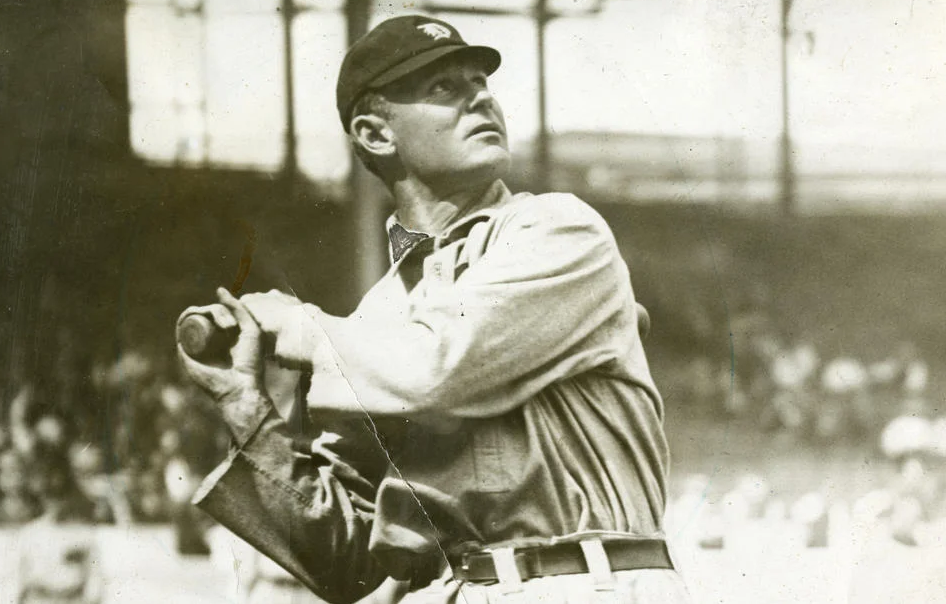
One of the unique aspects of Crawford’s career was his adaptability at the plate. Unlike many power hitters of his time, he was not simply a slugger who swung for the fences. He possessed exceptional bat control and could adjust his approach depending on the situation. This made him one of the most reliable run producers of his era, as he could drive in runs with power or finesse. His understanding of the game and his ability to read pitchers allowed him to remain a dominant offensive force well into his 30s.
Crawford’s rivalry and partnership with Ty Cobb have been the subject of much discussion among baseball historians. While they were teammates and shared the common goal of leading the Tigers to success, they had vastly different personalities and approaches to the game. Cobb was known for his fiery temper and aggressive style of play, whereas Crawford was more even-keeled and methodical. This contrast led to frequent clashes between the two, both on and off the field. However, their competitive nature also pushed them to elevate their games, resulting in a dynamic and powerful offensive tandem that terrorized opposing pitchers.
As the 1910s progressed, Crawford remained a productive player but began to see a decline in his numbers as the game evolved and younger players emerged. By 1917, at the age of 37, he played his final major league season. Although his career did not include a World Series championship, his impact on the game was undeniable. Crawford’s final statistics included a .309 career batting average, 2,961 hits, 152 home runs, and 1,525 RBIs. His offensive numbers, particularly his all-time triples record, are a testament to his ability to drive the ball into the gaps and use his speed to take extra bases.
After retiring from Major League Baseball, Crawford continued to be involved in the sport in various capacities. He played and managed in the minor leagues for several years and later became a coach and mentor to young players. His deep knowledge of the game and his experiences during baseball’s formative years made him a valuable resource for those looking to learn from one of the greats. He remained a respected figure in the baseball community, and his contributions to the sport were formally recognized in 1957 when he was inducted into the Baseball Hall of Fame.

Crawford’s legacy is one of excellence and perseverance. His ability to excel in an era that was not conducive to power hitters, his unmatched triples record, and his role in shaping the early history of the Detroit Tigers make him one of the most important players of his time. His influence on the game extended beyond his playing career, as he continued to pass down his knowledge to future generations of baseball players. Today, he is remembered as a pioneer of offensive baseball and one of the most complete hitters the game has ever seen.
In many ways, Crawford was ahead of his time. His ability to hit for power, combined with his speed and intelligence on the bases, foreshadowed the type of multi-faceted offensive players that would become more common in later generations. His career serves as a reminder of the diverse skills required to be an elite hitter and the lasting impact a player can have on the game even long after their playing days are over. His record for career triples remains one of the most unbreakable marks in baseball history, ensuring that his name will always be associated with one of the most exciting aspects of the sport.


 The Baseball Scholar
Leave a comment