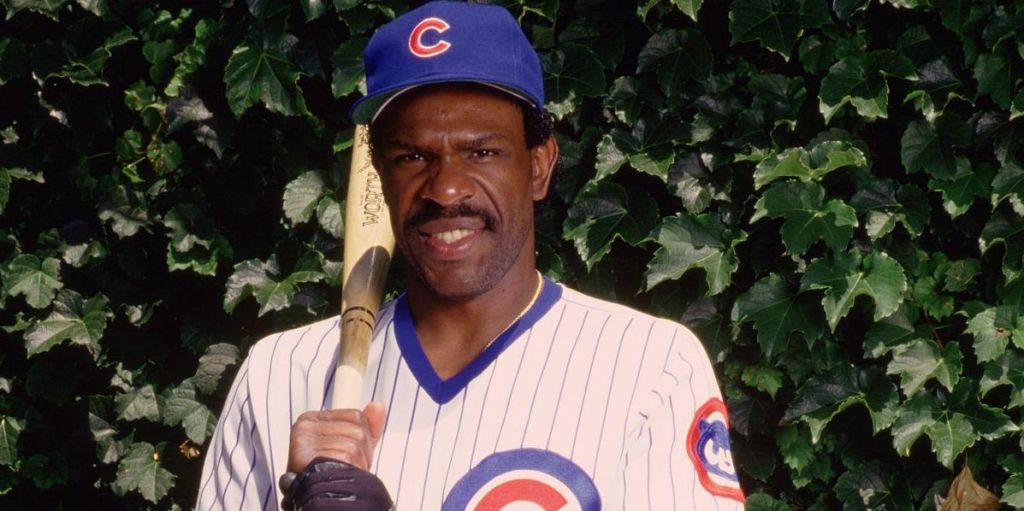
Andre Dawson, known as “The Hawk,” was one of the most dynamic and complete players of his era. Over a career that spanned 21 seasons, he made an indelible mark on Major League Baseball, combining power, speed, and defensive prowess to become one of the game’s most respected figures. Dawson’s journey from a promising young athlete to a Hall of Famer is a testament to his dedication and resilience in overcoming obstacles, including persistent knee injuries, to become one of the greatest outfielders in baseball history.
Born on July 10, 1954, in Miami, Florida, Andre Nolan Dawson grew up playing baseball on the sandlots of his hometown. His love for the game was evident from an early age, and he quickly emerged as a standout player at Southwest Miami High School. Despite his talent, Dawson was not heavily recruited out of high school, leading him to attend Florida A&M University, where he continued to refine his skills. While playing for the Rattlers, Dawson’s natural athleticism and raw power began to draw the attention of major league scouts, and in 1975, he was selected in the 11th round of the MLB Draft by the Montreal Expos.
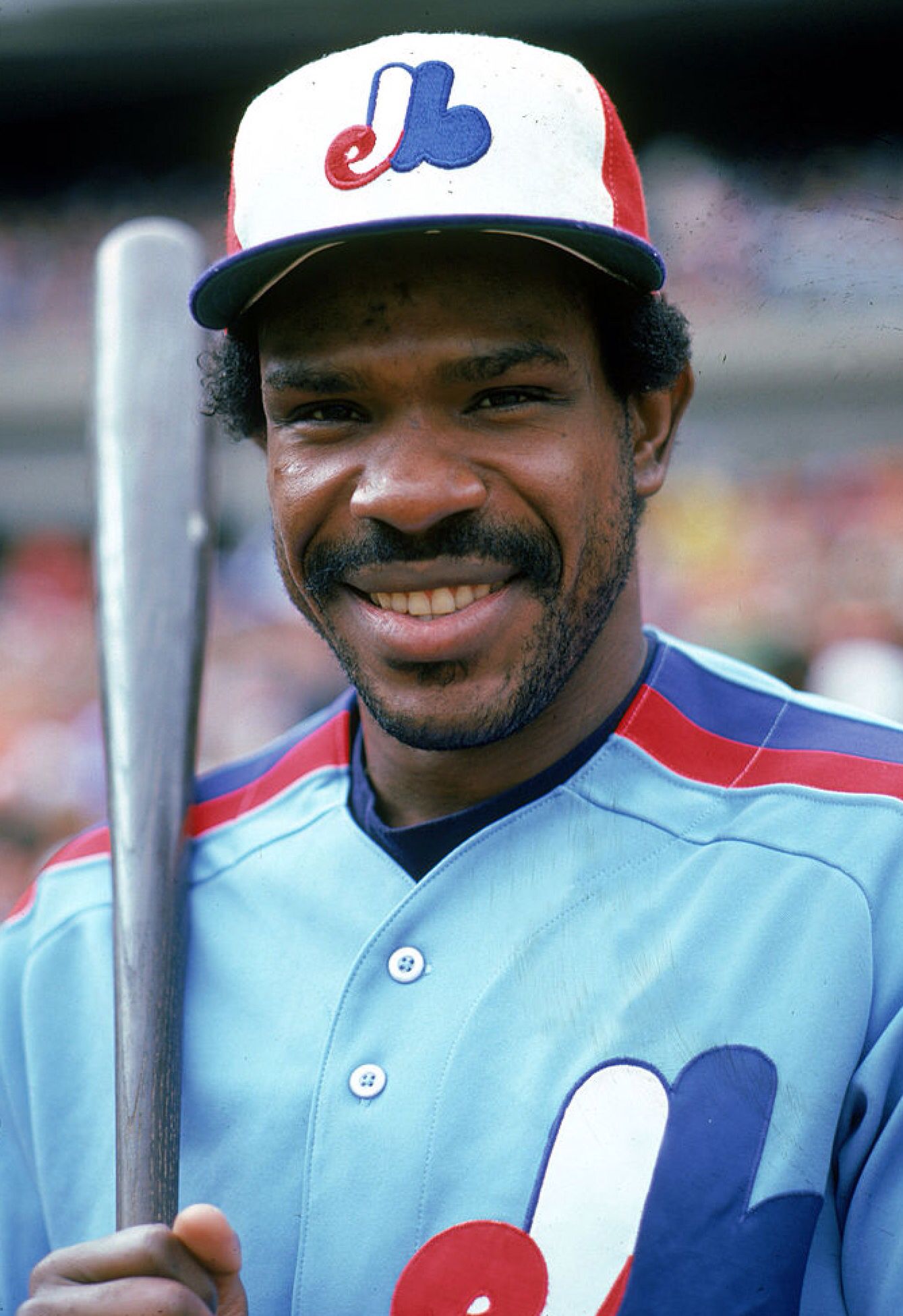
Dawson made his major league debut with the Expos in 1976, quickly establishing himself as a rising star. By the following season, he had taken over as the team’s starting center fielder and put together an outstanding rookie campaign, hitting .282 with 19 home runs, 65 RBIs, and 21 stolen bases. His all-around performance earned him the National League Rookie of the Year award in 1977, the first major accolade of his illustrious career. Dawson’s ability to impact the game in multiple ways—hitting for power, stealing bases, and playing exceptional defense—made him a cornerstone of the Expos’ franchise throughout the late 1970s and early 1980s.
During his years with Montreal, Dawson developed into one of the most feared hitters in the National League. He was a consistent power threat, regularly hitting 20 or more home runs per season while also contributing with his speed on the basepaths. Defensively, he was elite, winning six consecutive Gold Glove Awards from 1980 to 1985. His ability to track down fly balls with ease and unleash powerful throws from the outfield solidified his reputation as one of the best defensive outfielders of his generation. Despite playing his home games on Montreal’s unforgiving artificial turf—a factor that contributed to his chronic knee issues—Dawson continued to perform at an elite level.
In 1987, Dawson made the bold decision to leave Montreal via free agency, ultimately signing with the Chicago Cubs. The move proved to be a defining moment in his career. Dawson arrived in Chicago with something to prove, signing a contract for a relatively modest salary due to MLB’s collusion against free agents at the time. He responded with an extraordinary season, leading the National League with 49 home runs and 137 RBIs, while batting .287. His incredible production earned him the National League Most Valuable Player award, making him one of the few players in history to win the MVP while playing for a last-place team. His impact on the Cubs was immediate and profound, as he became a fan favorite at Wrigley Field and a symbol of perseverance and excellence.
Dawson remained with the Cubs through the early 1990s, continuing to be a productive hitter despite ongoing knee problems that limited his ability to steal bases. Even as his speed diminished, his power remained a constant, as he continued to hit over 20 home runs per season. In 1993, Dawson left Chicago and signed with the Boston Red Sox, where he played two seasons primarily as a designated hitter. Though his time in Boston marked the latter stages of his career, he still managed to contribute with his veteran leadership and occasional flashes of his former power.
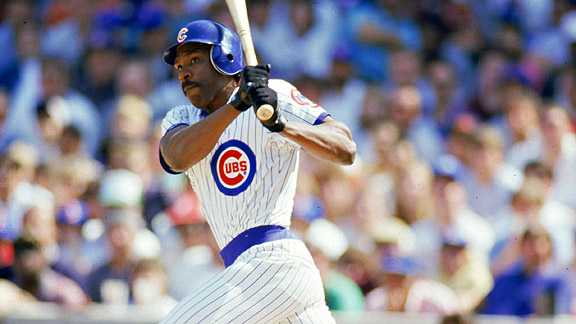
Dawson concluded his career with the Florida Marlins, returning to his home state for the final two seasons of his career in 1995 and 1996. While he played a reduced role, his presence in the clubhouse was invaluable for a young Marlins team still finding its footing in the league. He officially retired after the 1996 season, leaving behind a legacy defined by excellence, perseverance, and integrity.
Over the course of his career, Dawson compiled remarkable statistics. He finished with 2,774 hits, 438 home runs, 1,591 RBIs, and 314 stolen bases, demonstrating his rare combination of power and speed. He was an eight-time All-Star, an eight-time Gold Glove winner, and a four-time Silver Slugger recipient. Perhaps most impressively, he is one of only five players in MLB history to hit at least 400 home runs and steal at least 300 bases, placing him in elite company among the game’s greatest all-around players.
Dawson’s impact on baseball extended far beyond his statistics. He was widely respected for his professionalism, work ethic, and leadership. Despite battling injuries throughout his career, he never allowed adversity to define him, instead pushing through pain to consistently perform at a high level. His dedication to the game earned him admiration from teammates and opponents alike, and he remains one of the most beloved figures in Cubs and Expos history.
In 2010, Dawson received baseball’s highest honor when he was inducted into the National Baseball Hall of Fame. Though he had played for multiple teams, he chose to be enshrined as a member of the Montreal Expos, honoring the franchise that had given him his start and where he had spent the bulk of his prime years. His induction speech reflected his humility and gratitude, as he thanked those who had supported him throughout his career and emphasized the values of perseverance and determination.
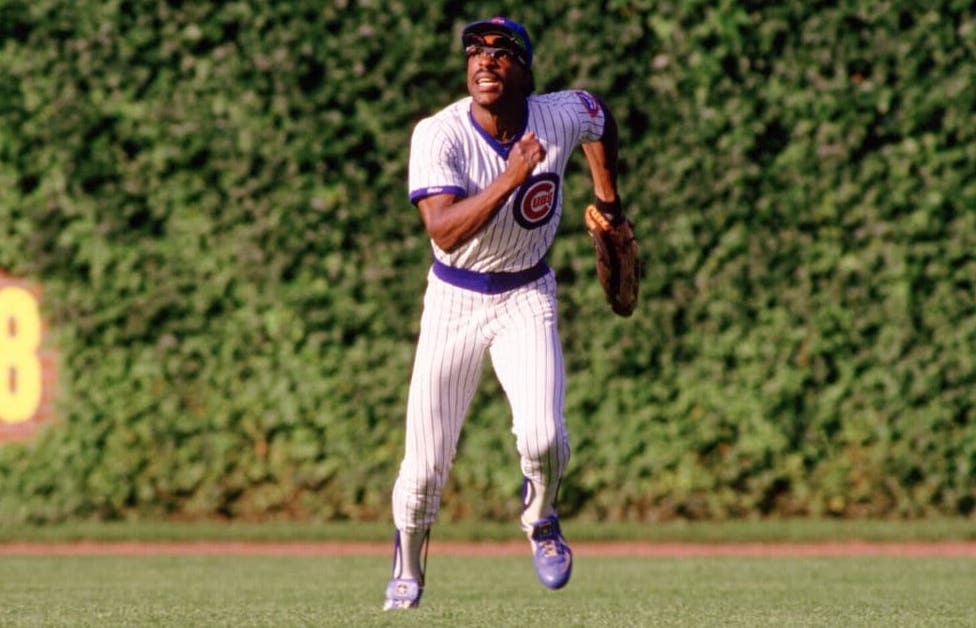
Beyond his playing career, Dawson has remained involved in the game in various capacities, including working in the front office for the Miami Marlins. His contributions to baseball continue to be felt, as he serves as a mentor and ambassador for the sport. His story serves as an inspiration to young athletes, demonstrating that hard work, resilience, and integrity are the keys to lasting success.
Andre Dawson’s career is a shining example of what it means to be a complete player. He excelled in every facet of the game—hitting for power, running the bases, playing elite defense, and leading by example. His journey from an overlooked college player to a Hall of Famer is a testament to his dedication and talent. Whether remembered for his majestic home runs, his daring stolen bases, or his spectacular defensive plays, Dawson’s legacy in baseball is one of greatness. His impact on the game, and the fans who had the privilege of watching him play, will never be forgotten.


 The Baseball Scholar
Leave a comment