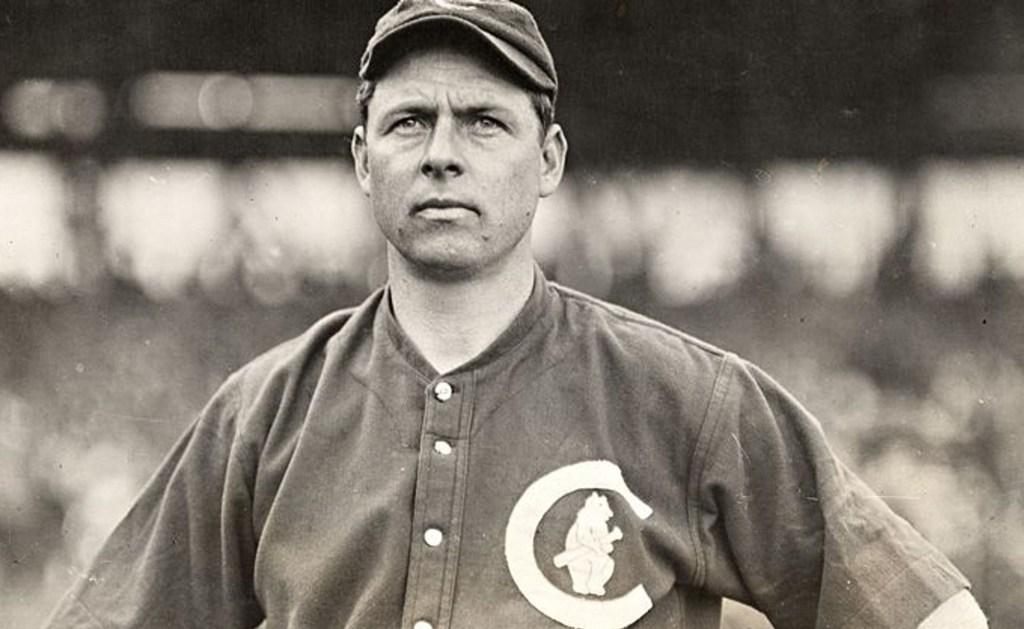
Mordecai “Three Finger” Brown is one of the most iconic and revered pitchers in the history of Major League Baseball. His career, which spanned from 1903 to 1916, is marked not only by remarkable on-field achievements but also by his ability to overcome adversity and his indelible impact on the sport of baseball. Brown’s career is a testament to the enduring power of resilience, and his legacy is one that continues to influence the game to this day.
Mordecai Brown was born on October 19, 1876, in Nyesville, Indiana, to a farming family. As a child, he worked on the farm and was no stranger to hard labor. Brown’s early life on the farm shaped his work ethic and toughness, two characteristics that would define his baseball career. Growing up, Brown had an affinity for sports, and while he was a multi-sport athlete, baseball was always his passion. He played for local teams and quickly gained a reputation for his raw talent, particularly as a pitcher. However, Brown’s path to Major League Baseball was not a straightforward one, and it would require overcoming a personal tragedy that would shape the trajectory of his life.
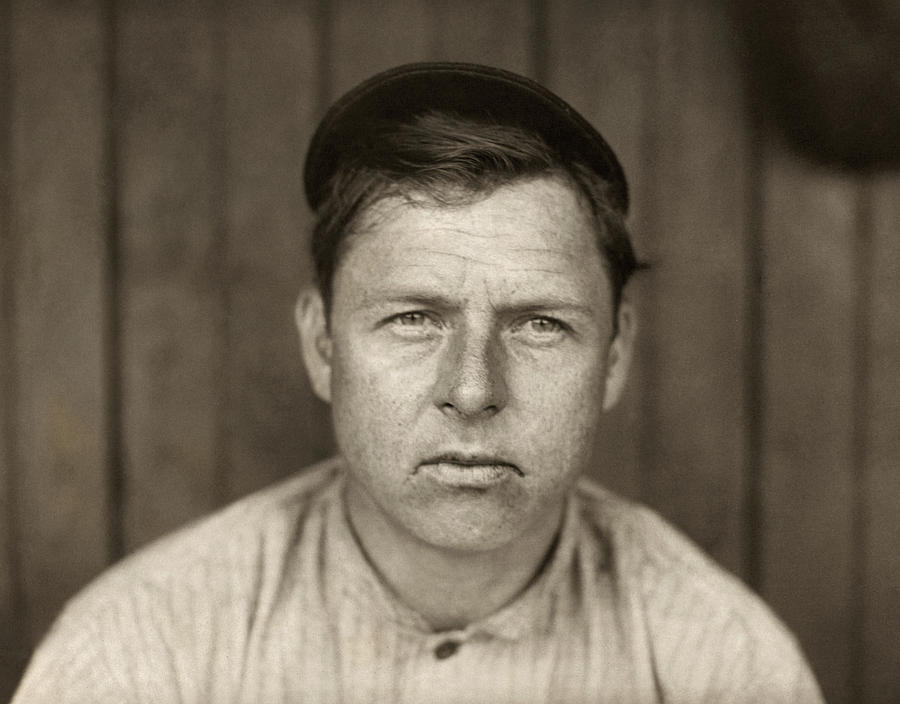
At the age of 9, Brown suffered a life-altering accident that would define his career and give him his famous nickname, “Three Finger.” While playing with a team of other children, Brown’s right hand was caught in a corn picker. The gruesome accident resulted in the loss of part of his index and middle fingers, leaving him with only three functional fingers on his throwing hand. The injury, which could have ended his baseball aspirations, instead became the foundation for his legendary career. Rather than allowing this setback to deter him, Brown used the loss of his fingers to develop a unique pitching grip, one that would make him a formidable force on the mound.
Despite this handicap, Brown’s pitching talent began to shine. His ability to spin the ball and create an unorthodox and unpredictable trajectory was a direct result of the new grip he had developed. As he honed his craft, Brown began to catch the attention of scouts, and in 1899, at the age of 23, he signed a contract with the St. Louis Cardinals. Though his early years in the minor leagues were marked by inconsistent play, Brown’s raw talent and distinctive pitching style could not be ignored. Eventually, he was called up to the majors in 1903, making his MLB debut for the Cardinals.
Brown’s early years in the major leagues were spent with the St. Louis Cardinals, where he struggled to find consistent success. In his first full season, 1904, he posted a record of 7-9 with a 3.38 ERA. While the Cardinals were a mediocre team during this time, Brown’s promise was evident. His ability to generate movement on the ball, particularly with his curveball, made him a dangerous pitcher. However, his time in St. Louis was short-lived, and in 1904, after just two seasons, Brown was traded to the Chicago Cubs.
The move to the Cubs would prove to be the turning point in Brown’s career. Under the guidance of manager Frank Chance and pitching coach Christy Mathewson, Brown flourished. He began to refine his pitching technique, and his three-fingered grip became a hallmark of his style. With the Cubs, Brown became one of the best pitchers in baseball, consistently ranking among the league leaders in ERA, strikeouts, and victories. His ability to control the ball and generate movement made him an extremely difficult pitcher to face, and he quickly earned a reputation as one of the most dominant hurlers of his era.
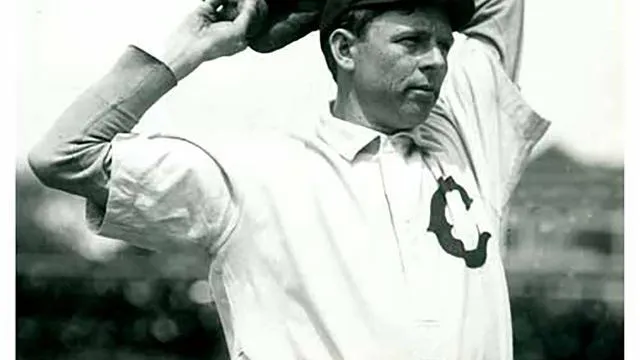
One of the most notable aspects of Brown’s pitching was his control. Unlike many of his contemporaries, who relied on sheer power and velocity, Brown was a master of precision. His pitches had an exceptional amount of movement, particularly his curveball, which would break sharply as it approached the plate. This made him particularly effective against right-handed hitters, as the ball would tail in on them, leaving them with little chance of making solid contact. Brown’s ability to place the ball on the corners of the strike zone, combined with his deceptive delivery, made him a nightmare for opposing batters.
Mordecai Brown’s statistical achievements are a testament to his brilliance on the mound. Over the course of his 14-year career, Brown compiled an impressive record of 239-130 with a 2.06 ERA. He finished in the top ten of the National League in ERA nine times during his career and was a mainstay in the Cubs’ rotation for many years. Brown was particularly effective during his peak seasons, which came in the first decade of the 20th century, when he was part of the dominant Cubs teams of the era.
In 1906, Brown had one of the most remarkable seasons of his career. He posted a 26-6 record with a 1.04 ERA, leading the Cubs to a National League pennant. Brown’s performance that year was a key factor in the Cubs’ success, and his dominance on the mound helped propel the team to the World Series. The Cubs ultimately lost the 1906 World Series to the Chicago White Sox, but Brown’s performance that season cemented his status as one of the best pitchers in baseball.
Brown continued to shine in the years that followed. In 1907, he helped lead the Cubs to another World Series title, with the Cubs defeating the Detroit Tigers in five games. Brown’s pitching in the World Series was crucial, as he won both of his starts and posted a 2.05 ERA. He was again a dominant force in 1908 when the Cubs won their second consecutive World Series, with Brown earning a victory in Game 2. The Cubs’ championship years of 1907 and 1908 were built in large part on Brown’s outstanding pitching, and his contributions to those teams cannot be overstated.
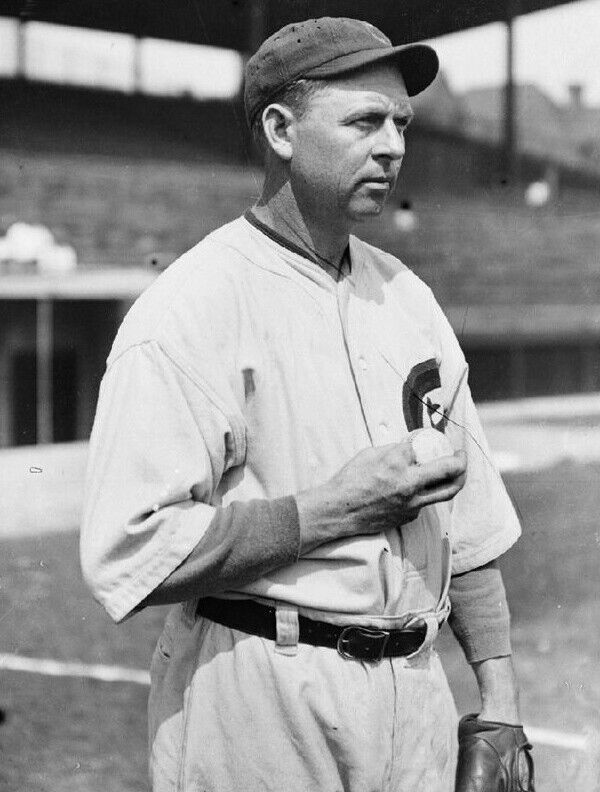
One of the unique aspects of Brown’s career was his ability to perform in high-pressure situations. His success in the postseason, combined with his regular-season excellence, earned him a place among the best pitchers of his era. Despite the loss of two fingers, Brown was able to overcome this limitation and become a dominant force in Major League Baseball. His success was a direct result of his adaptability and his ability to make the most of the skills he had, particularly his ability to spin the ball with incredible movement.
Brown’s peak years were not limited to a single season. In addition to his exceptional performance in 1906, Brown posted multiple seasons with 20 or more wins and sub-2.00 ERAs. He finished his career with a 1.83 ERA in the World Series, further solidifying his reputation as a clutch postseason performer. Over the course of his career, Brown struck out over 1,000 batters, a significant achievement given that strikeouts were not as prevalent in the early 1900s as they are today. His career WAR of 61.4 ranks him among the top pitchers of his era.
Mordecai Brown was known for his toughness, both on and off the field. The injury that led to the loss of his fingers was not the only obstacle Brown faced in his life. Throughout his career, he dealt with numerous challenges, including chronic injuries and personal setbacks. Brown’s tough mentality and ability to battle through adversity were key factors in his longevity and success. His perseverance, despite the physical limitations of his injury, became a part of his identity as a player and contributed to his legendary status.
Perhaps one of the most remarkable aspects of Brown’s career was his ability to maintain his dominance over such a long period of time, especially considering the physical limitations he faced. In a time when pitchers were often relied upon to pitch every fourth day, Brown’s consistency and durability were extraordinary. He played for some of the most successful teams in baseball history, including the Cubs teams of 1906 to 1910, and he was a key contributor to their success year after year. His ability to continue performing at such a high level, even as he dealt with the wear and tear of a grueling baseball schedule, is a testament to his mental and physical toughness.
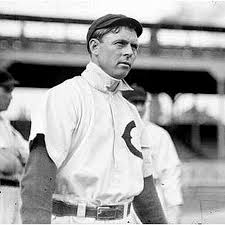
Brown’s unorthodox style, combined with his toughness, made him a fan favorite and a respected figure in the baseball world. His three-fingered grip became a part of his mystique, and his dominance on the mound became the stuff of legend. Though he was never a flamboyant figure off the field, his contributions to the game were immense, and his impact on the sport continues to be felt.
Mordecai Brown’s impact on baseball cannot be overstated. He was a key figure in the early history of Major League Baseball, and his influence on the game extends far beyond his statistical achievements. Brown’s career helped to establish the Cubs as one of the dominant teams of the early 20th century, and his success as a pitcher set a standard for future generations of hurlers. His innovative pitching grip, combined with his ability to create movement on the ball, influenced many pitchers who followed in his footsteps.
Brown’s success also helped to pave the way for future generations of pitchers who faced similar challenges. His story was one of overcoming adversity, and his ability to thrive despite the physical limitations of his injury was an inspiration to countless others. Brown’s legacy as a player who embodied resilience and perseverance has made him a figure of admiration for fans and players alike.
In recognition of his contributions to the game, Mordecai Brown was inducted into the Baseball Hall of Fame in 1949. His induction was a testament to his extraordinary career and the lasting impact he had on the game. Even today, Brown is regarded as one of the greatest pitchers in the history of Major League Baseball, and his place in the annals of the sport is firmly secure.
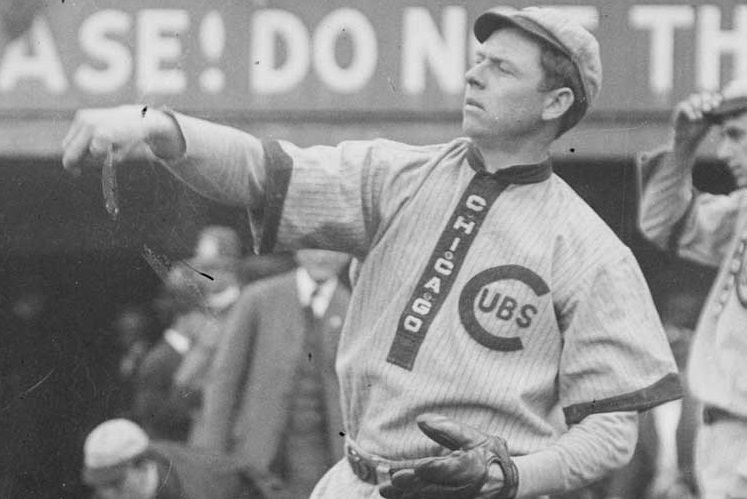
Mordecai “Three Finger” Brown’s career is one of the most compelling stories in baseball history. From his early life on a farm in Indiana to his rise as one of the most dominant pitchers of the early 20th century, Brown’s journey was one of perseverance, skill, and resilience. His ability to overcome the physical challenges posed by his injury and his dominance on the mound made him a legend of the game. Brown’s statistical achievements, including his impressive win total, ERA, and performance in the postseason, cement his place among the greatest pitchers of all time. His impact on baseball, both on the field and as an inspiration to future generations of players, is immeasurable, and his legacy continues to resonate in the world of baseball today.



 The Baseball Scholar
Leave a comment