
Luis Tiant was one of Major League Baseball’s most intriguing and charismatic pitchers, known not only for his electrifying stuff but for the fascinating journey he took to become one of the most revered figures in the sport. His career, spanning 19 seasons from 1964 to 1982, encompassed both notable individual achievements and unforgettable moments that helped to solidify his legacy. From his unique pitching style to his impact on the teams he played for, Tiant’s journey through baseball remains a remarkable testament to both talent and perseverance.
Luis Ernesto Tiant y Pino was born on November 23, 1940, in Havana, Cuba, into a baseball family. His father, Luis Tiant Sr., was a former professional baseball player and one of the early Cuban pitchers to gain national attention. Growing up in Havana, Luis Jr. was surrounded by the rich history of Cuban baseball, a legacy that included many of the island’s greatest players who would go on to play in Major League Baseball. It was no surprise that young Luis developed a love for the game, and even less surprising that he gravitated toward pitching, following in his father’s footsteps.
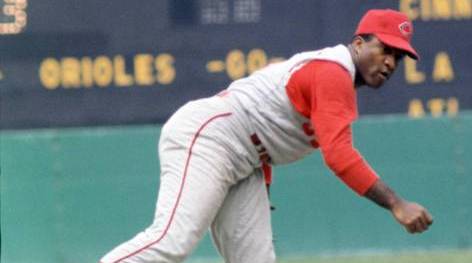
Tiant’s early playing days in Cuba were marked by his exceptional arm strength and his innate ability to make the ball move in ways that few others could replicate. In Cuba, Tiant began to draw the attention of professional scouts, and his early promise as a pitcher was apparent. His arm was both powerful and deceptive, a characteristic that would define his Major League career. Tiant’s pitching mechanics were unorthodox—he utilized a high leg kick and a distinct twisting motion that made his pitches difficult to pick up. This style would become one of the defining characteristics of his pitching career, one that set him apart from his contemporaries and made him a difficult challenge for hitters.
Tiant’s path to Major League Baseball was not immediate. After the Cuban Revolution in the late 1950s, Tiant’s family, like many others, faced difficulties as the political landscape shifted. He left Cuba in 1961, initially playing in Mexico before joining the minors in the United States. He eventually signed with the Cleveland Indians in 1961 and began his ascent through the minor league system.
Tiant debuted in the Major Leagues on April 23, 1964, for the Cleveland Indians, making an immediate impression with his unorthodox delivery and ability to make batters miss. Although he was not a star right away, Tiant showed flashes of brilliance. His early years with Cleveland were somewhat inconsistent, but his promise was undeniable. He had a tendency to struggle with control, which led to periods of frustration, but his raw talent was always evident. During his time with Cleveland, Tiant had several standout performances, including a 1966 season in which he posted a 2.83 ERA, a career-high 1.2 WAR, and struck out a respectable number of batters.
The Indians were not a championship contender during this period, and Tiant’s career trajectory was influenced by the team’s struggles. However, his skill set was already attracting attention. Tiant’s 1968 campaign was particularly notable, as he posted a 2.93 ERA and 9.6 strikeouts per nine innings. Though Tiant’s time with Cleveland was marked by inconsistency, these early years established his reputation as a pitcher capable of dominance.

The turning point in Tiant’s career came when he was traded to the Minnesota Twins in 1970. While his time with the Twins was short, it served as a launching pad for his future success. However, Tiant’s most significant years in the majors came when he was traded to the Boston Red Sox in 1971. The Red Sox, looking to bolster their pitching staff, saw the potential in Tiant, and the move paid immediate dividends.
In 1972, Tiant had a breakout year, finishing the season with a 1.91 ERA, the best in the American League. His success continued through the 1970s, as Tiant became one of the league’s premier pitchers. His unorthodox delivery, which included a high leg kick and a dramatic twist, made him a challenge for hitters, and he quickly became a fixture in the Boston rotation. During this period, Tiant was a regular contender for the Cy Young Award, finishing in the top ten of voting multiple times, including a second-place finish in 1972 behind only Gaylord Perry.
One of the most memorable seasons of Tiant’s career came in 1975, when he helped the Red Sox reach the World Series. Tiant’s pitching that season was nothing short of spectacular, and he finished with a career-high 22 wins. His performance in the postseason was equally memorable, particularly his Game 1 win in the World Series against the Cincinnati Reds, a performance that remains one of the highlights of his career. Tiant pitched a complete game, allowing just one earned run and striking out eight, leading the Red Sox to a 6-0 victory. His contributions in the 1975 postseason solidified his status as one of the most dominant pitchers in baseball.
Throughout his career, Tiant’s statistics were consistently impressive, and his longevity in the majors was a testament to his skill and ability to adapt to the changing dynamics of baseball. By the end of his career, Tiant had amassed 229 wins, a 3.30 ERA, and 2,416 strikeouts. His 3,486 innings pitched ranks him among the top pitchers of his era, and his 7.1 strikeouts per nine innings is a testament to his ability to miss bats.
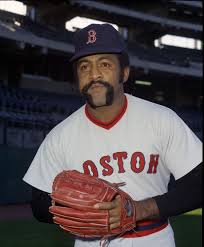
In addition to his overall success, Tiant’s statistical achievements were punctuated by several notable milestones. One of the most remarkable aspects of his career was his ability to pitch effectively in high-pressure situations, particularly in the postseason. In his three World Series appearances, Tiant posted a 3.00 ERA, earning a reputation for being a reliable performer when the stakes were highest. Tiant’s dominance in both regular-season and postseason play made him one of the most respected pitchers of his generation.
Tiant’s impact on the game was not solely statistical, though. His unconventional pitching style, which included a high leg kick and a twisting motion that made his pitches difficult to read, set him apart from other pitchers of his era. His style became a trademark, and many young pitchers looked up to him as an example of how to succeed by embracing one’s individuality on the mound.
One of the unique aspects of Tiant’s career was his ability to reinvent himself. After several successful years with the Red Sox, Tiant’s career appeared to be winding down in the late 1970s. He bounced around between a few teams, including the New York Yankees and the Pittsburgh Pirates, but he was not the same pitcher he had been in his prime. However, Tiant’s resilience and determination allowed him to continue playing at a high level even as his physical skills began to decline.
In 1978, Tiant had one of his most memorable seasons with the Yankees, where he helped the team win the American League pennant. Tiant’s success with the Yankees in the late 1970s showed that, despite his age and the wear on his arm, he could still pitch effectively in big games. His unique ability to adapt his pitching style and find success in his later years was a testament to his baseball IQ and his understanding of the game.
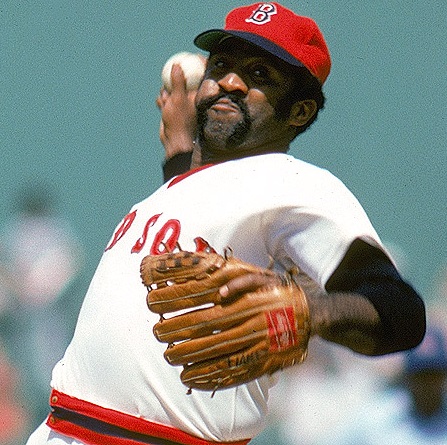
Tiant also faced several personal and professional challenges throughout his career, including the racial tension and political upheaval surrounding Cuban players in the 1960s and 1970s. His immigrant status and the complexities of navigating the Cold War era added a unique layer to his story, but Tiant’s resilience in overcoming these challenges further cemented his status as a trailblazer and an inspiration to future generations of Latin American players.
Luis Tiant’s impact on baseball extended beyond his individual achievements. As one of the premier pitchers of his era, Tiant became a symbol of the potential for success for Latin American players in Major League Baseball. His career helped pave the way for other players from Cuba and Latin America to make their mark in the majors, and his success resonated with fans in Latin America who saw in him a reflection of their own hopes and dreams.
Tiant’s playing style also left a lasting legacy. His unconventional delivery became a hallmark of his career and influenced many future pitchers who sought to emulate his unorthodox approach. Tiant’s success showed that there was no one-size-fits-all formula for pitching; it was a reminder that baseball was a game in which individuality and creativity could thrive.
In many ways, Tiant represented the bridge between different eras of baseball. He played in an era when pitchers still relied heavily on their physical skills and fastballs, but he also adapted to the changing dynamics of the game as it evolved into an era of specialization and advanced analytics. His ability to thrive in both eras made him a beloved figure in the baseball world, and his career remains a testament to the power of perseverance, adaptability, and creativity.

Luis Tiant’s career in Major League Baseball was one of both achievement and intrigue. From his early life in Cuba to his legendary performances with the Boston Red Sox, Tiant’s journey through baseball was marked by perseverance, resilience, and an unmistakable style. His unique pitching mechanics, statistical accomplishments, and ability to thrive in both regular-season and postseason play made him one of the most respected pitchers of his generation. Beyond his individual success, Tiant’s impact on the game of baseball is felt to this day, particularly among Latin American players who look to him as a pioneer and inspiration. His legacy is a reminder that baseball is not just a game of statistics, but a game of individuality, creativity, and passion.


 The Baseball Scholar
Leave a comment