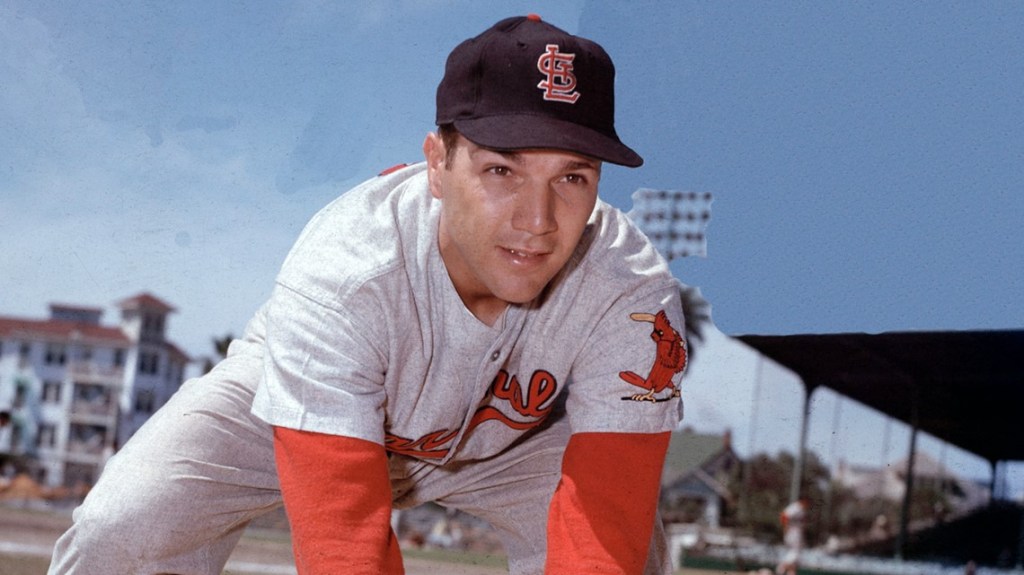
Ken Boyer, one of the most versatile and respected players in Major League Baseball (MLB) history, is often remembered as a stalwart of the St. Louis Cardinals during the 1950s and 1960s. His career, which spanned from 1955 to 1969, was characterized by his remarkable consistency, his power, and his leadership both on and off the field. Boyer’s legacy, though sometimes overshadowed by the flashier names of the era, represents the enduring qualities of a true baseball professional: dependability, hard work, and excellence.
Ken Boyer was born on May 20, 1931, in Liberty, Missouri, a small town just outside of Kansas City. He was the son of a farmer, and from an early age, Boyer was taught the values of hard work and dedication. His love for baseball developed early, and by the time he reached high school, Boyer had already begun to show the skills that would eventually carry him to the major leagues. A standout athlete, Boyer was also an excellent football player in high school, but baseball was where he truly excelled.
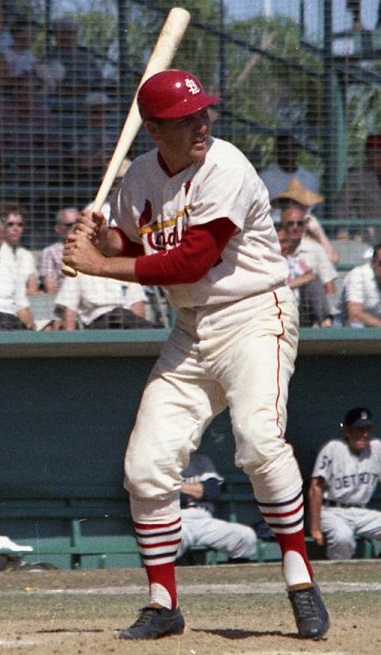
Boyer’s natural talent did not go unnoticed, and after graduating from Liberty High School, he was signed by the St. Louis Cardinals in 1949. He spent several years in the minor leagues, working his way through the Cardinals’ farm system. Boyer’s early years in the minors were a testament to his work ethic and determination. He played in the lower levels of the farm system for several seasons, improving both his offensive and defensive skills. Boyer was an adept fielder, and his offensive game featured a mix of power and average that would become his trademark.
After several years of seasoning in the minor leagues, Boyer finally received the call to the major leagues in 1955. At the age of 24, he made his debut with the St. Louis Cardinals, marking the beginning of a career that would eventually earn him a place among the best players of his era.
Boyer’s first few seasons in the majors were solid but unremarkable. However, 1956 marked the beginning of his rise to prominence. He took over as the Cardinals’ starting third baseman and immediately made an impact. In his first full season, Boyer posted a solid .295 batting average, along with 20 home runs and 80 RBIs. His defense was already known to be above average, and he quickly established himself as one of the top third basemen in the National League.
In 1957, Boyer’s game reached new heights. He finished the season with a .295 batting average, 26 home runs, and 90 RBIs. Boyer’s combination of offensive production and defensive reliability made him one of the most well-rounded players in the league. His ability to hit for power and average, coupled with his Gold Glove-caliber defense, began to earn him recognition as one of the best all-around players in baseball. Boyer’s 1957 season was the first of many where he would prove to be a consistent contributor for the Cardinals.

In 1958, Boyer continued his upward trajectory, finishing with a .300 batting average and 23 home runs, further solidifying his reputation as one of the top third basemen in the game. During this time, Boyer’s steady play helped the Cardinals remain competitive in the National League. While the Cardinals did not win a pennant in these years, Boyer’s individual performances gave the team hope for the future.
The 1960s marked the true peak of Ken Boyer’s career. His emergence as a complete player coincided with a period of sustained success for the St. Louis Cardinals. Boyer’s contributions were pivotal in the Cardinals’ success during this era, as he became a key figure on a team that would go on to win three National League pennants and one World Series title.
One of Boyer’s most memorable seasons came in 1964, when the Cardinals won the National League pennant and eventually triumphed over the New York Yankees in the World Series. Boyer was named the Most Valuable Player (MVP) of the National League that season, a well-deserved recognition for his outstanding performance. He finished the year with a .295 batting average, 24 home runs, and 119 RBIs. His performance in 1964 was instrumental in the Cardinals’ success that season, and his leadership both on and off the field helped the team capture the World Series title.
In addition to his offensive prowess, Boyer continued to be one of the top defensive third basemen in the game. His fielding was a key component of his overall value, and his ability to turn double plays and make difficult plays at third base became hallmarks of his career. Boyer was awarded five Gold Glove Awards during his career, a testament to his excellence with the glove. His defensive skills allowed him to consistently contribute to his team’s success, year in and year out.

Boyer’s performance in the 1964 World Series was particularly memorable. He batted .400 in the series, with a home run and six RBIs. His outstanding play helped the Cardinals defeat the Yankees in seven games, giving St. Louis its first World Series title since 1946. Boyer’s clutch hitting and leadership during the postseason solidified his status as one of the top players of his era.
Following the 1964 World Series victory, Boyer remained a key contributor to the Cardinals’ success in the mid-1960s. In 1965, he had another solid year, finishing with a .286 batting average and 27 home runs. The 1966 season saw Boyer’s production drop slightly, but he remained one of the league’s top third basemen. The Cardinals, however, were beginning to transition into a new era, and Boyer’s time with the team was nearing its end.
In 1966, Boyer’s tenure with the Cardinals came to a close when he was traded to the New York Mets. Boyer played his final seasons with the Mets, but by this point in his career, he was no longer the same player who had won the MVP award in 1964. His production began to decline as injuries took their toll, and Boyer’s offensive numbers were no longer as impressive as they had been in his prime. However, Boyer’s presence in the clubhouse and his leadership qualities were still valuable to the Mets, and he remained a respected figure in the game.
Boyer played three seasons with the Mets from 1966 to 1969, serving as a steady presence for a team in transition. His final year in the major leagues came in 1969, when he retired after a 15-year career in the MLB. Although his time with the Mets was brief, it was a fitting conclusion to a career that had been filled with both individual achievements and team success.

Ken Boyer’s career statistics are a testament to his greatness. Over the course of his 15-season career, Boyer accumulated a .287 batting average, 282 home runs, 1,143 RBIs, and 2,100 hits. His offensive numbers alone put him in the conversation as one of the best third basemen in baseball history. Boyer’s ability to hit for both average and power, combined with his fielding prowess, made him a truly well-rounded player.
Boyer’s offensive production was complemented by his outstanding defense. As one of the premier third basemen of his era, he was known for his quick reflexes, his ability to make accurate throws across the diamond, and his skill at turning double plays. His five Gold Glove Awards were a reflection of his excellence in the field, and his reputation as a top-tier defender was well-earned.
Perhaps one of the most impressive aspects of Boyer’s career was his ability to maintain consistency over a long period of time. Boyer was a regular fixture in the Cardinals’ lineup for nearly a decade, and he consistently produced at a high level. His combination of offensive production and defensive ability made him a key component of the Cardinals’ success in the 1960s.
Boyer’s MVP award in 1964 was the highlight of his career, but his consistent contributions to the Cardinals’ success made him one of the most valuable players of the era. He was a key member of the 1964 World Series champion team, and his performances in both the regular season and postseason helped elevate the Cardinals to the top of the baseball world.
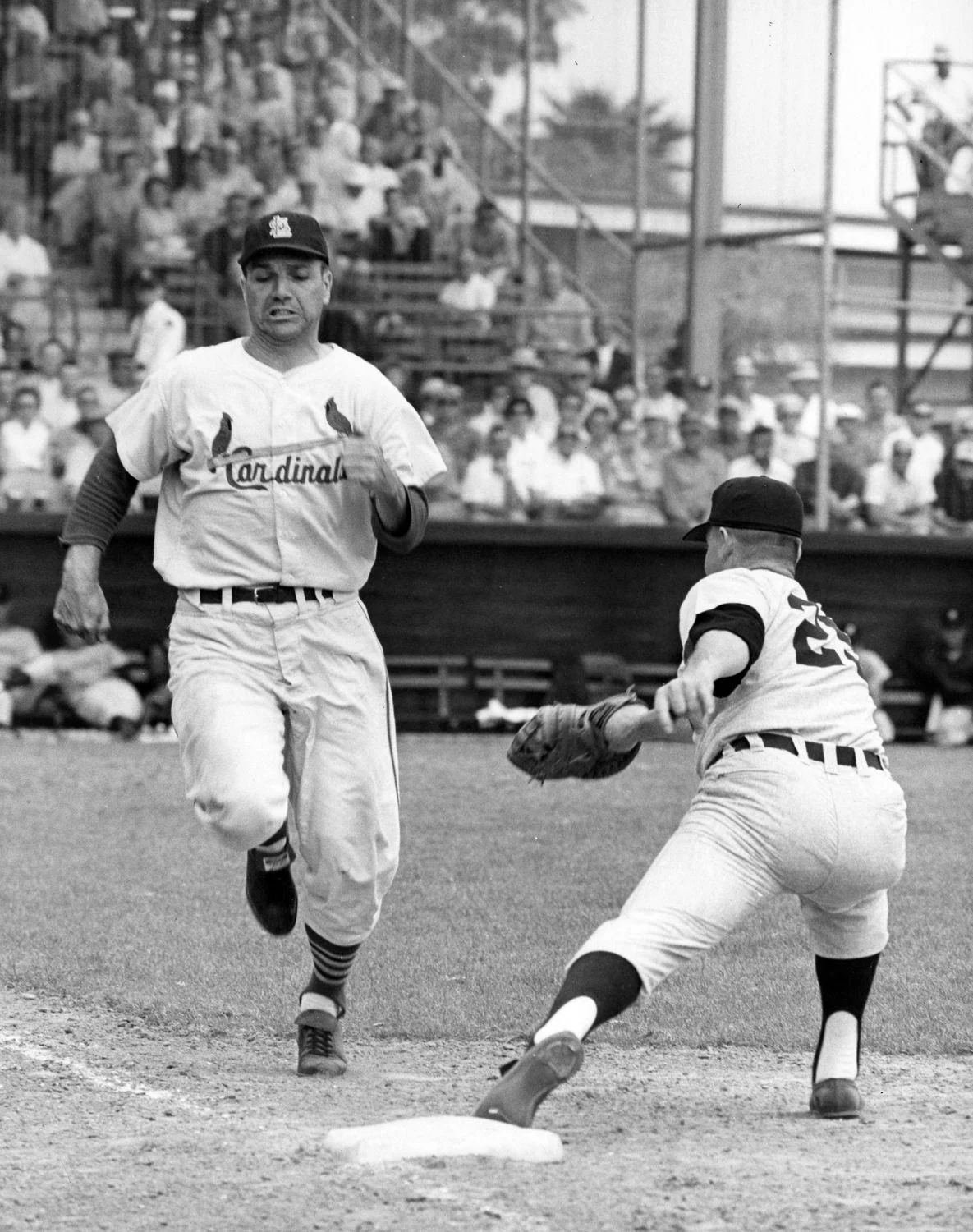
Ken Boyer’s impact on baseball extends beyond his statistics. He was known as a quiet leader, someone who led by example on the field and in the clubhouse. His work ethic and determination were a model for younger players, and his consistency and professionalism made him a respected figure in the game. Boyer’s leadership qualities were particularly valuable to the St. Louis Cardinals, who relied on him to be a steady presence during some of the most successful years in the franchise’s history.
Boyer’s versatility was another key element of his career. Although he played the majority of his career at third base, he was capable of playing multiple positions, including first base and the outfield. This versatility allowed the Cardinals to use Boyer in a variety of roles, and it contributed to his value to the team. Boyer was always willing to do whatever was necessary to help the team win, whether it was playing through injury or taking on a different role.
Although Boyer’s career was not as celebrated as some of his contemporaries, his contributions to the game of baseball are undeniable. His consistent production, his leadership, and his commitment to excellence made him one of the most respected players of his era. Boyer may not have the same level of fame as some of the other stars of the 1960s, but his legacy as one of the best third basemen of all time remains intact.
In the years following his retirement, Boyer’s contributions to the game were recognized by his induction into the St. Louis Cardinals Hall of Fame, where he was celebrated for his role in the team’s success during the 1960s. Boyer’s legacy also lives on through the example he set for future generations of players, particularly third basemen, who look to his career as a model of excellence both offensively and defensively.
Ken Boyer’s career was marked by consistent excellence, leadership, and an unwavering commitment to his craft. Over the course of his 15-season career, Boyer became one of the most respected and accomplished players in the history of baseball. His combination of power, average, and defensive skill made him one of the most complete players of his era. Boyer’s impact on the game goes beyond his impressive statistics; he was a leader, a mentor, and a true professional who contributed to the success of the St. Louis Cardinals during some of the most memorable years in the franchise’s history.
While Boyer’s career may not have garnered the same level of attention as some of his peers, his place in the history of the game is secure. His contributions to the Cardinals’ success in the 1960s and his individual achievements, including his MVP award and five Gold Glove Awards, solidify his legacy as one of the best third basemen in the history of the sport. Boyer’s story is one of perseverance, hard work, and excellence, and he will always be remembered as one of baseball’s greats.


 The Baseball Scholar
Leave a comment