
Wilbur Wood is remembered as one of the most unique and enduring figures in Major League Baseball (MLB) history, not only for his remarkable accomplishments on the mound but also for his distinctive role as one of the last great practitioners of the knuckleball. Over a career that spanned nearly two decades, Wood forged a reputation as a durable workhorse, an innovative pitcher, and a cornerstone of the teams he played for. His journey to MLB stardom was characterized by resilience, adaptation, and a tireless commitment to his craft. From his early days as a promising prospect to his years of dominance as a knuckleball specialist with the Chicago White Sox, Wood’s story is a fascinating exploration of baseball’s evolution and the enduring appeal of the game’s quirkiest pitch.
Wilbur Forrester Wood Jr. was born on October 22, 1941, in Cambridge, Massachusetts. Raised in the Boston suburb of Belmont, Wood grew up in a region steeped in baseball tradition. As a child, he was enamored with the game, idolizing local heroes like Ted Williams and other stars of the Boston Red Sox. His natural talent for pitching became evident at a young age, as he displayed excellent command and an innate understanding of how to manipulate the baseball.

Wood attended Belmont High School, where he excelled as a pitcher and quickly drew the attention of professional scouts. Despite his relatively small stature—standing 5 feet 10 inches and weighing around 180 pounds—Wood possessed a deceptive delivery and an ability to mix pitches effectively. He was signed by the Boston Red Sox as an amateur free agent in 1960, marking the beginning of his professional baseball journey.
Wood began his professional career in the Red Sox minor league system, where he showcased promise but struggled to define himself as a dominant pitcher. Initially a conventional fastball-curveball pitcher, Wood’s early years were marked by inconsistency and an inability to sustain success at the higher levels of competition. He made his MLB debut with the Red Sox in 1961 at the age of 19, but his limited appearances over the next two seasons revealed that he was not yet ready to compete at the major league level.
Following his brief stints with the Red Sox, Wood was traded to the Pittsburgh Pirates in 1964. However, his time in Pittsburgh was similarly unremarkable, as he struggled to find a consistent role on the team. Over his first six MLB seasons, Wood bounced between the minors and majors, compiling an unremarkable record and failing to secure a long-term spot in any rotation. By the mid-1960s, it appeared that Wood’s career might fizzle out before it had a chance to truly begin.
Wood’s fortunes began to change in the late 1960s when he was encouraged to experiment with the knuckleball—a pitch that would ultimately define his career. The knuckleball, with its erratic and unpredictable movement, was notoriously difficult to master, but Wood’s willingness to embrace the challenge proved transformative. With guidance from veteran knuckleball pitchers, Wood developed the pitch into a devastating weapon. Unlike traditional power pitchers who relied on velocity, Wood’s knuckleball allowed him to confound hitters and extend his career well beyond the typical trajectory of a conventional pitcher.
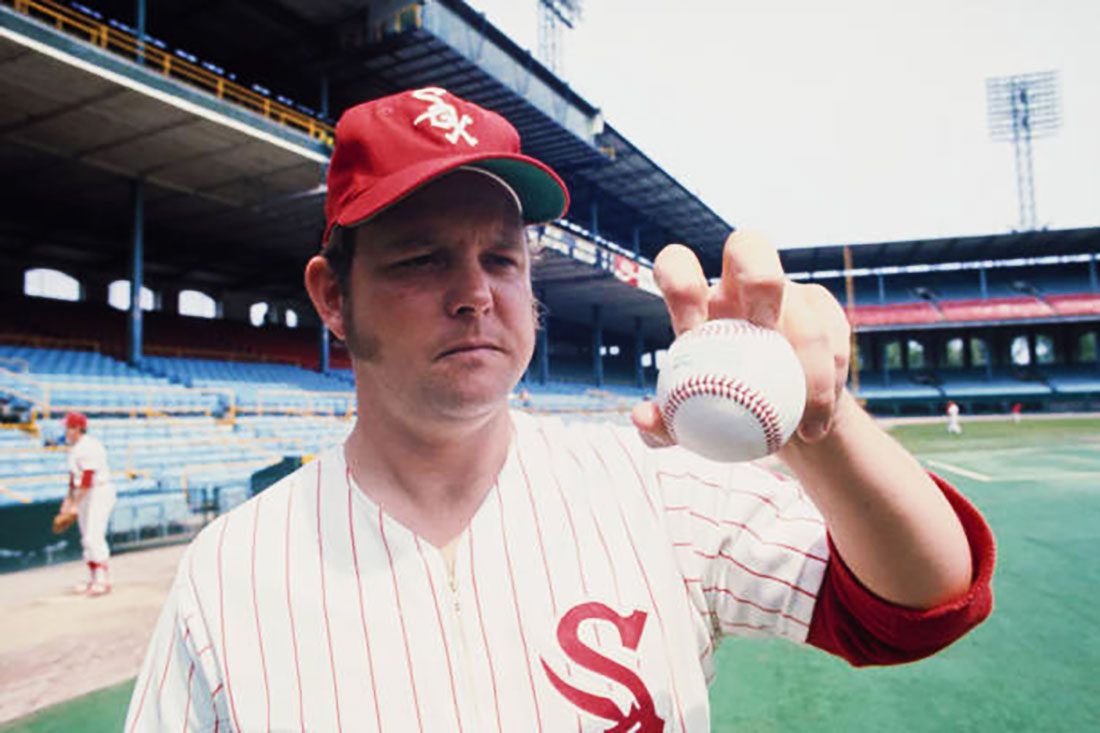
In 1967, Wood was traded to the Chicago White Sox, a move that would prove pivotal in his career. The White Sox, under the guidance of manager Eddie Stanky, recognized Wood’s potential as a knuckleball specialist and provided him with the opportunity to flourish. The change of scenery and newfound confidence in his signature pitch revitalized Wood’s career, and he quickly established himself as one of the most effective and durable pitchers in the game.
Wood’s tenure with the Chicago White Sox from 1967 to 1978 was marked by remarkable durability, consistency, and a string of extraordinary statistical achievements. As a knuckleball pitcher, Wood was capable of throwing on shorter rest than his peers, allowing him to log an extraordinary number of innings. His peak years in the early 1970s were particularly notable for his ability to shoulder an unprecedented workload.
The 1971 season marked Wood’s emergence as one of the American League’s premier pitchers. He posted a 22-13 record with a 1.91 ERA, leading the league in ERA and demonstrating his ability to dominate opposing hitters. Wood’s success in 1971 earned him his first All-Star selection, and he quickly became a cornerstone of the White Sox pitching staff.
Over the next several seasons, Wood continued to defy conventional wisdom about pitcher durability. In 1972, he compiled a 24-17 record and led the league in games started (49), innings pitched (376.2), and complete games (20). Remarkably, Wood’s ability to pitch on short rest allowed the White Sox to rely heavily on him as both a starter and reliever, showcasing his versatility and unrelenting work ethic.
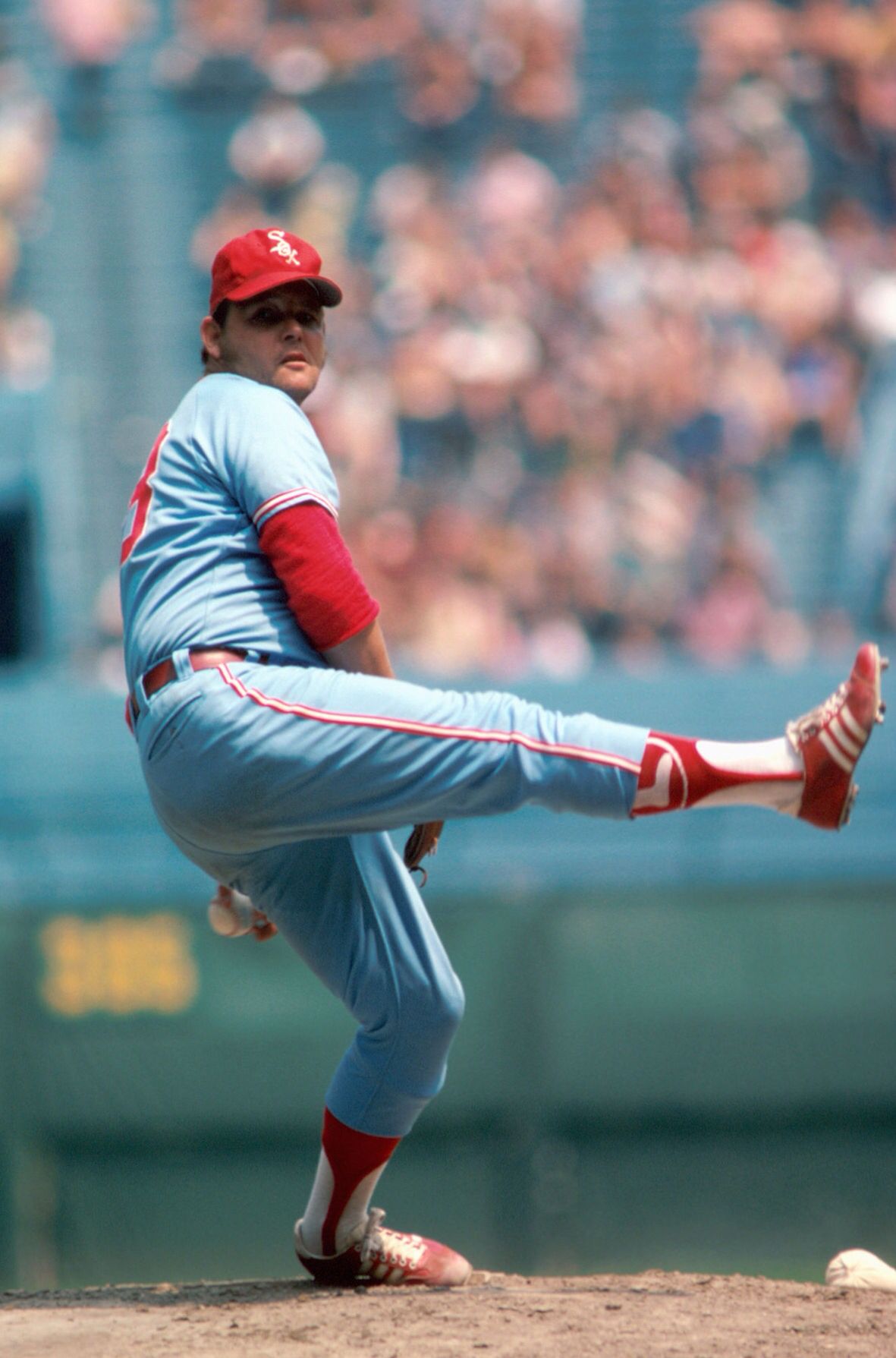
The 1973 and 1974 seasons were similarly remarkable, as Wood became the last MLB pitcher to win and lose 20 games in consecutive seasons. In 1973, he went 24-20 with a 3.46 ERA, and in 1974, he followed up with a 20-19 record and a 3.60 ERA. His ability to pitch an extraordinary number of innings—over 300 in each of those seasons—underscored his value to the White Sox and his status as one of the most durable pitchers in MLB history.
Wood’s career statistics reflect his extraordinary durability and effectiveness as a knuckleball pitcher. He finished his career with a 164-156 record, a 3.24 ERA, and 1,411 strikeouts over 2,684 innings pitched. His 57 career shutouts rank among the most by a knuckleball pitcher, and his ability to consistently eat innings made him a valuable asset to every team he played for.
Among Wood’s most notable achievements are his back-to-back seasons leading the league in innings pitched (1972-1973) and his four consecutive seasons with 20 or more wins (1971-1974). He also earned three All-Star selections during his career, a testament to his sustained excellence and the respect he commanded from peers and fans alike.
Wood’s impact on baseball extends beyond his impressive statistics. As one of the most successful knuckleball pitchers in MLB history, he helped popularize a pitch that was often regarded as a curiosity or last resort for struggling pitchers. His success demonstrated that the knuckleball could be a viable weapon for sustained success, inspiring future generations of pitchers to experiment with the pitch.
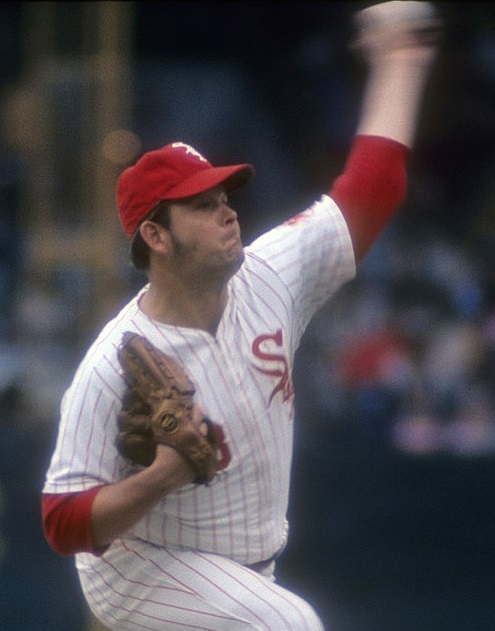
Wood’s remarkable durability also highlighted the potential value of unconventional pitchers in an era dominated by power arms. His ability to pitch on short rest and consistently log innings provided a blueprint for how teams could maximize the value of a knuckleball specialist. Moreover, Wood’s willingness to adapt and reinvent himself mid-career serves as a testament to the importance of perseverance and innovation in professional sports.
One of the most unique aspects of Wood’s career was his role as both a starter and reliever during his peak years. Unlike most pitchers who specialized in one role, Wood’s versatility allowed him to fill multiple roles depending on his team’s needs. His willingness to pitch on short rest and take the mound in virtually any situation made him a manager’s dream and a fan favorite.
Another distinctive feature of Wood’s career was his ability to thrive in an era of baseball dominated by power hitters and rising offensive statistics. Despite the challenges of pitching in hitter-friendly environments, Wood’s knuckleball proved to be a great equalizer, allowing him to compete against some of the game’s greatest sluggers.
Wilbur Wood’s legacy as one of baseball’s great knuckleball pitchers is secure. His durability, adaptability, and commitment to his craft serve as a reminder of the diverse ways in which pitchers can achieve success in MLB. Wood’s contributions to the White Sox and the game as a whole continue to be celebrated by fans and historians alike.
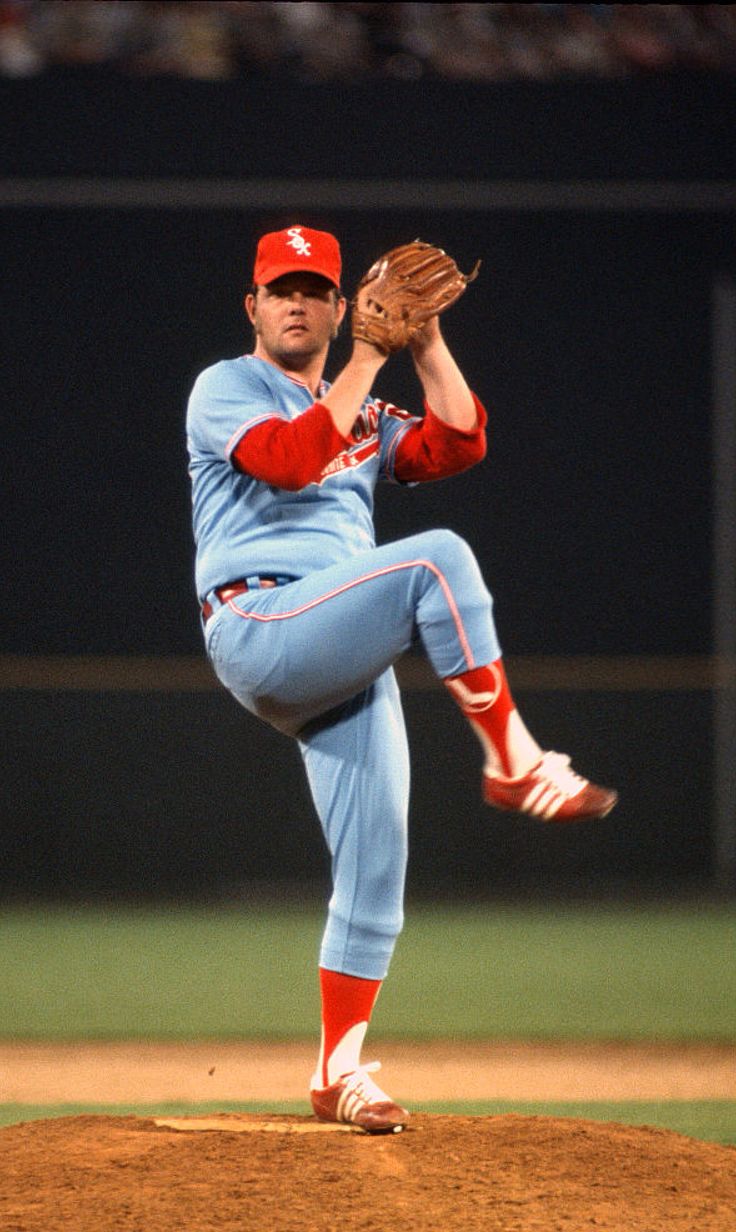
In retirement, Wood remained involved in baseball, sharing his knowledge of the knuckleball with aspiring pitchers and reflecting on his remarkable career. His story serves as an inspiration to players who face adversity, demonstrating that success can be achieved through innovation, hard work, and a willingness to embrace change.
In conclusion, Wilbur Wood’s MLB career is a testament to the power of perseverance and the enduring appeal of baseball’s most enigmatic pitch. His achievements on the mound, coupled with his impact on the game’s culture and strategy, ensure that he will be remembered as one of the most unique and influential figures in the history of baseball.


 The Baseball Scholar
Leave a comment