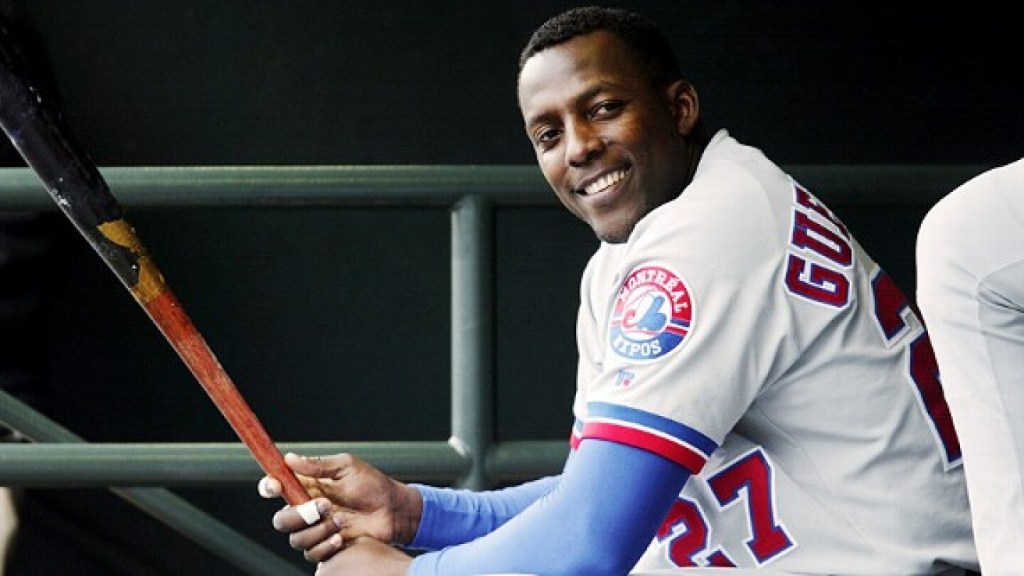
Vladimir Guerrero, affectionately known as “Vlad the Impaler,” is celebrated as one of the most electrifying players in Major League Baseball (MLB) history. Known for his prodigious power, unparalleled ability to hit virtually any pitch, and his dynamic style of play, Guerrero forged a Hall of Fame career that captivated fans and left an indelible mark on the game. Over the course of 16 MLB seasons, Guerrero distinguished himself with a combination of athleticism, consistency, and joy that made him a beloved figure across the sport. To fully appreciate his legacy, it is important to explore his journey from humble beginnings, his career achievements, and the lasting impact he had on baseball.
Vladimir Guerrero was born on February 9, 1975, in Nizao, Dominican Republic, into a family that struggled to make ends meet. The Guerrero household lacked many basic amenities, but the young Vladimir grew up surrounded by love and a passion for baseball. His upbringing instilled in him the work ethic and resilience that would define his professional career. Baseball was not merely a pastime for Guerrero—it was an avenue to create a better life for himself and his family.

Guerrero’s introduction to the sport came through informal games in the streets and sandlots of Nizao. Playing barefoot and with improvised equipment, he honed his skills under challenging conditions. Despite limited resources, Guerrero quickly demonstrated natural talent, combining raw power with exceptional hand-eye coordination. His older brother, Wilton Guerrero, also showed promise as a baseball player and would later pave the way for Vladimir by signing with the Los Angeles Dodgers.
Vladimir’s path to professional baseball began in earnest when he joined a Dominican baseball academy. Scouts soon took notice of his talent, and in 1993, at the age of 18, Guerrero signed with the Montreal Expos for a modest $2,100 signing bonus. His journey to the major leagues had begun, though the road ahead would demand hard work and perseverance.
Guerrero’s rise through the minor leagues was meteoric. His ability to hit for power and average, coupled with his strong throwing arm, quickly established him as one of the most exciting prospects in baseball. In 1996, Guerrero made his MLB debut with the Montreal Expos, a small-market team with a reputation for developing young talent. Although his first stint in the majors was brief, it offered a glimpse of his potential.
By 1997, Guerrero had secured a full-time role with the Expos and began to make an impact. In his rookie season, he batted .302 with 11 home runs and 40 RBIs in 90 games. His aggressive approach at the plate—swinging at pitches that other players would not even consider—quickly became his trademark. Guerrero’s ability to make contact with virtually any pitch, whether it was above his head, below his knees, or far outside the strike zone, astounded fans and baffled pitchers.

Over the next several seasons, Guerrero blossomed into one of baseball’s premier players. From 1998 to 2003, he was a consistent offensive force, hitting over .300 every season and surpassing 30 home runs and 100 RBIs in five of those years. In 2002, he came tantalizingly close to joining the exclusive 40-40 club, hitting 39 home runs and stealing 40 bases. Despite playing for a team with limited resources and fanfare, Guerrero’s performances established him as one of the most complete players in the game.
In 2004, Guerrero became a free agent and signed a six-year, $70 million contract with the Anaheim Angels (later renamed the Los Angeles Angels of Anaheim). The move to a larger market brought increased attention to Guerrero’s talent, and he thrived in his new environment. In his first season with the Angels, Guerrero put together one of the most impressive campaigns of his career. He batted .337 with 39 home runs, 126 RBIs, and a league-leading 124 runs scored, earning him the American League (AL) Most Valuable Player (MVP) award. His ability to carry the Angels to the playoffs with a torrid September performance solidified his reputation as one of the game’s most clutch performers.
Guerrero’s tenure with the Angels was marked by consistent excellence. He made five All-Star teams and won four Silver Slugger Awards during his time in Anaheim. His ability to hit for both power and average, combined with his strong throwing arm in right field, made him a cornerstone of the Angels’ lineup. Although injuries began to take a toll on his speed and defensive range, Guerrero remained one of the most feared hitters in the league.
After six successful seasons with the Angels, Guerrero’s career entered a new phase as he transitioned to a designated hitter role. In 2010, he signed with the Texas Rangers and enjoyed a resurgent season, batting .300 with 29 home runs and 115 RBIs. His performance helped lead the Rangers to their first World Series appearance, a testament to Guerrero’s continued ability to contribute at a high level.

Guerrero’s final seasons included stints with the Baltimore Orioles and brief appearances in independent leagues. Although his production declined as he aged, his impact on the game remained undeniable. He officially retired in 2014, leaving behind a legacy defined by consistency, power, and an unparalleled ability to hit pitches outside the strike zone.
Over the course of his MLB career, Vladimir Guerrero compiled a .318 batting average, 449 home runs, and 1,496 RBIs. He recorded 2,590 hits, 1,328 runs scored, and 181 stolen bases. His offensive numbers rank among the best of his era, and his career batting average is particularly notable in an age increasingly dominated by power hitting.
Guerrero was a nine-time All-Star, an eight-time Silver Slugger Award winner, and the 2004 AL MVP. He also led the league in various categories over the years, including hits, runs, and total bases. Perhaps most remarkable was his ability to avoid strikeouts while maintaining his aggressive approach, a testament to his exceptional hand-eye coordination and natural hitting ability.
Guerrero’s approach to hitting was unlike anything baseball had seen before. He was notorious for his ability to hit pitches far outside the strike zone, including balls that bounced in the dirt or sailed over his head. This unorthodox style endeared him to fans and made him a nightmare for pitchers, who struggled to find a pitch he could not handle.

Off the field, Guerrero was known for his humility and quiet demeanor. Despite his superstardom, he remained grounded and focused on providing for his family and community. Guerrero’s journey from poverty in the Dominican Republic to MLB stardom served as an inspiration to countless young players in his home country.
Vladimir Guerrero’s impact on baseball extended far beyond his statistics. He was a pioneer for Dominican players, demonstrating that raw talent and determination could overcome any obstacle. His success helped pave the way for future generations of Dominican stars, solidifying the country’s status as a baseball powerhouse.
Guerrero’s induction into the Baseball Hall of Fame in 2018, in his first year of eligibility, was a fitting recognition of his contributions to the game. He became only the third Dominican-born player to be enshrined, joining Juan Marichal and Pedro Martinez. His election to the Hall of Fame was celebrated not only in the United States but also in the Dominican Republic, where he remains a national hero.

Vladimir Guerrero’s MLB career was a celebration of talent, resilience, and joy. From his humble beginnings in the Dominican Republic to his enshrinement in Cooperstown, Guerrero’s journey captured the essence of baseball as a game that transcends borders and unites people. His unique style of play, statistical achievements, and impact on the sport have cemented his place as one of the game’s all-time greats. Few players have brought as much excitement and unpredictability to the field as Vladimir Guerrero, and his legacy will continue to inspire generations of players and fans alike.




 The Baseball Scholar
Leave a comment