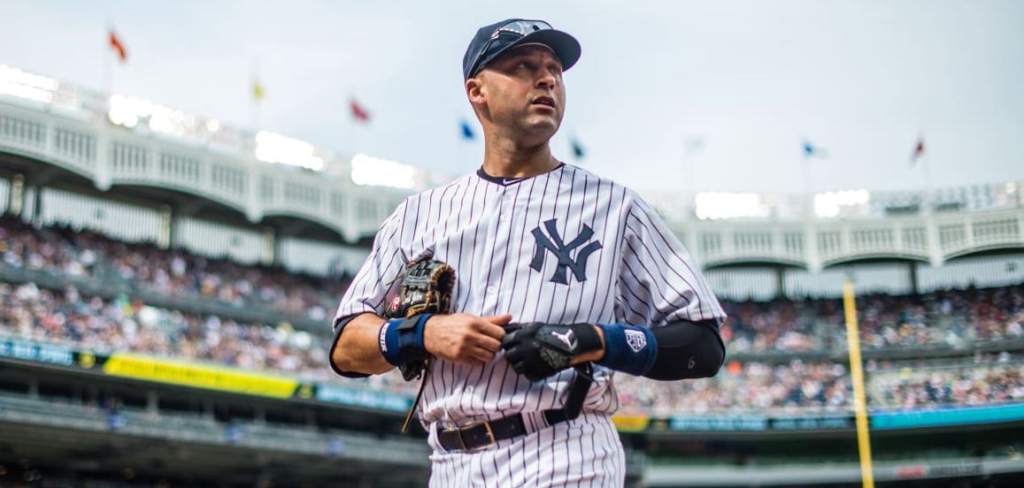
Derek Jeter’s career in Major League Baseball stands as a testament to sustained excellence, leadership, and grace under pressure. Over the course of his 20-year career with the New York Yankees, Jeter left an indelible mark on the game, earning a reputation as one of baseball’s all-time greats. His unparalleled achievements, both statistically and culturally, defined an era of success for the Yankees and made him a role model for players and fans alike. From his early days as a young boy dreaming of playing shortstop in Yankee Stadium to his enshrinement in the Baseball Hall of Fame, Jeter’s journey is one of determination, skill, and consistency. His story encompasses not only his remarkable accomplishments on the field but also his profound impact on the sport and its culture.
Born on June 26, 1974, in Pequannock Township, New Jersey, Derek Sanderson Jeter grew up in a household steeped in values of discipline, respect, and hard work. His parents, Charles and Dorothy Jeter, were both college graduates who placed a strong emphasis on education and character. Growing up as part of a biracial family, Jeter faced challenges that shaped his resilience and character, particularly as he navigated a world that sometimes judged him unfairly. His upbringing instilled in him a sense of humility and determination, qualities that would come to define his career.
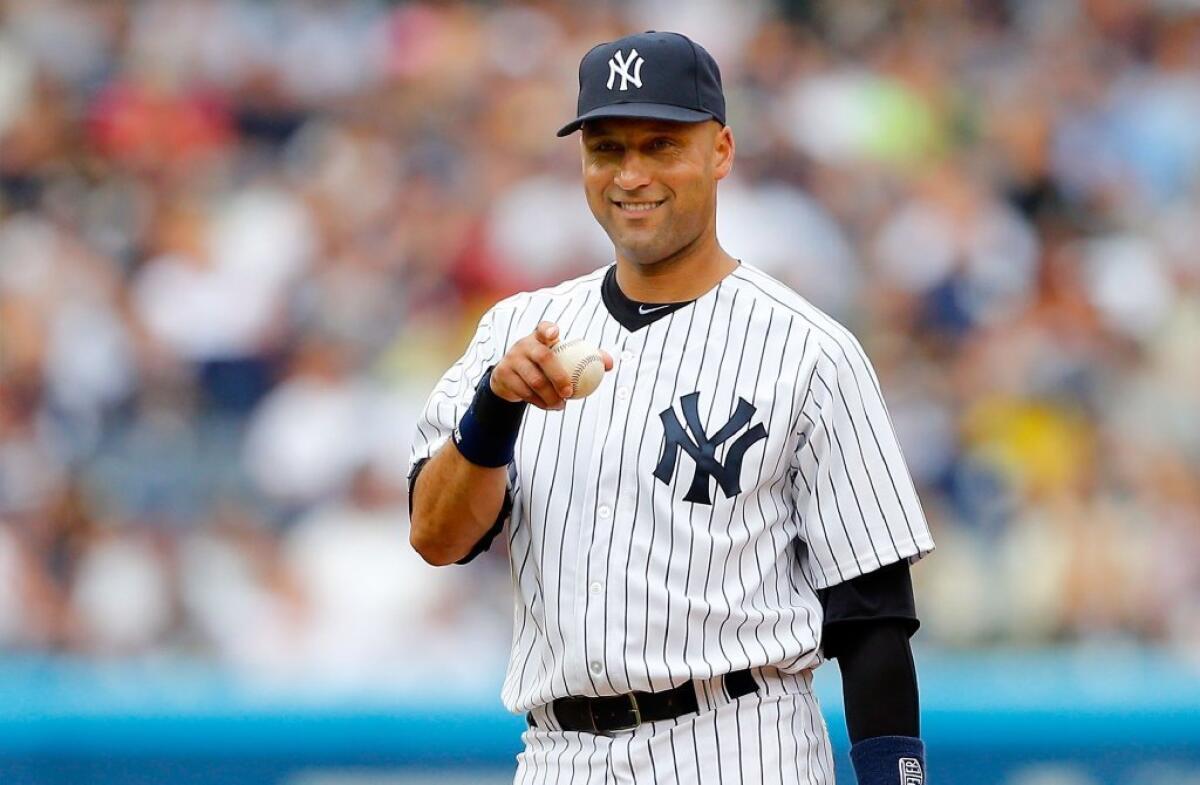
Jeter spent his formative years in Kalamazoo, Michigan, where he displayed exceptional athletic talent from an early age. Summers spent visiting his grandparents in New Jersey gave him the chance to attend Yankees games, sparking a deep connection with the team and a dream of someday wearing their pinstripes. By the time he reached Kalamazoo Central High School, Jeter’s talent on the baseball diamond was undeniable. He excelled as both a hitter and a fielder, showcasing natural instincts, speed, and leadership qualities. During his senior year, he batted an astonishing .508 with four home runs, 23 RBIs, and 12 stolen bases, earning him the 1992 Gatorade High School Player of the Year award for Michigan and recognition as the *USA Today* High School Player of the Year.
The New York Yankees, recognizing his immense potential, selected Jeter with the sixth overall pick in the 1992 MLB Draft. Though he had the option to attend the University of Michigan on a baseball scholarship, Jeter chose to sign with the Yankees, embarking on a professional journey that would lead to greatness. His initial years in the minor leagues were not without challenges, but they revealed the hallmarks of a player destined for stardom: work ethic, adaptability, and an unyielding desire to improve.
Jeter’s transition to the major leagues began with a brief debut in 1995, during which he gained valuable experience despite limited playing time. By 1996, he had earned the Yankees’ starting shortstop position, becoming the first rookie to start at shortstop for the team on Opening Day since Tom Tresh in 1962. What followed was a breakout season that established Jeter as one of baseball’s brightest young stars. He batted .314 with 10 home runs, 78 RBIs, 104 runs scored, and 14 stolen bases, demonstrating a combination of consistency and versatility that would define his career. His defensive reliability at shortstop further solidified his value to the team.
Jeter’s rookie season culminated in a World Series championship, as the Yankees defeated the Atlanta Braves to claim their first title since 1978. Jeter’s performance throughout the postseason was crucial, as he hit .361 and delivered several key hits. His efforts earned him the 1996 American League Rookie of the Year Award, the first of many accolades in his storied career.

From 1996 to 2003, Jeter was a cornerstone of a Yankees dynasty that captured four World Series titles (1996, 1998, 1999, 2000) and six American League pennants. During this period, Jeter consistently demonstrated his ability to perform at the highest level, earning respect as one of the game’s most dependable players. He recorded over 190 hits in seven of those eight seasons, showcasing an extraordinary level of consistency and durability.
The 1998 season, in particular, was a highlight of both Jeter’s career and Yankees history. Jeter hit .324 with 203 hits, 19 home runs, 84 RBIs, and a league-leading 127 runs scored. The Yankees set an MLB record with 114 regular-season wins before sweeping the San Diego Padres in the World Series. Jeter’s postseason contributions, including a .353 batting average in the World Series, were instrumental in the team’s success.
Jeter’s career statistics are a reflection of his sustained brilliance. Over 20 seasons, he amassed 3,465 hits, placing him sixth on MLB’s all-time hits list and first in Yankees history. He finished his career with a .310 batting average, 260 home runs, 1,311 RBIs, and 1,923 runs scored. His ability to consistently get on base, combined with his speed and power, made him a versatile offensive force. Jeter’s 358 career stolen bases and 200-plus hits in eight separate seasons further underscore his multifaceted talent.
Jeter was selected to 14 All-Star Games, won five Gold Glove Awards, and earned five Silver Slugger Awards. He also finished in the top 10 in AL MVP voting eight times, including a runner-up finish in 2006. His accolades are a testament to his enduring excellence and his ability to perform at an elite level year after year.

Jeter’s postseason resume is unparalleled in MLB history. He played in 158 playoff games, more than any other player, and posted a .308 batting average with 200 hits, 32 doubles, 20 home runs, and 61 RBIs. His ability to deliver in clutch situations earned him the nickname “Mr. November,” a moniker solidified during the 2001 World Series. In Game 4 of the series, Jeter hit a walk-off home run shortly after midnight on November 1, the first such home run in World Series history.
Another iconic moment came during the 2001 AL Division Series against the Oakland Athletics. Known as “The Flip,” Jeter sprinted from his shortstop position to retrieve a wayward throw from the outfield, executing a backhanded flip to catcher Jorge Posada to tag out Jeremy Giambi at home plate. The play epitomized Jeter’s instincts, awareness, and ability to make game-changing plays in critical moments.
In 2003, Jeter was named the Yankees’ captain, a role he embraced with humility and dedication. As captain, he set the standard for professionalism and leadership, earning the respect of teammates, opponents, and fans alike. His leadership extended beyond the field, as he became a mentor to younger players and an ambassador for the game.
Jeter’s farewell season in 2014 was a celebration of his remarkable career. At every ballpark, he received tributes and ovations from fans and opposing teams, a testament to the respect he commanded across the league. His final game at Yankee Stadium provided a storybook ending, as Jeter delivered a walk-off single to win the game, a fitting conclusion to a legendary career.

In 2020, Jeter was inducted into the Baseball Hall of Fame, receiving 99.7% of the vote, the second-highest percentage in history. His enshrinement cemented his place among the game’s greatest players.
Derek Jeter’s impact on baseball transcends statistics and championships. He represented the ideals of sportsmanship, integrity, and respect for the game. Off the field, Jeter’s Turn 2 Foundation has positively impacted countless young people, promoting education, leadership, and healthy lifestyles.

For generations of fans, Jeter remains the epitome of what it means to be a New York Yankee. His dedication to excellence, his ability to rise to the occasion in the game’s biggest moments, and his unwavering commitment to his team and community have left an indelible mark on the sport. Few players have had as profound an influence on baseball as Derek Jeter, and his legacy will continue to inspire for years to come.




 The Baseball Scholar
Leave a comment