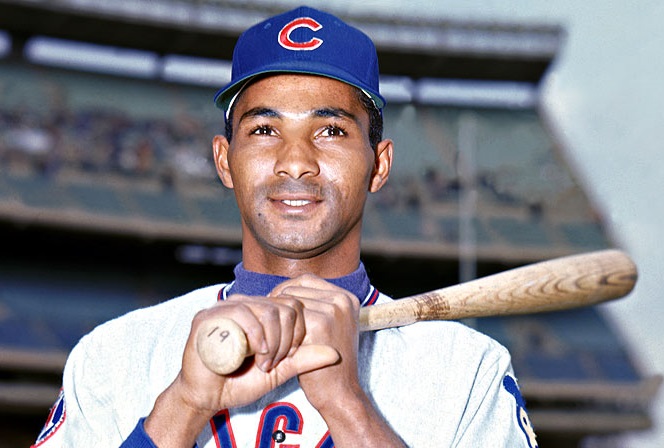
Billy Williams, affectionately known as “Sweet Swingin’ Billy” for his effortless and picturesque left-handed swing, is one of the most iconic players in Major League Baseball history. His career, which spanned nearly two decades from 1959 to 1976, was defined by remarkable consistency, longevity, and a deep-seated commitment to excellence. Williams played the majority of his career with the Chicago Cubs, where he became a cornerstone of the franchise during the 1960s and early 1970s. With a combination of power, average, and durability, Williams etched his name among the all-time greats and earned enshrinement in the Baseball Hall of Fame in 1987.
Billy Leo Williams was born on June 15, 1938, in Whistler, Alabama, a small, segregated town near Mobile. Growing up in the racially divided South presented significant challenges for young Black athletes, but Williams found solace and inspiration in baseball. He idolized Jackie Robinson, whose courage and excellence had broken Major League Baseball’s color barrier in 1947, and Willie Mays, another Alabama native who would go on to become one of the game’s all-time legends. Baseball was more than a pastime for Williams; it was a dream, a means of overcoming the societal obstacles he faced.
Williams’ natural talent was apparent from an early age, and he honed his skills playing on the sandlots of Whistler. As a teenager, he attracted the attention of professional scouts, including Buck O’Neil, the legendary figure who had played in the Negro Leagues and became a prominent scout for the Chicago Cubs. O’Neil was instrumental in bringing Williams into the Cubs organization, signing him in 1956. This marked the beginning of a journey that would see Williams rise from the minor leagues to the pinnacle of baseball greatness.
Williams’ early professional career was marked by both promise and challenges. The transition from the segregated South to the Midwest and from amateur baseball to the professional ranks was not without its difficulties. Williams faced racial prejudice, isolation, and the pressure of proving himself in an era when opportunities for Black players were still limited. Yet, he persevered, steadily climbing the ranks in the Cubs’ farm system. By 1959, Williams had earned his first call-up to the major leagues, though his initial stints were brief and unspectacular.
It wasn’t until 1961 that Williams firmly established himself as a major league regular. That year, he won the National League Rookie of the Year Award after hitting .278 with 25 home runs and 86 RBIs. His smooth, compact swing and ability to drive the ball to all fields made him an immediate standout. Williams’ rookie season was the beginning of an extraordinary career characterized by consistency and excellence.
One of the defining attributes of Billy Williams’ career was his durability. Between September 22, 1963, and September 2, 1970, he played in 1,117 consecutive games, setting a National League record that stood for decades. This streak underscored his resilience and commitment to his team. While some players were sidelined by injuries, illness, or fatigue, Williams seemed almost immune to the wear and tear of a grueling baseball schedule. His consecutive games streak earned him comparisons to Lou Gehrig, the legendary “Iron Horse” of baseball, and cemented Williams’ reputation as one of the most reliable players of his era.
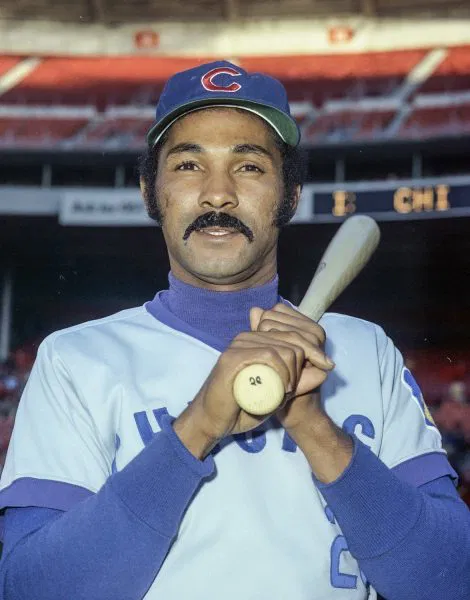
Williams’ offensive production during the 1960s and early 1970s placed him among the elite hitters in baseball. He was a model of consistency, hitting at least 20 home runs in 13 consecutive seasons and driving in over 100 runs five times. His best statistical season came in 1970, when he hit .322 with 42 home runs, 129 RBIs, and a league-leading 205 hits. That year, Williams finished second in the National League MVP voting, narrowly losing to Johnny Bench of the Cincinnati Reds. In 1972, Williams won the National League batting title with a .333 average and also posted a .606 slugging percentage, further solidifying his status as one of the most dangerous hitters in the game.
Over the course of his career, Williams compiled a .290 batting average, 2,711 hits, 426 home runs, 1,475 RBIs, and an .853 OPS. He was a six-time All-Star and finished in the top five of the MVP voting on three occasions. Williams’ left-handed swing was a thing of beauty, combining power and precision in a way that few players could replicate. He had an innate ability to hit both fastballs and breaking pitches, and his plate discipline made him a tough out in any situation. Despite playing in an era dominated by pitching, Williams’ offensive numbers remained consistently excellent.
Williams was also a key figure on a Cubs team that, while talented, often fell short of postseason success. Alongside teammates such as Ernie Banks, Ron Santo, and Ferguson Jenkins, Williams formed the core of a Cubs roster that was competitive but ultimately unable to overcome the dominance of teams like the St. Louis Cardinals and the Cincinnati Reds. The most infamous example of the Cubs’ struggles came in 1969, when they led the National League East for much of the season before a late collapse allowed the “Miracle Mets” of New York to overtake them. Williams, who hit .293 with 21 home runs and 95 RBIs that year, was one of the few bright spots during the Cubs’ disappointing finish.
Despite the team’s lack of postseason success, Williams remained a fan favorite at Wrigley Field. His quiet demeanor, work ethic, and consistent performance endeared him to the Cubs faithful, who appreciated his dedication to the team. Williams’ loyalty to the Cubs was evident throughout his career, and he became one of the franchise’s most beloved players.

In 1974, after 16 seasons with the Cubs, Williams was traded to the Oakland Athletics. Although he was nearing the end of his career, he continued to be a productive player and contributed to the A’s success. In 1975, Williams helped Oakland win the American League West division title, providing veteran leadership and solid production at the plate. He retired following the 1976 season, bringing an end to a remarkable career that spanned 18 seasons.
Williams’ contributions to baseball were formally recognized in 1987 when he was inducted into the Baseball Hall of Fame. His induction was a testament to his consistency, durability, and the respect he commanded throughout the game. The Cubs retired his number 26, ensuring that his legacy would forever be a part of the franchise’s history. Today, Williams is remembered not only as one of the greatest players in Cubs history but also as one of the finest hitters of his era.
Beyond the statistics, Williams’ impact on baseball can be seen in the example he set for future generations of players. His ability to overcome adversity, his commitment to excellence, and his quiet professionalism made him a role model for young athletes. Williams’ career serves as a reminder that greatness in baseball is not always about flashiness or controversy; sometimes, it is about showing up every day and performing at a consistently high level.
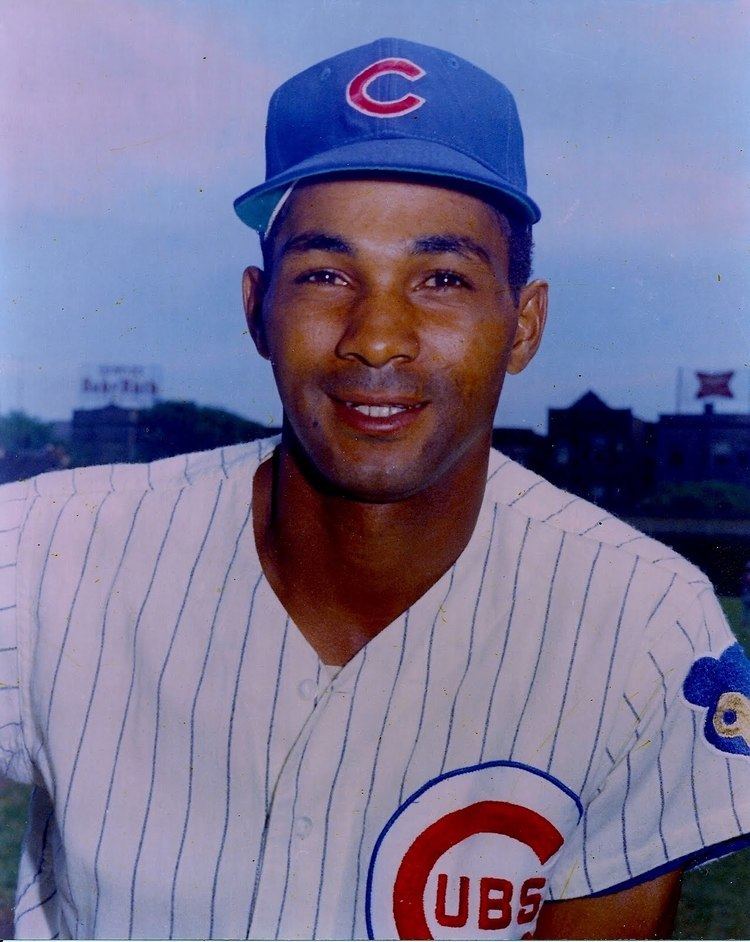
Billy Williams’ story is one of resilience, talent, and quiet greatness. From his humble beginnings in Whistler, Alabama, to his status as a Hall of Fame outfielder, Williams left an indelible mark on the game of baseball. His sweet swing, unmatched durability, and consistent production ensured his place among the sport’s legends. As fans reflect on the rich history of the game, Billy Williams stands as a shining example of what it means to be a professional baseball player. His legacy lives on not only in the record books but also in the hearts of those who had the privilege of watching him play.



 The Baseball Scholar
Leave a comment