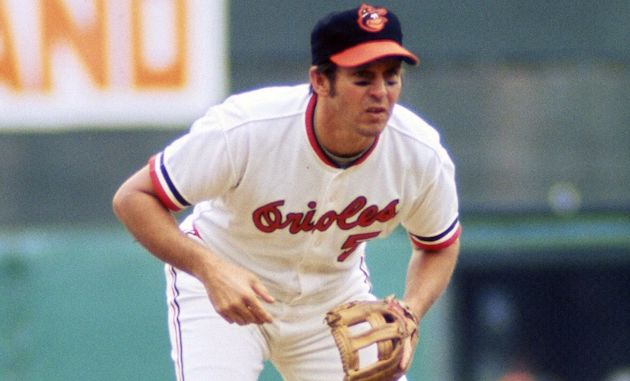
Brooks Robinson, widely regarded as one of the greatest third basemen in Major League Baseball (MLB) history, epitomized the perfect blend of athletic excellence, unwavering dedication, and humility. Over a storied 23-year career with the Baltimore Orioles, Robinson became the gold standard for defensive prowess, earning him the nickname “The Human Vacuum Cleaner.” Beyond his statistical achievements, Robinson’s impact extended into the broader culture of the game, where his sportsmanship, community involvement, and leadership left an indelible mark on baseball.
Brooks Calbert Robinson Jr. was born on May 18, 1937, in Little Rock, Arkansas. Raised in a supportive family, Robinson displayed an early passion for baseball. His father, Brooks Sr., worked as a firefighter and played amateur baseball, influencing young Brooks’s interest in the sport. By his teenage years, Robinson was excelling on the baseball field, demonstrating a natural talent for hitting and fielding.

Robinson attended Little Rock Central High School, where he played multiple sports, including basketball and baseball. However, baseball was his true calling, and his standout performances at the high school level caught the attention of professional scouts. In 1955, at the age of 18, Robinson signed with the Baltimore Orioles as an amateur free agent, embarking on a journey that would define his life and legacy.
Robinson began his professional career in the minor leagues, where his potential as a third baseman was evident despite a raw skill set. He demonstrated an exceptional work ethic, constantly striving to improve his fielding mechanics and develop his offensive abilities. His dedication paid off, and in 1955, he made his MLB debut with the Orioles, marking the beginning of a remarkable two-decade-plus career.
While Robinson’s early years in the majors were marked by inconsistency at the plate, his defensive skills were already beginning to stand out. By the late 1950s, he had secured his role as the Orioles’ everyday third baseman. Robinson’s style of play at third base was revolutionary; he displayed a combination of lightning-quick reflexes, unmatched range, and an uncanny ability to anticipate where the ball would go.
Robinson’s defensive acumen was complemented by his strong and accurate arm, allowing him to make plays that seemed impossible to the average observer. His ability to charge bunts, field hard-hit grounders, and throw out runners with precision became hallmarks of his game. These traits earned him the first of 16 consecutive Gold Glove Awards in 1960, a record for third basemen that still stands today.

As Robinson’s defense reached legendary status, his offensive game also began to improve. He developed into a reliable contact hitter with occasional power, solidifying his position as one of the most complete third basemen in the league. By the early 1960s, Robinson was not just a defensive specialist but an all-around cornerstone for the Orioles.
Robinson’s career reached its peak in the 1960s and early 1970s, a period during which he solidified his reputation as one of the game’s greats. The 1964 season was particularly noteworthy, as Robinson won the American League (AL) Most Valuable Player (MVP) Award. That year, he hit .317 with 28 home runs and 118 runs batted in (RBIs), career highs in each category. His performance at the plate, combined with his unparalleled defense, made him the undisputed leader of the Orioles.
The crowning achievement of Robinson’s career came in the 1970 World Series, where he delivered one of the most dominant performances in postseason history. Facing the Cincinnati Reds, Robinson turned the Fall Classic into a personal showcase of defensive brilliance. He made a series of jaw-dropping plays, including diving stops, barehanded pickups, and throws from impossible angles, each one seemingly more spectacular than the last. His defensive wizardry frustrated the Reds’ hitters and earned him the World Series MVP Award. Robinson also contributed offensively, hitting .429 with two home runs and six RBIs in the series. The Orioles won the championship in five games, and Robinson’s performance remains one of the most celebrated in World Series history.
In addition to his 1970 World Series heroics, Robinson was a key figure in the Orioles’ success throughout the late 1960s and early 1970s. The team won four AL pennants and two World Series titles during his tenure, establishing the Orioles as one of baseball’s premier franchises.

Robinson’s career statistics reflect both his consistency and his ability to excel in high-pressure situations. Over 23 seasons, he compiled 2,848 hits, 268 home runs, 1,357 RBIs, and a .267 batting average. While his offensive numbers were solid, it was his defense that set him apart. He retired as the all-time leader in games played at third base, with 2,870 appearances at the position.
Robinson’s 16 Gold Glove Awards remain an unbroken record for third basemen, and his defensive metrics confirm his unparalleled impact. According to modern analytics, Robinson’s defensive runs saved (DRS) and total zone fielding runs consistently rank among the best in history, further validating his reputation as the greatest defensive third baseman of all time.
In addition to his Gold Gloves and MVP Award, Robinson was an 18-time All-Star, demonstrating his enduring excellence over two decades. He was inducted into the Baseball Hall of Fame in 1983, his first year of eligibility, receiving 92% of the vote.
Robinson’s impact on baseball transcended his on-field achievements. He redefined the third base position, elevating its importance and inspiring future generations of players. Before Robinson, third base was often seen as a less glamorous position compared to shortstop or outfield. His defensive brilliance demonstrated that third base could be a position of artistry and athleticism.

Robinson’s humility and work ethic also left a lasting impression. He was known for his team-first mentality and willingness to mentor younger players, qualities that made him a beloved figure in the Orioles’ clubhouse. His sportsmanship and integrity earned him widespread respect, both from teammates and opponents.
Off the field, Robinson was deeply involved in the Baltimore community. He embraced his role as an ambassador for the game, participating in charitable initiatives and community events. His connection to Baltimore became a defining aspect of his legacy, and he remains one of the most beloved figures in the city’s sports history.
One unique aspect of Robinson’s career was his loyalty to a single team. In an era when free agency was non-existent and trades were common, Robinson spent his entire career with the Orioles, a rarity that endeared him to fans and underscored his commitment to the organization.
Another defining feature of Robinson’s career was his ability to perform under pressure. His 1970 World Series performance is often cited as one of the greatest individual efforts in postseason history, but it was just one example of his ability to rise to the occasion when it mattered most.
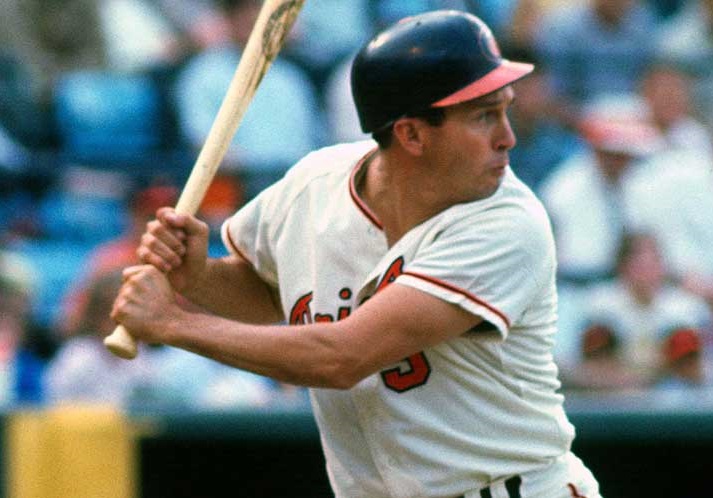
Brooks Robinson’s legacy is one of excellence, humility, and integrity. He set a standard for defensive play that remains unmatched, and his contributions to the Orioles’ success helped establish the franchise as one of baseball’s most respected organizations. Beyond his on-field achievements, Robinson’s character and dedication to the game left an indelible mark on baseball.
Today, Robinson is celebrated as a symbol of what baseball represents at its best. His commitment to excellence, both as a player and as a person, serves as an enduring example for players and fans alike. His name is synonymous with the highest ideals of the sport, and his influence continues to be felt in the generations of players who followed in his footsteps.
Brooks Robinson’s MLB career was a testament to the power of hard work, dedication, and integrity. His defensive brilliance, offensive consistency, and leadership made him one of the greatest players in baseball history. While his statistics and accolades speak volumes, it is his character and impact on the game that truly define his legacy. Robinson’s story is one of inspiration, reminding us of the timeless values that make baseball the cherished sport it is today.



 The Baseball Scholar
Leave a comment