
Eddie Plank is one of the most influential yet often underappreciated players in the history of Major League Baseball. His career spanned two decades, from 1901 to 1917, and during that time, he earned a place as one of the game’s most accomplished pitchers. Plank’s mastery on the mound and his steady contributions to some of the early 20th-century baseball teams, particularly with the Philadelphia Athletics, cemented his place in baseball history.
Born on August 31, 1875, in Gettysburg, Pennsylvania, Eddie Plank’s entry into the world of baseball was not the product of a meteoric rise or a high-profile, early start. Raised on a farm, Plank’s upbringing was far from glamorous. His formative years were spent in the rural surroundings of Gettysburg, where he developed an affinity for sports, particularly baseball. His initial exposure to baseball came through amateur leagues and local games, where he honed the skills that would make him a formidable force on the mound in professional baseball. He attended Gettysburg College, a small school with no major baseball program, but it was here that Plank developed his love for the game and a reputation for his powerful pitching.

Before breaking into the majors, Plank spent some time playing in the minor leagues. He played for teams like the Norfolk, Virginia team, where he began to develop a reputation for his fastball and control. His time in the minor leagues was relatively undistinguished in terms of national attention, but it gave him the experience and opportunity to refine his skills. His ability to throw strikes with precision, his steady velocity, and his remarkable composure on the mound set the stage for his future success in the majors.
Plank’s breakthrough came in 1901 when he was signed by the Philadelphia Athletics. Under the guidance of Hall of Fame manager Connie Mack, who recognized Plank’s potential, he began to grow into one of the league’s premier pitchers. Mack’s trust in Plank would prove to be pivotal in the young pitcher’s development, as the manager was known for allowing his pitchers to mature without excessive pressure. This trust paid off quickly, and by his second season in the majors, Plank had established himself as a key component of the Athletics’ pitching staff.
Throughout his career, Eddie Plank amassed remarkable statistics that are still respected in the baseball world today. Over his 17-year career, Plank compiled a total of 326 wins, ranking him among the all-time leaders in that category. His win total is one of the most significant achievements of his career, showcasing his consistency and durability over the course of a long and successful tenure in the major leagues. Plank’s win total places him among the top pitchers in baseball history and underscores his importance to the teams he played for.
In addition to his wins, Plank accumulated a career earned run average (ERA) of 2.35. For a pitcher who played during an era when offensive production was generally higher than it would be in later decades, Plank’s ERA speaks volumes about his dominance on the mound. To put this into context, the league ERA in the early 1900s was often well above 3.00, making Plank’s 2.35 ERA one of the best in the game during his time. His ability to limit opposing batters and control the pace of the game allowed him to establish himself as a pitcher who could excel in a variety of game situations.
Plank’s career strikeout total of 2,496 further illustrates his effectiveness. Though he was not known for the overpowering strikeouts of later pitchers like Sandy Koufax or Nolan Ryan, Plank’s ability to strike out batters at such a high rate for his era is a testament to his mastery of pitching technique. His strikeouts were often the result of his pinpoint control and his ability to manipulate the ball with different pitches. His curveball, in particular, became one of his signature offerings, a pitch that kept hitters off balance and often resulted in weak contact or swings and misses.
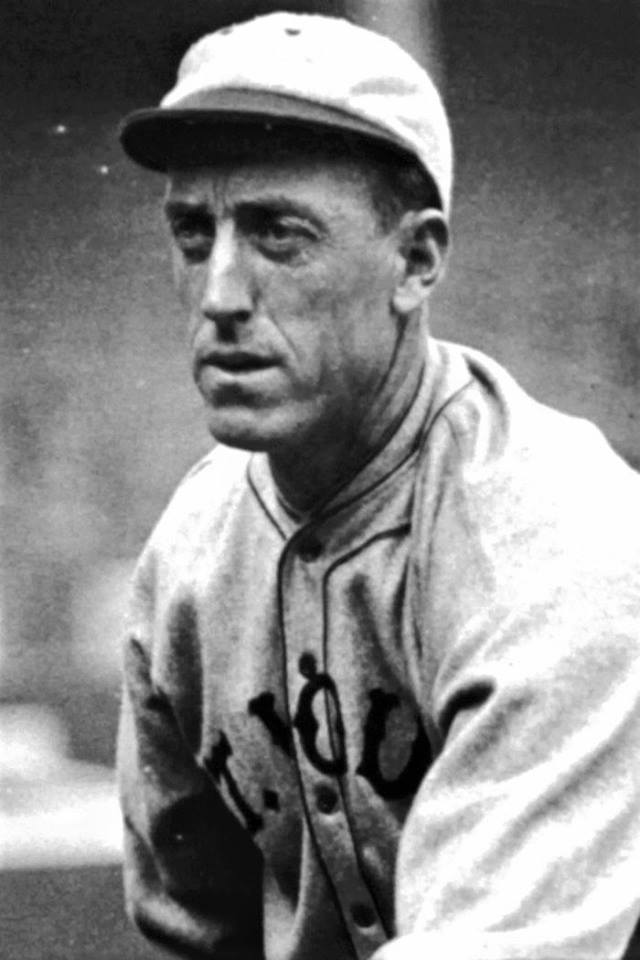
Plank’s strikeouts, along with his consistent performance, were a major reason why he became a reliable workhorse for his teams, often leading the league in innings pitched. His ability to throw long outings and consistently deliver quality starts made him an invaluable asset to the teams he played for, especially the Athletics, who benefited greatly from his contributions on the mound.
While statistics form the backbone of Eddie Plank’s career, it is the stories and moments that shape the narrative of his legacy. Plank was known for his cool-headed demeanor on the mound, which was crucial in his success. One of the most significant moments in Plank’s career came in the 1910 World Series, when the Philadelphia Athletics squared off against the Chicago Cubs. In a pivotal Game 1, Plank delivered a brilliant pitching performance, going the distance to help the Athletics secure a 2-1 victory. His ability to rise to the occasion in such an important game demonstrated his resilience and ability to perform under pressure.
Another moment that solidified Plank’s place in baseball history occurred in 1913, when he secured his 300th career win. This milestone was particularly significant because it placed him among the elite pitchers of his era, earning him respect from both teammates and opponents alike. His 300th win was a testament to his longevity, skill, and ability to stay relevant in a sport that was evolving rapidly during the early 20th century. He would finish his career with 326 wins, but it was that 300th victory that marked him as one of the true legends of the game.
Though his pitching was often the highlight, Plank’s competitiveness and grit were evident throughout his career. Stories from teammates and opponents alike tell of a pitcher who was not easily rattled. One famous anecdote involves Plank’s time on the mound during a tense game in 1914. Despite being visibly ill, Plank pitched a complete game, earning a shutout and leading the Athletics to a victory. His resilience in the face of adversity was a characteristic that endeared him to his teammates and earned him the admiration of baseball fans.
Plank’s time with the Athletics also coincided with the team’s dominance in the early 1910s. Under Connie Mack’s management, the Athletics won three World Series championships (1910, 1911, and 1913). Plank was integral to the team’s success, serving as one of their key pitchers alongside stars like Chief Bender and Rube Waddell. His role in these championship seasons only further solidified his legacy as one of the premier pitchers of his era.
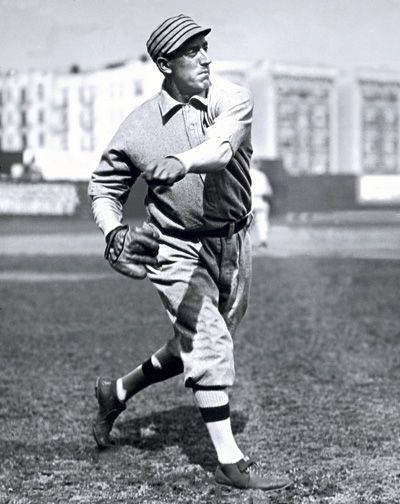
Beyond his individual achievements and contributions to his teams, Eddie Plank’s impact on baseball can be seen in his role as a pioneer of pitching technique and his influence on future generations of pitchers. During an era when pitchers often threw overhand in a manner that was less refined, Plank’s mastery of the curveball and his ability to vary his pitches helped shape the future of pitching. His precision and control set a standard for pitchers who would follow, influencing the development of pitching mechanics and strategy for years to come.
Plank’s role as a mentor and leader in the Athletics’ clubhouse also had a lasting impact. He was respected not only for his talent but for his knowledge of the game and his willingness to teach younger pitchers. His leadership helped shape the careers of many of the Athletics’ pitchers, and his guidance was crucial in the development of future Hall of Fame players who would follow in his footsteps.
Moreover, Plank’s success at a time when the game was rapidly evolving from the early “dead-ball” era to the “live-ball” era speaks to his adaptability. He was able to maintain his effectiveness through changes in the style of play, making him a valuable asset to his teams for nearly two decades. This ability to evolve and succeed during different phases of the game is part of what makes Plank’s career so remarkable.
One of the most unique aspects of Eddie Plank’s life was his humble background. Coming from a farm in Gettysburg, Pennsylvania, Plank did not fit the mold of the polished, high-profile baseball star that many other players of his era embodied. His work ethic, quiet confidence, and dedication to his craft set him apart as someone who let his performance on the field do the talking. In an era when some players sought fame and attention, Plank remained a more reserved figure, focusing on his work on the mound rather than seeking the limelight.
Additionally, Plank’s longevity in the game is a rare feat. While the average career length of a pitcher in the early 20th century was often much shorter, Plank managed to maintain his high level of performance for nearly two decades. This longevity is a testament to his physical conditioning, his skill in adapting to changes in the game, and his mental toughness.

Plank’s career also saw him play for the St. Louis Terriers for a brief period near the end of his career, a move that is often overlooked in discussions of his legacy. However, his time with the Terriers allowed him to continue pitching at a high level even as his time with the Athletics was winding down. His time in St. Louis marked the end of a remarkable career that spanned some of the most exciting and transformative years in baseball history.
Eddie Plank’s career is one of the most fascinating and impactful in the history of Major League Baseball. With his impressive statistical achievements, remarkable performances in key moments, and lasting influence on the game, Plank earned his place among the greats of the sport. His career was defined not only by his ability to dominate on the mound but also by his humility, leadership, and adaptability. Through his contributions to the Philadelphia Athletics’ World Series victories and his influence on the development of pitching, Eddie Plank left an indelible mark on the game of baseball. His career is a reminder that greatness is not always defined by flashy moments or national attention, but by consistency, skill, and the lasting impact a player has on the sport they love.


 The Baseball Scholar
Leave a comment