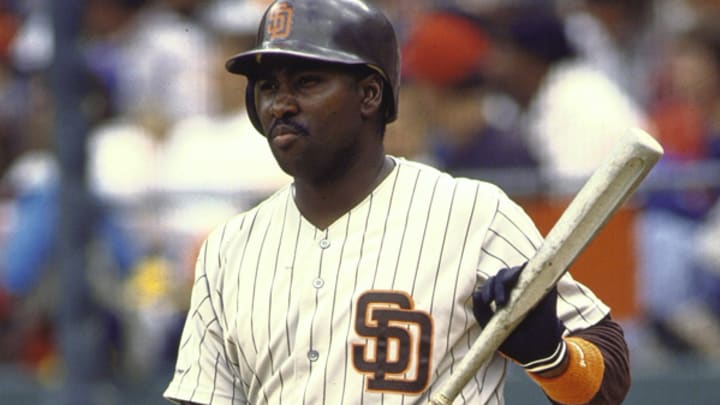
Tony Gwynn, affectionately known as “Mr. Padre,” stands as one of the most accomplished and beloved figures in Major League Baseball (MLB) history. Over a 20-year career, Gwynn redefined the art of hitting while exemplifying professionalism, consistency, and dedication to the game. His remarkable journey from a multi-sport collegiate athlete to a first-ballot Hall of Famer is a testament to his unparalleled work ethic and love for baseball.
Tony Gwynn was born on May 9, 1960, in Los Angeles, California. Raised in a close-knit family, Gwynn grew up with a strong support system that emphasized education and hard work. Sports played a central role in his early life, with Gwynn excelling in both basketball and baseball during his high school years. He attended Long Beach Polytechnic High School, where his athletic prowess quickly became evident.

After high school, Gwynn attended San Diego State University (SDSU) on a basketball scholarship. Although basketball initially seemed to be his primary focus, baseball soon emerged as his true passion. Gwynn played both sports at SDSU, becoming a standout in each. His quick reflexes, hand-eye coordination, and ability to analyze situations on the court translated seamlessly to the baseball diamond. By his junior year, he was a two-time All-American in baseball and a record-setting assist leader in basketball.
Gwynn’s decision to pursue a professional baseball career was solidified when he was selected by the San Diego Padres in the third round of the 1981 MLB Draft. Interestingly, the NBA’s San Diego Clippers also drafted him on the same day, but Gwynn chose baseball, a decision that would lead to one of the most iconic careers in MLB history.
Gwynn made his MLB debut on July 19, 1982, for the San Diego Padres, and it didn’t take long for him to make an impact. In his rookie season, he showcased his natural hitting ability, batting .289 in 54 games. It was clear from the outset that Gwynn possessed a unique combination of discipline, precision, and an innate understanding of the strike zone.
By 1984, Gwynn had firmly established himself as one of the game’s premier hitters. That year, he won his first National League (NL) batting title with a .351 average, helping the Padres clinch their first-ever NL pennant. Gwynn’s ability to hit for average, combined with his speed on the basepaths and excellent defense in right field, made him an all-around player. The Padres reached the World Series in 1984 but fell to the Detroit Tigers. Despite the loss, Gwynn’s performance solidified his status as a rising star in the league.
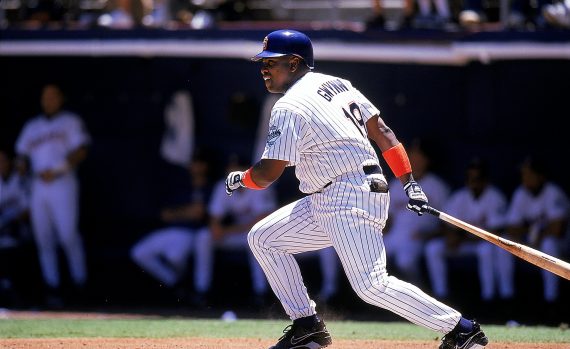
Tony Gwynn’s career statistics are a testament to his extraordinary consistency and skill as a hitter. Over 20 seasons, all with the Padres, he amassed 3,141 hits, a .338 career batting average, and eight NL batting titles. His .338 career average ranks among the highest in the modern era, and he remains one of the few players to achieve a batting average above .350 in multiple seasons.
Perhaps the most striking aspect of Gwynn’s career is his mastery of contact hitting. He struck out just 434 times in 9,288 at-bats, an astonishing ratio in an era increasingly defined by power hitting and strikeouts. His ability to consistently put the ball in play made him a nightmare for opposing pitchers and a linchpin in the Padres’ lineup.
Gwynn’s eight batting titles, won between 1984 and 1997, are tied for the second-most in MLB history. His highest single-season batting average came in 1994, when he hit an incredible .394. That year, Gwynn came tantalizingly close to becoming the first player since Ted Williams in 1941 to hit .400. The season was cut short by a players’ strike, leaving fans to wonder what might have been. Nonetheless, his .394 average remains one of the highest marks in modern baseball history.
Gwynn was also a 15-time All-Star and a five-time Gold Glove winner, demonstrating his value as a complete player. While he was not known for his power, hitting just 135 home runs in his career, his ability to drive in runs and set the table for teammates was unparalleled. Gwynn’s 1,138 RBIs and 1,383 runs scored reflect his consistent contributions to the Padres’ offense.

Throughout his career, Gwynn delivered numerous memorable performances that showcased his brilliance as a hitter. One of his most dominant stretches came during the 1993 season, when he recorded a 25-game hitting streak, a career-high. Gwynn’s consistency during this streak epitomized his ability to make adjustments and find success against a wide range of pitchers.
Gwynn’s postseason performances also stand out, particularly his showing in the 1998 World Series against the New York Yankees. Although the Padres were swept in four games, Gwynn hit .500 in the series, including a memorable home run off the Yankees’ David Wells in Game 1. His performance in the 1998 playoffs was a reminder of his ability to rise to the occasion on the sport’s biggest stage.
Another remarkable feat occurred in 1997, when Gwynn recorded his 3,000th career hit. The milestone came on August 6 against the Montreal Expos, solidifying his place among baseball’s all-time greats. Gwynn’s milestone was celebrated not only by Padres fans but by the entire baseball community, as his humility and dedication to the game had earned him widespread admiration.
Tony Gwynn’s success at the plate was rooted in an obsessive commitment to studying the craft of hitting. He was one of the first players to embrace video analysis, using it to dissect his swing and study opposing pitchers. Gwynn’s meticulous preparation set him apart from his peers and allowed him to make constant adjustments, even as the game evolved.
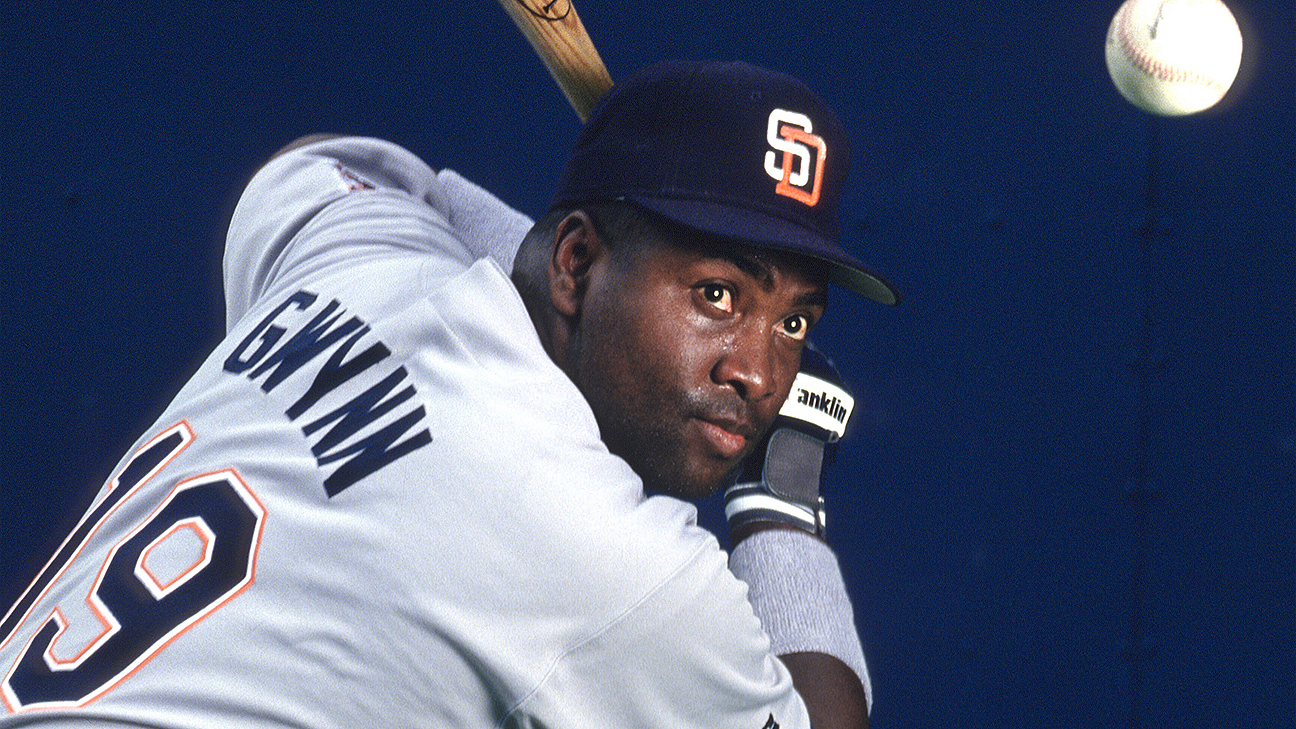
Gwynn’s swing was a model of simplicity and efficiency. He kept his mechanics consistent, focusing on maintaining a compact swing and a keen eye for the strike zone. His ability to hit to all fields made him unpredictable and difficult to defend. Whether pulling the ball down the line or slapping a pitch the other way, Gwynn’s versatility as a hitter was unmatched.
Tony Gwynn’s impact on baseball extends far beyond his statistical achievements. He was a beacon of consistency in an era increasingly dominated by home runs and strikeouts. Gwynn’s dedication to contact hitting and his ability to consistently hit for average served as a reminder of the artistry of the game.
Off the field, Gwynn’s humility and approachability endeared him to fans and teammates alike. He was a consummate professional who prioritized the team’s success over individual accolades. Gwynn’s loyalty to the Padres, spending his entire career with one franchise, is a rarity in modern sports and further cements his legacy as “Mr. Padre.”
Gwynn’s influence on younger players is another significant aspect of his legacy. Many hitters have cited him as an inspiration, pointing to his work ethic and meticulous approach as a model to follow. Gwynn’s passion for teaching continued after his playing days, as he served as the head baseball coach at his alma mater, SDSU, where he mentored future MLB players, including Stephen Strasburg.
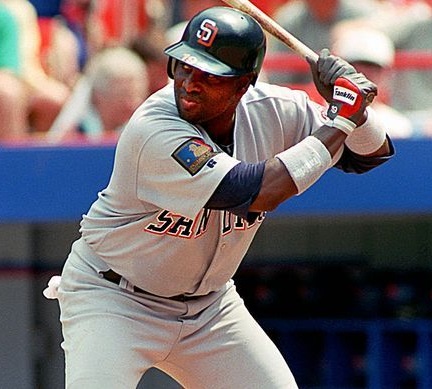
Tony Gwynn retired after the 2001 season, leaving behind a legacy as one of the greatest hitters in MLB history. In 2007, he was inducted into the Baseball Hall of Fame in his first year of eligibility, receiving 97.6% of the vote. His induction was a celebration of not only his incredible achievements on the field but also his character and contributions to the game.
Tragically, Gwynn passed away on June 16, 2014, at the age of 54, after a battle with cancer. His death was a profound loss for the baseball community, but his legacy endures through the countless players, coaches, and fans he inspired. The Padres honored Gwynn’s memory by retiring his No. 19 jersey and dedicating a statue to him at Petco Park, ensuring that his contributions to the game will never be forgotten.
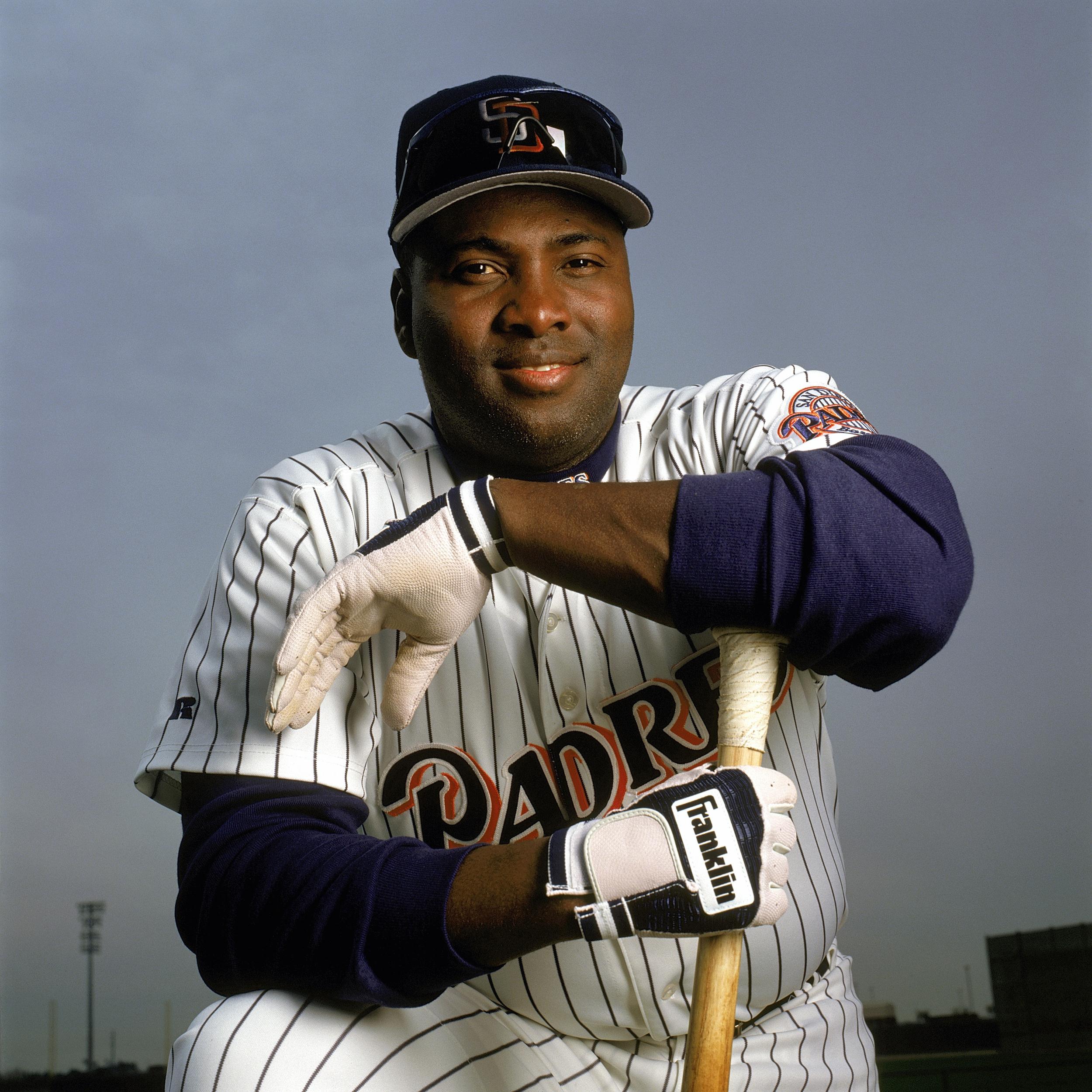
Tony Gwynn’s career is a shining example of excellence, dedication, and love for the game of baseball. From his early days as a multi-sport athlete to his two-decade tenure as the face of the San Diego Padres, Gwynn’s journey is a testament to the power of hard work and passion. His statistical achievements, including a .338 career batting average and eight batting titles, place him among the all-time greats, while his influence on the game’s culture and his unwavering professionalism have left an indelible mark on baseball. Tony Gwynn’s legacy will forever be celebrated as that of a true master of his craft and one of the most iconic figures in MLB history.



 The Baseball Scholar
Leave a comment