
Hank Greenberg, also known as “Hammerin’ Hank,” stands as one of the most impactful and influential players in the history of Major League Baseball (MLB). His career, which spanned 13 seasons, was defined by extraordinary hitting prowess, resilience in the face of adversity, and a profound cultural impact, particularly for Jewish Americans during a time of heightened anti-Semitism. Greenberg’s legacy extends beyond his towering home runs and gaudy statistics; he served as a beacon of hope and pride for an entire community and helped shape the perception of baseball as a unifying force in American society.
Henry Benjamin Greenberg was born on January 1, 1911, in Greenwich Village, New York City, to Romanian Jewish immigrants. Growing up in a working-class household, Greenberg’s early life was marked by the challenges of balancing his cultural identity with his aspirations in a predominantly non-Jewish society. Despite facing anti-Semitic prejudices, Greenberg’s family instilled in him a strong sense of pride and resilience.
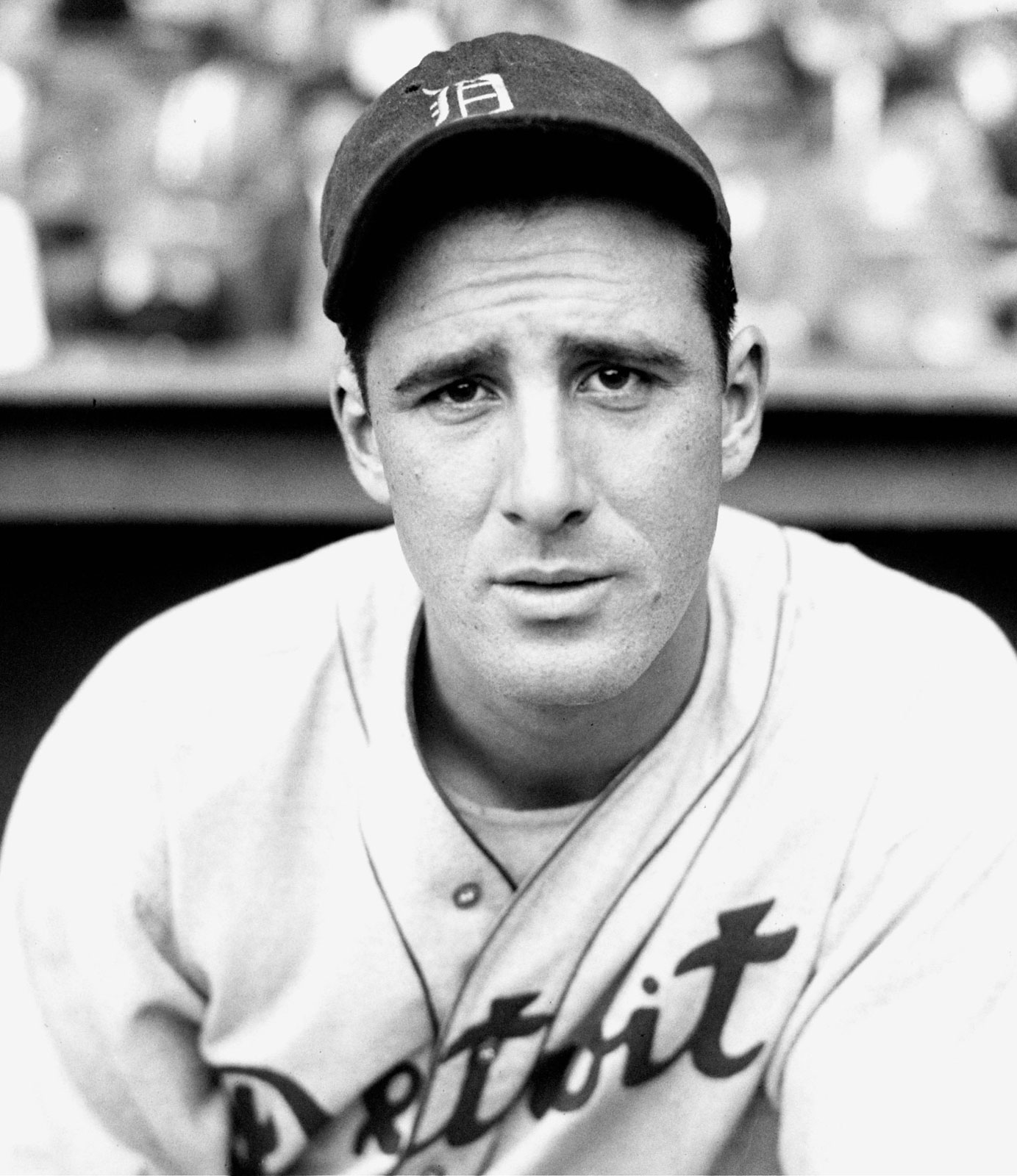
As a child, Greenberg displayed natural athleticism and gravitated toward sports, excelling in baseball, basketball, and soccer. His towering frame and physical strength made him a standout on the baseball diamond, and he quickly gained a reputation as a fearsome hitter in local leagues. Greenberg attended James Monroe High School in the Bronx, where he further honed his skills and caught the attention of college scouts. After a brief stint at New York University, Greenberg was signed by the Detroit Tigers in 1929, beginning his journey toward baseball greatness.
Greenberg made his MLB debut with the Detroit Tigers in 1930 but played only a single game that season. It wasn’t until 1933 that he became a regular in the Tigers’ lineup, and he wasted little time establishing himself as one of the league’s premier power hitters. In his first full season, Greenberg hit .301 with 12 home runs and 87 RBIs, providing a glimpse of the dominance that would define his career.
By 1934, Greenberg had emerged as a cornerstone of the Tigers’ offense. That year, he hit .339 with 26 home runs and 139 RBIs, helping Detroit capture the American League pennant. Though the Tigers fell short in the World Series against the St. Louis Cardinals, Greenberg’s performance cemented his status as one of the most feared hitters in baseball. His ability to drive in runs with consistency and hit for both average and power made him an invaluable asset to the team.
The mid-1930s marked the peak of Greenberg’s career and established him as one of the most dominant players of his era. In 1935, Greenberg delivered one of the finest seasons in baseball history, batting .328 with 36 home runs and a league-leading 170 RBIs. His offensive production propelled the Tigers to their first-ever World Series championship, where they defeated the Chicago Cubs in six games. Greenberg’s contributions to the team’s success earned him the American League MVP Award, solidifying his reputation as a premier slugger.
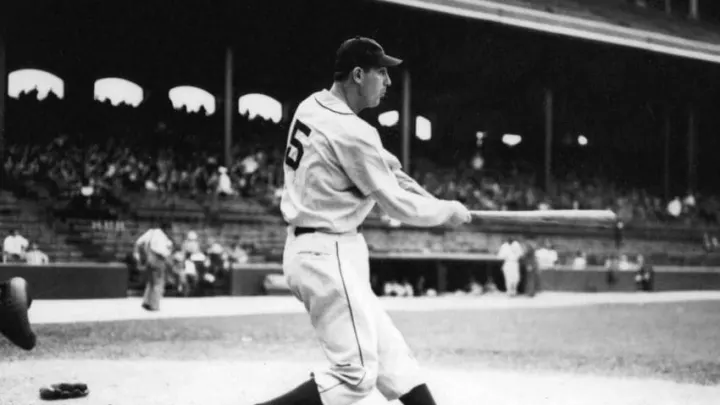
Greenberg’s most iconic season came in 1938 when he hit 58 home runs, falling just two shy of Babe Ruth’s single-season record of 60. Despite facing intense scrutiny and pressure, Greenberg maintained remarkable consistency at the plate, finishing the season with a .315 batting average and 146 RBIs. His pursuit of Ruth’s record captivated fans and drew national attention, though he later revealed that anti-Semitic sentiment among certain pitchers likely played a role in his failure to surpass the mark.
The following year, Greenberg achieved another milestone by becoming the first player in baseball history to win MVP Awards at two different positions. After moving from first base to left field to accommodate the Tigers’ roster needs, Greenberg responded by hitting .312 with 33 home runs and 112 RBIs, demonstrating his versatility and commitment to team success.
Greenberg’s career was interrupted by World War II, a sacrifice that underscored his sense of duty and patriotism. In 1941, with the United States on the brink of entering the war, Greenberg became the first major league player to voluntarily enlist in the military. His decision to leave behind a lucrative baseball career to serve his country was widely admired, further elevating his status as a role model and leader.
Greenberg served in the U.S. Army Air Forces for nearly four years, missing the 1942, 1943, and 1944 seasons, as well as most of the 1945 campaign. Despite the interruption, Greenberg returned to the Tigers in July 1945 and made an immediate impact. In a remarkable display of resilience and determination, Greenberg hit a dramatic grand slam on the final day of the regular season to clinch the American League pennant for Detroit. He followed up with a stellar performance in the World Series, batting .304 with two home runs and seven RBIs as the Tigers defeated the Chicago Cubs in seven games.
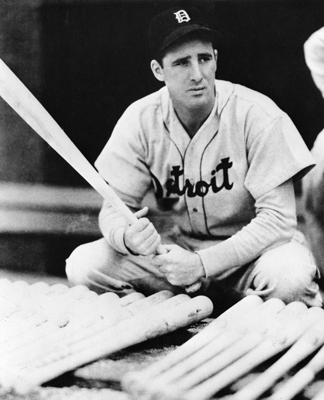
Greenberg’s final years in baseball were marked by continued excellence, though injuries and the physical toll of military service began to take their toll. After the 1946 season, he was traded to the Pittsburgh Pirates, where he played one final season before retiring in 1947. Even in his final campaign, Greenberg remained a productive hitter, finishing with a .249 batting average, 25 home runs, and 81 RBIs.
Over the course of his career, Greenberg compiled a .313 batting average, 331 home runs, and 1,276 RBIs in 1,394 games. His .605 career slugging percentage ranks among the highest in MLB history, a testament to his extraordinary power and consistency at the plate. Despite losing four prime years to military service, Greenberg’s statistical achievements place him among the all-time greats.
Hank Greenberg’s impact on baseball extended far beyond his on-field accomplishments. As one of the first Jewish superstars in professional sports, Greenberg became a symbol of pride and resilience for Jewish Americans during a time of widespread anti-Semitism. His ability to excel in the face of prejudice and discrimination inspired countless fans and demonstrated the unifying power of baseball as a cultural institution.
Greenberg’s decision to sit out games on Yom Kippur, even during a pennant race, further underscored his commitment to his faith and principles. This act of religious observance resonated deeply with fans of all backgrounds and established Greenberg as a trailblazer for athletes who sought to balance their cultural identities with their professional responsibilities.

In addition to his cultural significance, Greenberg played a key role in promoting racial integration in baseball. As a teammate and mentor to Jackie Robinson during spring training in 1947, Greenberg offered support and encouragement to the first African American player in the modern era. His actions reflected a broader commitment to equality and social justice, values that continue to define his legacy.
Hank Greenberg was inducted into the Baseball Hall of Fame in 1956, an honor that recognized both his statistical achievements and his enduring impact on the game. His legacy as one of the greatest hitters in baseball history is complemented by his role as a cultural icon and advocate for social change.
Greenberg’s influence can be seen in the generations of players who followed in his footsteps, particularly those from minority backgrounds who viewed him as a trailblazer and inspiration. His story serves as a reminder of the power of perseverance, integrity, and resilience in the face of adversity.

Hank Greenberg’s career stands as a testament to the transformative power of sports. Through his extraordinary talent, unwavering principles, and commitment to excellence, Greenberg transcended the boundaries of the baseball diamond and became a symbol of hope and pride for millions. His legacy as one of the greatest hitters in MLB history is matched only by his impact as a cultural and social pioneer, ensuring that his contributions to the game will be remembered for generations to come.


 The Baseball Scholar
Leave a comment