
Hal Newhouser, one of the most dominant pitchers of his era, carved out an illustrious Major League Baseball (MLB) career that spanned 17 seasons, from 1939 to 1955. Known for his incredible left-handed arm, fierce competitiveness, and unwavering consistency, Newhouser became a household name during the 1940s. His achievements on the field not only earned him a place in the Baseball Hall of Fame but also solidified his status as one of the greatest pitchers of all time.
Hal Newhouser was born on May 20, 1921, in Detroit, Michigan. Raised in a working-class family, Newhouser grew up in the shadows of Briggs Stadium (later Tiger Stadium), where he would one day achieve legendary status. From an early age, he displayed a natural aptitude for sports, particularly baseball, and his exceptional arm strength quickly became evident. Encouraged by his family and local coaches, Newhouser began honing his craft as a pitcher, developing a fastball that would later become one of his most devastating weapons.

As a teenager, Newhouser attended Wilbur Wright High School in Detroit, where he excelled in athletics. His dominance on the baseball diamond attracted the attention of scouts, and by the time he graduated in 1939, he was regarded as one of the most promising young pitchers in the country. That same year, Newhouser signed with his hometown Detroit Tigers, fulfilling a lifelong dream and setting the stage for one of the most remarkable careers in MLB history.
Newhouser made his major league debut with the Tigers in September 1939 at the age of 18. Despite his youth, he quickly demonstrated his potential, showcasing a blazing fastball and a curveball that kept opposing hitters off balance. However, the early years of his career were marked by inconsistency and growing pains, as he struggled to refine his command and adapt to the rigors of the big leagues. From 1939 to 1942, Newhouser posted a combined 34-52 record with a 4.50 ERA, often plagued by control issues and a lack of run support from his teammates.
The challenges of his early career, however, served as a valuable learning experience for Newhouser. Under the guidance of Tigers manager Del Baker and pitching coach George Uhle, he worked tirelessly to improve his mechanics and develop a more effective changeup. By the end of the 1942 season, Newhouser had begun to show signs of the brilliance that would later define his career.
The years 1944 to 1946 marked the pinnacle of Hal Newhouser’s career, as he established himself as the most dominant pitcher in baseball during that period. This stretch coincided with World War II, when many of the league’s star players were serving in the military. While some critics have argued that Newhouser’s dominance was aided by the absence of top-tier competition, his remarkable performances during these years stand as a testament to his talent and work ethic.
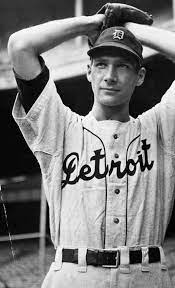
In 1944, Newhouser enjoyed a breakout season, leading the American League (AL) in wins (29), innings pitched (312.1), and strikeouts (187). He posted a 2.22 ERA and completed 25 of his 33 starts, earning his first American League Most Valuable Player (MVP) award. His 29 victories remain one of the highest single-season win totals in MLB history and underscored his ability to carry the Tigers’ pitching staff on his shoulders.
Newhouser’s success reached even greater heights in 1945, a season in which he led the Tigers to their first World Series championship since 1935. He finished the regular season with a 25-9 record, a league-leading 1.81 ERA, and 212 strikeouts over 313.1 innings. Newhouser’s dominance earned him a second consecutive AL MVP award, making him the first and only pitcher in history to win the award in back-to-back years. His performance in the postseason was equally impressive, as he pitched two complete-game victories in the World Series against the Chicago Cubs, including a decisive Game 7 victory that cemented his place in Detroit sports lore.
In 1946, Newhouser continued his dominance, posting a 26-9 record with a 1.94 ERA and 275 strikeouts. He led the league in wins, ERA, strikeouts, and complete games, securing the pitching Triple Crown. While he did not win the MVP award that season, his sustained excellence reaffirmed his status as the premier pitcher of his generation.
Over the course of his 17-year MLB career, Hal Newhouser compiled a 207-150 record, a 3.06 ERA, and 1,796 strikeouts in 2,993 innings pitched. He recorded 212 complete games, including 33 shutouts, and was a six-time All-Star. His achievements during his peak years—three consecutive 20-win seasons, two MVP awards, and a World Series championship—solidify his place among the all-time greats.

Newhouser’s career WAR (Wins Above Replacement) of 63.0 further underscores his value and impact on the game. His ability to dominate opposing hitters, even in an era of fluctuating competition levels, made him a cornerstone of the Tigers’ success during the 1940s. In 1992, Newhouser was inducted into the Baseball Hall of Fame, an honor that recognized his contributions to the sport and his enduring legacy.
Like many players of his era, Newhouser faced his share of challenges, both on and off the field. The post-war years brought a resurgence of talent to the major leagues, and Newhouser had to adapt to the increased level of competition. Injuries also began to take a toll on his performance, and his effectiveness gradually declined during the late 1940s and early 1950s.
Despite these obstacles, Newhouser’s determination and love for the game never wavered. He continued to contribute as a reliable veteran presence for the Tigers and later for the Cleveland Indians, with whom he played his final MLB season in 1955. His resilience in the face of adversity served as an inspiration to his teammates and fans alike.
Hal Newhouser’s impact on baseball extends beyond his on-field accomplishments. As one of the first great left-handed pitchers of the modern era, he set a standard of excellence that inspired future generations of pitchers. His dominance during the 1940s helped popularize the idea of the “ace” pitcher—a player who could single-handedly influence the outcome of a game or a season.

Newhouser’s legacy is also tied to his role as a trailblazer for player development and scouting. After retiring as a player, he worked as a scout for several MLB teams, including the Houston Astros, where he played a pivotal role in the signing of Hall of Fame pitcher Nolan Ryan. His keen eye for talent and deep understanding of the game allowed him to continue contributing to baseball long after his playing days were over.
Hal Newhouser’s MLB career is a story of talent, perseverance, and excellence. From his humble beginnings in Detroit to his rise as the premier pitcher of the 1940s, Newhouser’s journey reflects the values of hard work and dedication that define the game of baseball. His statistical achievements, including two MVP awards, three 20-win seasons, and a World Series championship, place him among the sport’s all-time greats. Beyond the numbers, Newhouser’s impact on the game is evident in the generations of players he inspired and the legacy he left as a player, mentor, and scout.

As one of baseball’s true legends, Hal Newhouser’s contributions to the sport continue to be celebrated and remembered. His story serves as a reminder of the enduring power of passion and perseverance, and his place in the annals of baseball history is forever secure.


 The Baseball Scholar
Leave a comment