
Bobby Grich’s Major League Baseball (MLB) career is one that often flies under the radar when discussing the game’s all-time greats, yet his accomplishments and impact on baseball cannot be understated. Known for his exceptional defensive skills, offensive contributions, and overall versatility as a second baseman, Grich carved out a legacy as one of the finest players of his era. His career, which spanned from 1970 to 1986, demonstrated a rare combination of power, patience, and defensive excellence, making him a cornerstone player for the Baltimore Orioles and California Angels. Exploring his early life, career achievements, standout moments, and broader impact on the sport offers a comprehensive understanding of why Bobby Grich deserves recognition among the game’s elite.
Robert Anthony Grich was born on January 15, 1949, in Muskegon, Michigan. Shortly after his birth, his family relocated to Southern California, where Grich grew up in the baseball-rich environment of Long Beach. As a child, Grich displayed a natural affinity for athletics, gravitating toward baseball as his sport of choice. The competitive baseball culture of Southern California, coupled with Grich’s dedication, helped mold him into a standout player.

Grich attended Woodrow Wilson High School in Long Beach, where his talent became undeniable. He excelled as a shortstop and demonstrated leadership on and off the field, qualities that would serve him well throughout his career. His outstanding play earned him a spot at Long Beach City College, where he continued to develop his skills and attract the attention of professional scouts.
In 1967, the Baltimore Orioles selected Grich in the first round of the MLB Draft. This marked the beginning of a professional journey that would see Grich ascend from a promising young prospect to one of the best all-around players in baseball.
Grich made his MLB debut with the Baltimore Orioles on June 29, 1970. At the time, the Orioles were one of the most dominant teams in baseball, boasting a roster filled with stars like Brooks Robinson, Frank Robinson, and Jim Palmer. Breaking into such a talented lineup was no easy task, but Grich’s versatility and work ethic allowed him to earn playing time as a utility infielder.
In his rookie season, Grich played in 30 games, primarily as a backup. Though his offensive numbers were modest, he impressed coaches and teammates with his defensive acumen and baseball IQ. The Orioles recognized that they had a special talent in Grich, and they began to see him as a potential long-term solution at second base.
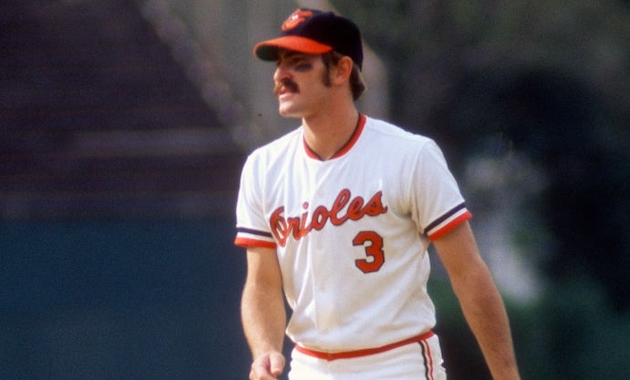
Grich spent most of the 1971 season in the minors but returned to the Orioles full-time in 1972. That year marked the beginning of his emergence as an everyday player. Grich hit .278 with 12 home runs and 50 RBIs in 129 games, showcasing his ability to contribute offensively while playing outstanding defense. His performance earned him a spot on the American League All-Star team, the first of many accolades in his career.
Bobby Grich’s defensive prowess was a hallmark of his career. As a second baseman, he combined athleticism, instinct, and intelligence to become one of the finest defenders in the history of the position. Grich’s ability to turn double plays, cover ground in the infield, and make difficult plays look routine set him apart from his peers.
Grich won four Gold Glove Awards during his career, capturing the honor in 1973, 1974, 1975, and 1976. His defensive metrics, even by modern standards, highlight his elite skills. Grich consistently ranked among the league leaders in defensive runs saved, range factor, and fielding percentage. His ability to anticipate plays and position himself effectively was a key factor in his success, and he earned the respect of pitchers and teammates for his reliability in the field.
In an era where defensive statistics were not as widely recognized as they are today, Grich’s contributions often went underappreciated. However, advanced metrics developed in later years have only reinforced his status as one of the greatest defensive second basemen in baseball history.

While Grich’s defensive abilities were extraordinary, he was far from a one-dimensional player. His offensive contributions were equally significant, particularly for a middle infielder. Over the course of his 17-year career, Grich posted a .266 batting average, a .371 on-base percentage, and a .424 slugging percentage. He hit 224 home runs, drove in 864 runs, and scored 1,033 runs.
Grich’s offensive profile was defined by his power and plate discipline. He was one of the first second basemen to consistently hit for power, reaching double-digit home run totals in 11 seasons. His career-high came in 1979 when he hit 30 home runs for the Angels, leading the league in the category and proving that he could be a middle-of-the-order threat.
In addition to his power, Grich had an exceptional eye at the plate. He drew 1,087 walks during his career, often ranking among the league leaders in on-base percentage. His ability to get on base and work deep counts made him a valuable asset in any lineup. Grich’s combination of power and patience was ahead of its time and would be highly valued in today’s analytical era.
Grich’s offensive contributions were also evident in his postseason performances. He played in five American League Championship Series and the 1979 World Series, delivering key hits and showcasing his ability to perform under pressure. Although he never won a World Series championship, his postseason contributions were an essential part of his legacy.

In 1976, Bobby Grich became a free agent, and the California Angels signed him to a lucrative contract. The move marked a new chapter in Grich’s career as he joined a team eager to establish itself as a contender in the American League. Grich’s presence provided stability and leadership to the Angels, who were building a roster that included future Hall of Famer Rod Carew and ace pitcher Nolan Ryan.
Grich’s early years with the Angels were hampered by injuries, but he rebounded in 1979 to have one of the best seasons of his career. That year, he hit .294 with 30 home runs, 101 RBIs, and a league-leading .537 slugging percentage. His performance helped the Angels win the American League West division title, marking the franchise’s first playoff appearance. Grich’s impact extended beyond his statistics, as he emerged as a leader both on and off the field.
Throughout the 1980s, Grich continued to be a key contributor for the Angels. He remained a consistent offensive threat and a defensive anchor, earning multiple All-Star selections during his time in California. His ability to excel in all facets of the game made him a fan favorite and a respected figure in the organization.
Bobby Grich’s career was filled with memorable moments that demonstrated his skill and competitive spirit. One such moment came on May 22, 1979, when he hit two home runs in a game against the Milwaukee Brewers, including a dramatic walk-off shot in the 10th inning. The performance exemplified Grich’s ability to rise to the occasion and deliver in clutch situations.

Another notable achievement occurred during the 1981 season when Grich led the league in home runs during the strike-shortened campaign. Despite the unusual circumstances of the season, Grich’s performance underscored his consistency and ability to adapt to challenges.
Grich was also known for his work ethic and attention to detail. Teammates often spoke of his dedication to improving his craft, whether it was taking extra ground balls in practice or studying opposing pitchers. His approach to the game earned him the respect of his peers and solidified his reputation as a consummate professional.
Bobby Grich’s impact on baseball extends beyond his individual achievements. As one of the first second basemen to combine power, patience, and defense at an elite level, Grich helped redefine the expectations for the position. His success paved the way for future generations of second basemen who sought to emulate his all-around game.
Grich’s career also highlights the value of sabermetrics and advanced analytics in evaluating players. While his contributions were sometimes overlooked during his playing days, modern statistical analysis has shed new light on his greatness. Metrics such as Wins Above Replacement (WAR) place Grich among the best players of his era, further validating his case for recognition.
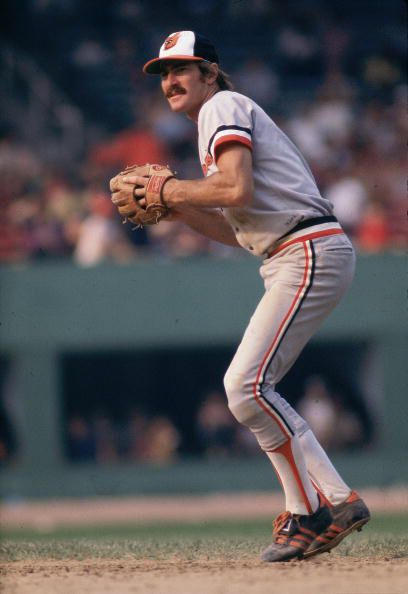
Off the field, Grich was known for his humility and dedication to the game. He remained involved in baseball after his retirement, working as a broadcaster and mentor to younger players. His love for the sport and commitment to excellence continue to inspire those who follow in his footsteps.
Bobby Grich’s MLB career is a testament to the power of perseverance, versatility, and excellence. From his early days in Southern California to his success with the Baltimore Orioles and California Angels, Grich demonstrated an unwavering commitment to the game he loved. His statistical achievements, including 224 home runs, four Gold Glove Awards, and six All-Star selections, reflect his extraordinary talent and impact on the field.
Beyond the numbers, Grich’s legacy lies in his ability to elevate the role of the second baseman and set a standard for future players. His combination of power, patience, and defense was ahead of its time, and his influence on the game endures to this day. While he may not always receive the recognition he deserves, Bobby Grich’s contributions to baseball are undeniable, and his place among the sport’s all-time greats is secure.



 The Baseball Scholar
Leave a comment