
Johnny Bench is widely regarded as one of the greatest catchers in Major League Baseball (MLB) history. Renowned for his defensive brilliance, offensive power, and leadership abilities, Bench redefined the catcher position and became the cornerstone of the Cincinnati Reds during their iconic “Big Red Machine” era. Over his illustrious 17-year career, he earned accolades for his exceptional play and left a lasting impact on the game.
Johnny Lee Bench was born on December 7, 1947, in Oklahoma City, Oklahoma, and grew up in the small town of Binger. From a young age, Bench demonstrated athletic ability and a love for baseball. His father, Ted Bench, played a pivotal role in shaping his career. Ted, who had once harbored dreams of playing professional baseball, encouraged Johnny to pursue his passion. The elder Bench’s influence went beyond encouragement—he taught Johnny the fundamentals of the game and emphasized the importance of hard work and dedication.

Bench’s talent as a catcher became evident early on. While attending Binger High School, he honed his skills both defensively and offensively. His powerful arm and precise throws made him a standout catcher, while his batting prowess further set him apart. Bench also excelled academically, reflecting a discipline that would serve him well in his professional career.
In 1965, Bench graduated high school and was selected by the Cincinnati Reds in the second round of the MLB draft. Although his selection didn’t generate much fanfare, the Reds’ scouts saw immense potential in the young catcher. At just 17 years old, Bench embarked on a professional career that would ultimately redefine the catcher position.
Bench’s journey to the major leagues began in the Reds’ farm system, where he quickly made an impression. In the minor leagues, his defensive skills were already elite, particularly his ability to control the running game with a lightning-quick release and pinpoint accuracy. He also displayed a keen understanding of the game, earning the trust of pitchers and coaches alike. Offensively, Bench showed glimpses of the power and consistency that would later define his career.
In 1967, Bench earned a September call-up to the Reds, marking the beginning of his MLB career. Although his initial stint in the majors was brief, it was enough to showcase his potential. The following season, Bench cemented his place as the Reds’ starting catcher. As a 20-year-old rookie in 1968, Bench took the league by storm, batting .275 with 15 home runs and 82 RBIs. His defensive performance was equally remarkable, and he became the first catcher in MLB history to win the Rookie of the Year Award. This achievement signaled the start of a career filled with accolades and milestones.

The late 1960s and 1970s were marked by Johnny Bench’s dominance, as he emerged as the premier catcher in baseball. His ability to excel both offensively and defensively made him a rare and invaluable asset. Bench’s combination of power, precision, and leadership propelled the Cincinnati Reds to new heights and helped define an era of baseball excellence.
One of Bench’s most significant achievements came in 1970, when he won the National League (NL) Most Valuable Player (MVP) Award. That season, he hit .293 with 45 home runs and a league-leading 148 RBIs, setting a new standard for offensive production by a catcher. His performance not only helped the Reds capture the NL pennant but also established him as a generational talent.
In 1972, Bench continued to solidify his legacy with another MVP-winning campaign. He smashed 40 home runs, drove in 125 RBIs, and posted a .920 OPS. His offensive firepower was complemented by his extraordinary defensive work, as he led the league in assists among catchers and guided the Reds’ pitching staff with exceptional skill. Bench’s ability to contribute in all facets of the game made him a cornerstone of the Reds’ success during this period.
Bench was a central figure in the Reds’ legendary “Big Red Machine,” a team that dominated the National League throughout the 1970s. Managed by Sparky Anderson and featuring stars such as Pete Rose, Joe Morgan, and Tony Pérez, the Reds were a powerhouse known for their relentless offense and solid defense. Bench’s leadership and performance were critical to the team’s success.
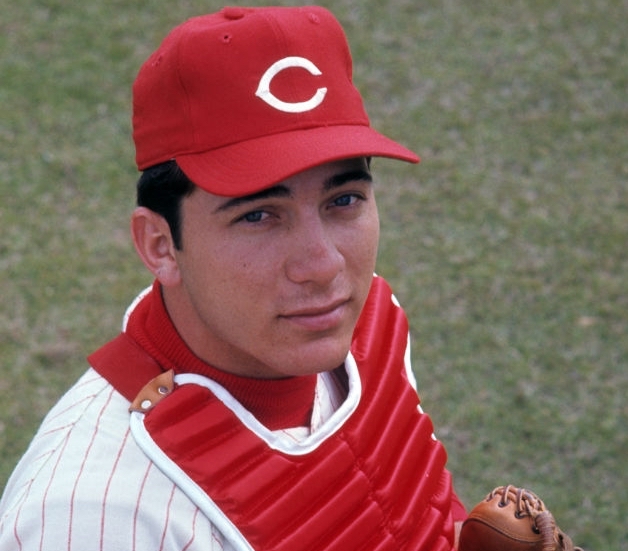
The pinnacle of the Big Red Machine’s dominance came in 1975 and 1976, when the Reds won back-to-back World Series championships. Bench played a pivotal role in both title runs, delivering clutch performances in key moments. In the 1976 World Series against the New York Yankees, Bench was especially dominant, batting .533 with two home runs and six RBIs. His contributions earned him World Series MVP honors, further cementing his reputation as a player who thrived on the game’s biggest stage.
Johnny Bench’s career statistics underscore his greatness as a player. Over 17 seasons, all with the Reds, he compiled a .267 batting average, 389 home runs, 1,376 RBIs, and an .817 OPS. Bench retired as the all-time leader in home runs by a catcher, a record he held until surpassed by Mike Piazza. His 2,048 hits and 1,091 runs scored further highlight his offensive contributions.
Defensively, Bench was unmatched. He won 10 Gold Glove Awards, a testament to his excellence behind the plate. Bench’s ability to manage a pitching staff, control the running game, and call a game with precision made him an invaluable asset. His career caught-stealing rate of 43% remains one of the best in MLB history, reflecting his unparalleled arm strength and quick release.
Bench was a 14-time All-Star, demonstrating his consistent excellence over nearly two decades. He also earned six Silver Slugger Awards and was a key figure in numerous postseason appearances. His ability to perform at an elite level in both regular season and playoff games set him apart from his peers.
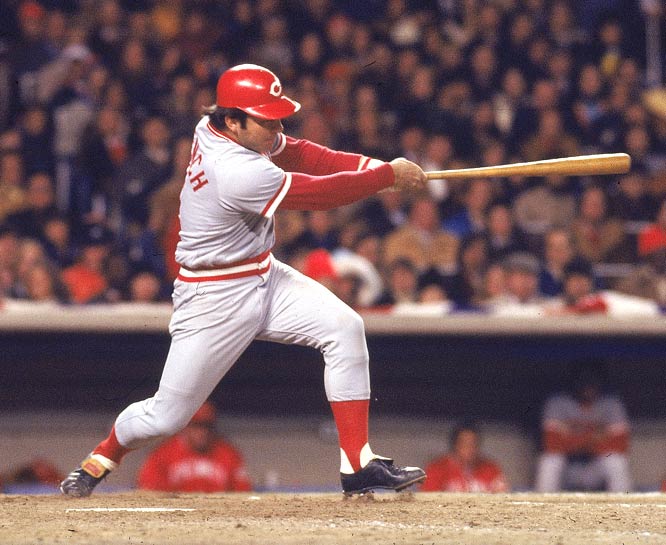
Johnny Bench’s impact on baseball goes far beyond his individual achievements. He redefined the role of the catcher, setting a new standard for what the position could be. Before Bench, catchers were often viewed primarily as defensive specialists. While offense was a bonus, it was rarely a requirement. Bench changed that perception by combining exceptional defense with unparalleled offensive production. He proved that catchers could be both leaders behind the plate and offensive powerhouses, inspiring future generations of players.
Bench’s influence can also be seen in his innovation and approach to the game. He was one of the first catchers to use a one-handed catching technique, a method that allowed him to better block pitches in the dirt and prevent injuries. This technique is now a staple of modern catching and is taught at all levels of baseball.
Off the field, Bench was a charismatic ambassador for the sport. His humility, professionalism, and dedication to the game earned him respect from teammates, opponents, and fans alike. Bench’s popularity extended beyond baseball, as he appeared in commercials, television shows, and public events, helping to grow the game’s appeal.
Johnny Bench retired in 1983, leaving behind a legacy as one of the greatest catchers in baseball history. In 1989, he was inducted into the Baseball Hall of Fame in his first year of eligibility, receiving 96.4% of the vote. Bench’s induction was a fitting tribute to a player who had redefined his position and left an indelible mark on the sport.
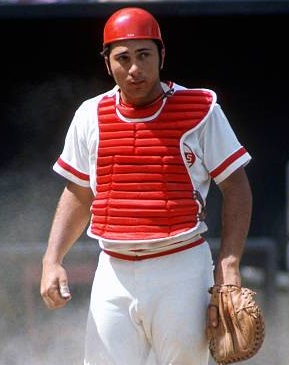
Today, Bench’s name is synonymous with excellence in catching. He remains an iconic figure in Cincinnati and a revered legend in the baseball world. His contributions to the game continue to inspire young players, and his influence can be seen in the evolution of the catcher position.
Johnny Bench’s career is a testament to the power of talent, hard work, and leadership. From his humble beginnings in Oklahoma to his rise as the cornerstone of the Big Red Machine, Bench’s journey is one of perseverance and greatness. His remarkable achievements, both offensively and defensively, set him apart as one of the all-time greats. Beyond the statistics, Bench’s impact on the game—through his innovation, leadership, and influence—ensures that his legacy will endure for generations to come. Johnny Bench will forever be remembered as a player who exemplified the best of baseball and set a standard that few have matched.




 The Baseball Scholar
Leave a comment