
Ernie Banks, affectionately known as “Mr. Cub,” stands as one of the most beloved and iconic figures in Major League Baseball history. His Hall of Fame career, spent entirely with the Chicago Cubs, is a testament to his exceptional talent, unwavering positivity, and profound impact on the game of baseball. Banks’ legacy extends far beyond his on-field accomplishments, as he became a symbol of resilience, joy, and the unifying power of the sport. Exploring his life and career reveals not only his remarkable achievements but also the enduring influence he has had on generations of fans and players.
Ernest Banks was born on January 31, 1931, in Dallas, Texas. He was one of 12 children in a modest African American family, and his upbringing was marked by strong values of faith, hard work, and community. Banks’ father, Eddie, worked in a warehouse and played semi-professional baseball, instilling in Ernie a love for the game at an early age. However, opportunities for organized baseball were limited for young African Americans in the segregated South, and Banks initially found outlets for his athleticism in football, basketball, and track.
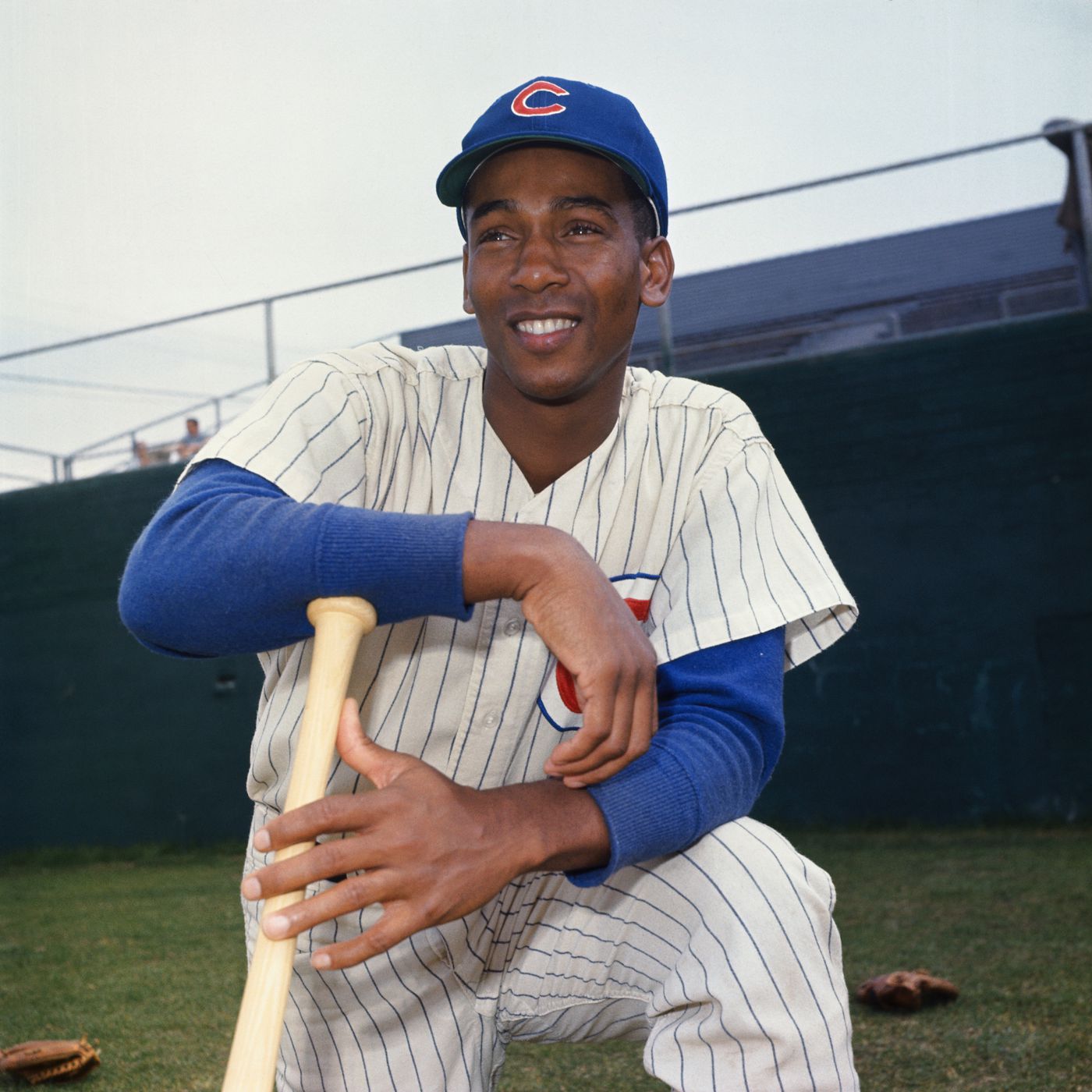
Banks’ first serious exposure to baseball came through his high school coach, who recognized his talent and encouraged him to play. Despite his natural ability, Banks did not initially dream of a career in professional baseball. After graduating from high school, he was drafted into the Army, where he served during the Korean War. It was during his time in the military that Banks began to take baseball more seriously, playing for service teams and honing his skills.
In 1950, Banks’ life changed when he was recruited by the Kansas City Monarchs of the Negro Leagues. Playing for the Monarchs, one of the most storied teams in Negro Leagues history, gave Banks the opportunity to develop his game and gain exposure to a higher level of competition. His time in the Negro Leagues was brief but transformative, as it paved the way for his entry into Major League Baseball during a time of rapid racial integration.
Banks was signed by the Chicago Cubs in 1953, becoming the team’s first African American player. He made his major league debut on September 17, 1953, at the age of 22, signaling the beginning of a transformative era for both the Cubs and baseball at large. Despite the challenges of breaking racial barriers and adjusting to the rigors of the major leagues, Banks quickly established himself as a rising star.
Banks’ first full season came in 1954, and he wasted no time showcasing his immense talent. Playing shortstop, a demanding defensive position, Banks demonstrated exceptional athleticism, a strong arm, and a keen baseball IQ. Offensively, he was equally impressive, hitting .275 with 19 home runs and 79 RBIs. His combination of power and finesse was rare for a shortstop, a position traditionally associated more with defense than offense.

As Banks continued to develop, his offensive production soared. In 1955, he hit .295 with 44 home runs and 117 RBIs, setting a new standard for power-hitting shortstops. His remarkable season earned him his first All-Star selection, an honor he would achieve 14 times over the course of his career. Banks’ ability to hit for both power and average, combined with his defensive prowess, made him one of the most complete players in the game.
The late 1950s and early 1960s marked the peak of Banks’ career. During this period, he was widely regarded as one of the most dominant players in baseball, earning back-to-back National League MVP Awards in 1958 and 1959. In 1958, Banks hit .313 with 47 home runs and 129 RBIs, leading the league in RBIs and total bases. The following year, he posted a .304 batting average with 45 home runs and 143 RBIs, again leading the league in RBIs.
Banks’ offensive production was particularly remarkable given the context in which he played. Wrigley Field, the Cubs’ home ballpark, was not known for being particularly friendly to power hitters, and the Cubs struggled as a team during much of Banks’ career. Despite the lack of consistent support from his teammates, Banks consistently delivered at the plate, earning a reputation as one of the most feared hitters in the league.
By the mid-1960s, Banks transitioned from shortstop to first base to preserve his longevity. Despite the position change, he continued to be a productive player, hitting 23 home runs and driving in 95 runs as late as 1969, at the age of 38. Over the course of his career, Banks amassed a .274 batting average, 2,583 hits, 512 home runs, and 1,636 RBIs. His 512 home runs ranked 8th all-time at the time of his retirement, and he remains one of the most prolific power hitters in Cubs history.

One of the most enduring aspects of Banks’ legacy is his infectious enthusiasm and love for the game. His famous catchphrase, “Let’s play two!” became synonymous with his unwavering passion for baseball. Banks’ positive attitude was especially significant given the challenges he faced, both as an African American player navigating the racial tensions of his era and as a star on a team that often struggled to contend.
Banks’ sunny disposition and tireless work ethic endeared him to fans and teammates alike. Despite the Cubs’ lack of postseason success during his career, Banks remained a steadfast ambassador for the team and the city of Chicago. He took pride in representing the Cubs and often spoke about his deep affection for Wrigley Field and its loyal fans.
One particularly memorable moment in Banks’ career came in 1955, when he hit five grand slams in a single season, setting a National League record that stood for decades. His ability to deliver in clutch situations further solidified his reputation as one of the game’s great power hitters.
Another highlight came in 1969, when the Cubs mounted a surprising run at the National League pennant. Although the team ultimately fell short, Banks played a key role in their success, providing veteran leadership and timely hitting. His contributions during that season were a fitting testament to his enduring value as a player and teammate.
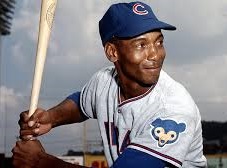
Banks’ impact on baseball extends far beyond his impressive statistics. As one of the first African American stars in the major leagues, he played a pivotal role in breaking down racial barriers and advancing the integration of the sport. His success and professionalism opened doors for future generations of African American players and helped to transform baseball into a more inclusive and representative game.
Banks’ legacy is also defined by his unwavering commitment to the Cubs and the city of Chicago. Despite never appearing in a postseason game, he remains one of the most beloved figures in Cubs history, a testament to the profound connection he forged with fans through his talent, charisma, and loyalty.
In 1977, Banks was inducted into the Baseball Hall of Fame in his first year of eligibility, receiving one of the highest percentages of votes in history at the time. His induction was a celebration of not only his remarkable career but also his enduring impact on the game and its culture.
Beyond baseball, Banks continued to be an active and influential figure, engaging in philanthropy and community work. His contributions to society, both on and off the field, were recognized with numerous honors, including the Presidential Medal of Freedom, which he received in 2013.

Ernie Banks’ career is a testament to the power of talent, perseverance, and positivity. From his humble beginnings in Dallas to his rise as one of the most iconic players in Major League Baseball history, Banks’ journey is a story of triumph and inspiration. His remarkable achievements on the field, including 512 home runs and two MVP Awards, are matched by his enduring impact on the game and its culture.
As “Mr. Cub,” Banks embodied the spirit of baseball, bringing joy and hope to fans even during challenging times. His legacy continues to resonate, serving as a reminder of the transformative power of sports and the enduring impact of those who play the game with passion and integrity. Ernie Banks will forever be remembered as a true legend of baseball and a cherished figure in the hearts of fans everywhere.



 The Baseball Scholar
Leave a comment