
Justin Verlander, one of the most dominant and enduring pitchers in Major League Baseball (MLB) history, has left an indelible mark on the game through his remarkable consistency, competitiveness, and excellence. Over a career that has spanned nearly two decades, Verlander has amassed an array of accolades, statistical milestones, and iconic moments, cementing his status as one of the greatest pitchers of his generation. Known for his blazing fastball, pinpoint command, and fierce determination, Verlander has been a force on the mound, delivering in both the regular season and the postseason with unparalleled success.
Justin Brooks Verlander was born on February 20, 1983, in Manakin-Sabot, Virginia, a small community near Richmond. From an early age, it was evident that Verlander had a special gift for throwing a baseball. Encouraged by his parents, Richard and Kathy Verlander, Justin pursued his passion for the sport with determination. His younger brother, Ben, would also later pursue a baseball career, although Justin’s rise to stardom was marked by early signs of elite talent.
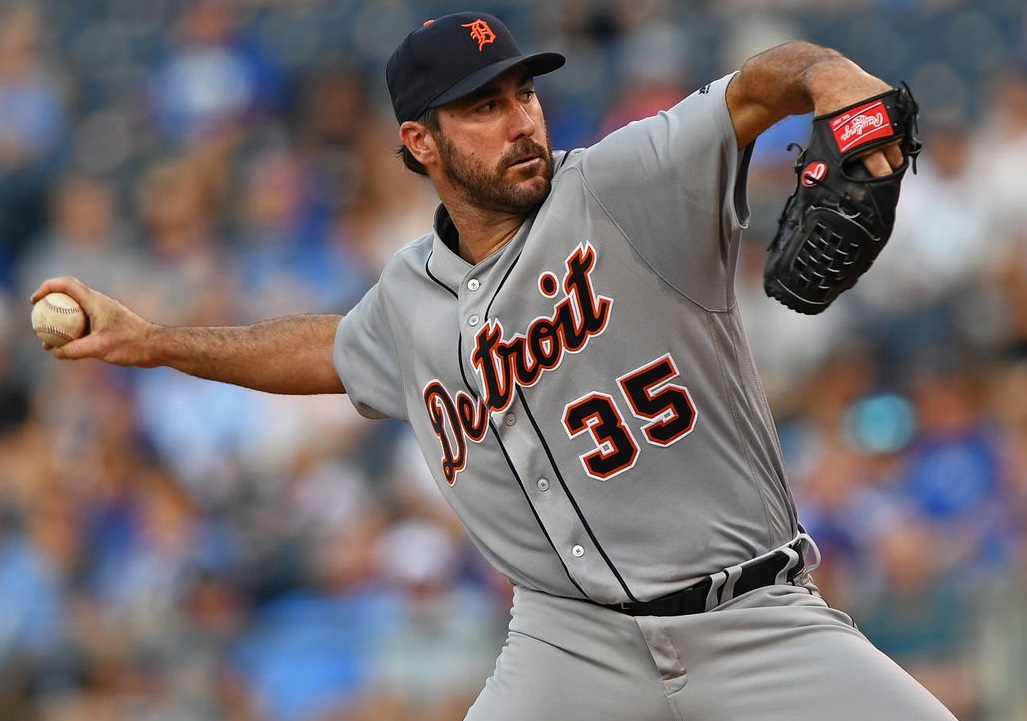
Verlander attended Goochland High School in Virginia, where he began to showcase his pitching ability. Despite his raw talent, Verlander did not immediately garner national attention as a high school prospect. His fastball velocity was impressive but lacked the consistent command that would later define his career. Recognizing his potential, Verlander chose to attend Old Dominion University, a decision that would prove pivotal in his development as a pitcher.
At Old Dominion, Verlander blossomed into one of the most dominant collegiate pitchers in the country. Over three seasons (2002–2004), he set school records for career strikeouts (427) and single-season strikeouts (151). His ability to overpower hitters with a high-velocity fastball and a devastating breaking ball caught the attention of MLB scouts. Verlander’s standout performances earned him a reputation as a can’t-miss prospect, and he was selected second overall in the 2004 MLB Draft by the Detroit Tigers.
Verlander made his MLB debut with the Detroit Tigers on July 4, 2005, against the Cleveland Indians. Although his first taste of the majors was brief, it provided a glimpse of his immense potential. The following year, in 2006, Verlander emerged as a cornerstone of the Tigers’ rotation. He went 17-9 with a 3.63 ERA and 124 strikeouts over 186 innings, helping the Tigers reach the postseason for the first time since 1987. Verlander’s performance earned him the American League (AL) Rookie of the Year award, solidifying his status as one of the league’s brightest young stars.
The 2006 postseason further showcased Verlander’s ability to perform under pressure. He played a key role in the Tigers’ run to the World Series, where they ultimately fell to the St. Louis Cardinals. Despite the loss, Verlander’s poise on the big stage hinted at a future filled with postseason success.
Over the next several years, Verlander established himself as one of the premier pitchers in baseball. His combination of velocity, movement, and durability made him a nightmare for opposing hitters. From 2007 to 2010, he consistently ranked among the league leaders in strikeouts, innings pitched, and wins, solidifying his reputation as a workhorse.
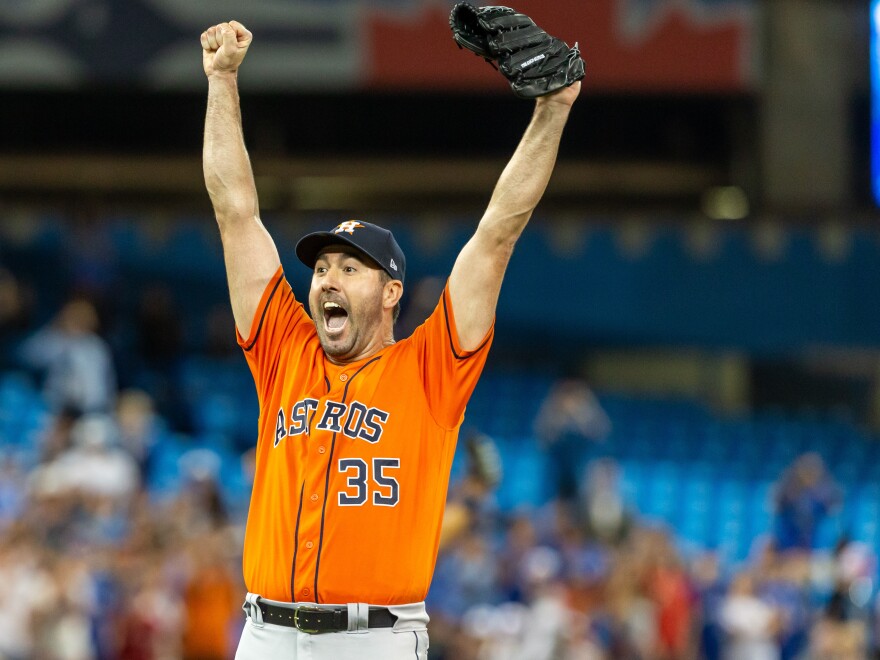
Verlander’s career reached new heights in 2011, a season that stands as one of the most dominant pitching performances in modern MLB history. He finished the year with a 24-5 record, a 2.40 ERA, and 250 strikeouts in 251 innings. Verlander’s remarkable consistency earned him the AL Triple Crown for pitching, leading the league in wins, strikeouts, and ERA. His dominance was recognized with both the AL Cy Young Award and the AL Most Valuable Player (MVP) award, a rare feat for a pitcher. Verlander’s MVP win highlighted his value to the Tigers, as he was instrumental in leading them to the AL Central title.
One of the defining characteristics of Verlander’s career has been his ability to throw harder as games progress. Known for reaching back for extra velocity in the later innings, Verlander routinely hits the upper 90s with his fastball deep into games, a testament to his conditioning and competitive spirit.
Despite his regular-season dominance, Verlander’s postseason career has been a study in contrasts. Early in his playoff career, he faced struggles, posting inconsistent performances in critical games. However, as his career progressed, Verlander found his footing in October, delivering several iconic moments.
In 2012, Verlander led the Tigers back to the World Series, dominating the Oakland Athletics in the AL Division Series (ALDS) and shutting down the New York Yankees in the AL Championship Series (ALCS). While the Tigers ultimately fell to the San Francisco Giants in the World Series, Verlander’s postseason performance solidified his reputation as a big-game pitcher.
Verlander’s postseason resurgence reached its zenith during his tenure with the Houston Astros. Traded to Houston in 2017, Verlander immediately made an impact, going 5-0 with a 1.06 ERA in his first five starts with the team. In the postseason, he was instrumental in the Astros’ run to the World Series, earning ALCS MVP honors after two dominant starts against the Yankees. The Astros captured their first-ever World Series title that year, with Verlander playing a pivotal role.
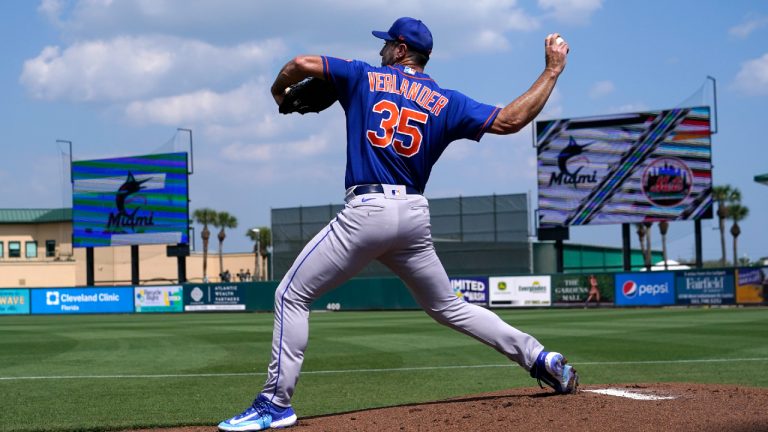
As Verlander entered his 30s, questions arose about whether he could sustain his dominance. In 2014, he endured one of the toughest seasons of his career, posting a 4.54 ERA and struggling with injuries. However, Verlander rebounded in spectacular fashion, defying the aging curve to remain one of the game’s elite pitchers.
The 2019 season was another milestone in Verlander’s career. He posted a 21-6 record with a 2.58 ERA and 300 strikeouts, leading the league in wins and innings pitched. Verlander’s performance earned him his second AL Cy Young Award, cementing his status as one of the greatest pitchers of his generation. That year, he also achieved a personal milestone, recording his 3,000th career strikeout, a feat accomplished by only a handful of pitchers in MLB history.
Justin Verlander’s impact on baseball extends beyond his impressive statistics and accolades. As a pitcher, he embodies the qualities of a true ace: durability, dominance, and the ability to perform under pressure. His competitive fire and leadership have inspired teammates and set a standard for excellence.

Verlander’s influence can also be seen in the way he has adapted his approach over the years. As hitters have evolved and analytics have transformed the game, Verlander has remained at the forefront, utilizing advanced metrics and refining his pitch selection to maintain his edge. His ability to evolve and stay relevant in a rapidly changing sport speaks to his intelligence and dedication.
Off the field, Verlander has been a vocal advocate for player rights and has used his platform to support charitable causes. His marriage to supermodel Kate Upton has also made him a prominent figure in popular culture, further raising his profile and bringing attention to the sport.
As of now, Justin Verlander’s career is still ongoing, and he continues to defy expectations with his remarkable longevity and effectiveness. With multiple Cy Young Awards, over 3,000 strikeouts, and a reputation as one of the greatest postseason performers in history, Verlander’s place in the Hall of Fame is all but assured.

Verlander’s journey from a small-town kid in Virginia to one of the most celebrated pitchers in MLB history is a testament to his talent, work ethic, and love for the game. His ability to dominate for nearly two decades has left an indelible mark on baseball, inspiring the next generation of players and fans. As he continues to add to his legacy, Verlander remains a symbol of excellence and a reminder of what can be achieved through dedication and perseverance.



 The Baseball Scholar
Leave a comment