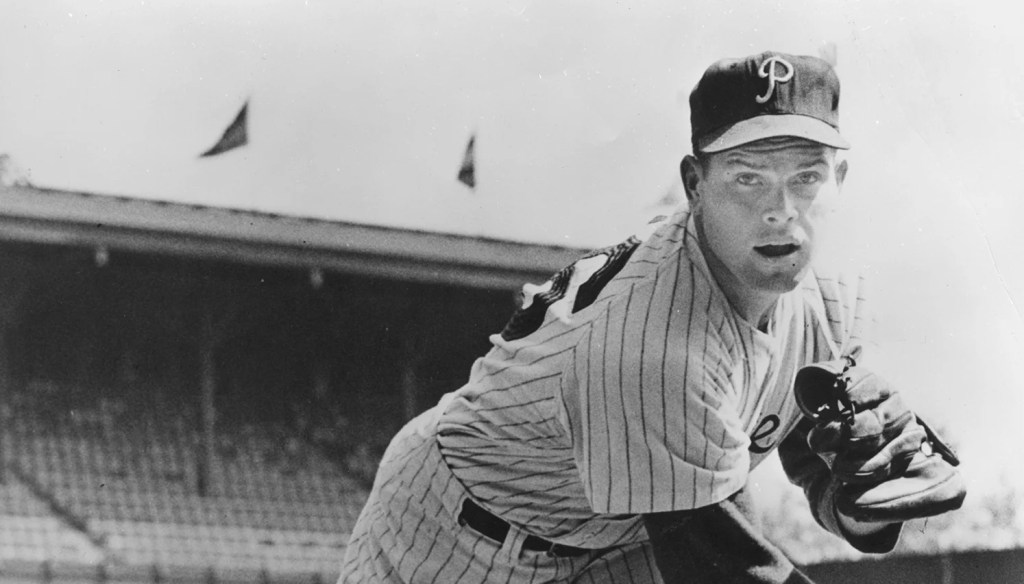
Robin Roberts is often remembered as one of the most consistent and dominant pitchers in the history of Major League Baseball (MLB). With a career spanning from 1948 to 1966, Roberts’ name is synonymous with durability, consistency, and excellence on the mound. Over the course of his 19-year career, Roberts left a significant mark on the game, both with his impressive statistical achievements and his impact on the teams and players around him. His legacy continues to resonate in the baseball community, and his career serves as an example of what it means to be a true competitor at the highest level.
Born on September 30, 1926, in Springfield, Illinois, Robin Roberts’ early life was marked by his love of sports and natural athleticism. Raised in a family that appreciated sports, Roberts grew up playing baseball, basketball, and football. However, it was baseball that captured his imagination, and he soon developed a strong affinity for pitching. Growing up in Springfield, he honed his skills playing for his high school team and impressing local scouts with his pitching abilities. Despite facing the challenges of growing up during the Great Depression and World War II, Roberts’ early exposure to sports paved the way for a successful baseball career.
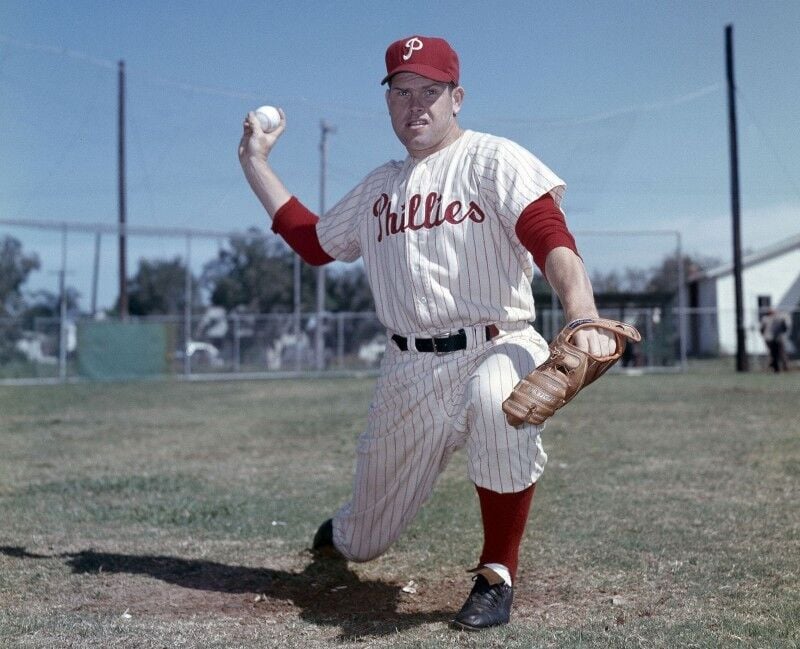
Roberts attended Michigan State University, where he further developed his pitching skills. During his time at Michigan State, Roberts’ performance on the mound attracted attention from MLB scouts. He signed with the Philadelphia Phillies in 1948 and quickly made a name for himself in the minor leagues. His rise through the minor league system was swift, and he was called up to the majors by 1950, making his debut for the Phillies at the age of 23.
Robin Roberts’ MLB debut came on June 18, 1948, against the Boston Braves. Although his debut was modest, the young right-hander showed promise with his poise on the mound. Over the next few years, Roberts gradually became a key player for the Phillies. In 1950, he took on a larger role in the Phillies’ pitching staff, and his performances were integral to the team’s success. His 1950 season was especially notable as he finished with a 3.02 ERA and 15 wins, helping lead the Phillies to the National League pennant. That year, Roberts quickly established himself as one of the league’s top pitchers, showcasing both his raw talent and his ability to perform under pressure.
The early part of Roberts’ career was marked by his ability to stay durable and healthy, two traits that would define his entire career. In an era where many pitchers struggled to maintain their stamina, Roberts’ ability to pitch deep into games and consistently put up strong performances was remarkable. His fastball, which was his signature pitch, combined with his excellent control and ability to throw a variety of off-speed pitches, made him a difficult opponent for batters.
The 1950s marked the prime years of Robin Roberts’ career, as he became one of the most dominant pitchers in the game. His rise to prominence during this time coincided with the Phillies’ success, as Roberts emerged as the ace of the staff and one of the premier pitchers in Major League Baseball.
During the 1950s, Roberts enjoyed several dominant seasons, posting impressive numbers year after year. Between 1950 and 1956, Roberts won 20 or more games six times and led the National League in wins on four occasions. His consistency was evident as he finished with double-digit wins in every season of the decade, and his ERA was often among the league leaders. In 1952, he posted a career-high 28 wins, a feat that was particularly impressive given the demanding schedule of the era. His 28 wins were the most by any pitcher in the major leagues that year, and they helped cement his status as one of the best pitchers in the game.
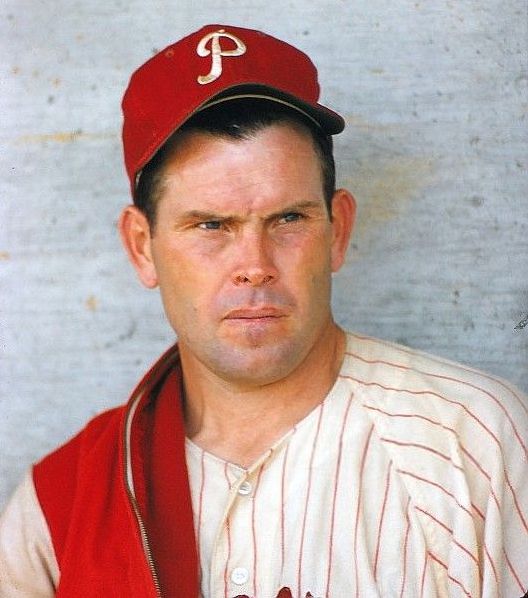
Roberts’ dominance during this era also earned him numerous accolades, including eight All-Star Game selections. His ability to pitch deep into games made him a workhorse for the Phillies, and he was often called upon to start the crucial games in a pennant race. Roberts was known for his composure on the mound, and his ability to handle high-pressure situations helped elevate the Phillies during the height of their success in the early 1950s. He was instrumental in the Phillies’ winning the National League pennant in 1950, though they were ultimately defeated in the World Series by the New York Yankees.
One of the defining moments of Roberts’ career came during the 1950 season when he was a part of the famous “Whiz Kids” team, a group of young players who helped return the Phillies to prominence. Roberts’ contributions were vital to the success of the team, as he emerged as the ace of the pitching staff. His performance in the postseason that year helped reinforce his reputation as one of the league’s best pitchers, even though the team fell short of winning the championship. Despite the World Series loss, Roberts’ performance and leadership were crucial to the Phillies’ rise in the 1950s.
Robin Roberts’ career achievements are a testament to his durability and consistency as a pitcher. Over his 19-year career, Roberts accumulated 286 wins, a remarkable feat for a pitcher in any era. He finished his career with a 3.41 ERA and 2,357 strikeouts, numbers that rank him among the top pitchers in MLB history. His ability to maintain a high level of performance throughout his career, particularly during the 1950s and 1960s, set him apart from his peers.
Roberts was also known for his incredible stamina and ability to pitch deep into games. He led the league in complete games multiple times during his career and is widely regarded as one of the last pitchers to regularly throw complete games in an era dominated by bullpen specialists. Roberts’ workhorse mentality allowed him to pitch over 300 innings in five different seasons, a rare accomplishment in modern baseball. In 1953, he threw 330 innings, an extraordinary total in an era when starting pitchers were expected to pitch long games but not at the extreme levels of Roberts’ consistency.
Roberts’ incredible durability was complemented by his effectiveness on the mound. He led the National League in victories four times during his career and finished with a career-high 20 or more wins in six seasons. His ability to control the game with his fastball and a sharp breaking ball made him a difficult pitcher for opposing batters to handle. He earned the respect of hitters around the league for his ability to execute pitches and his calm, calculated approach to every batter he faced.
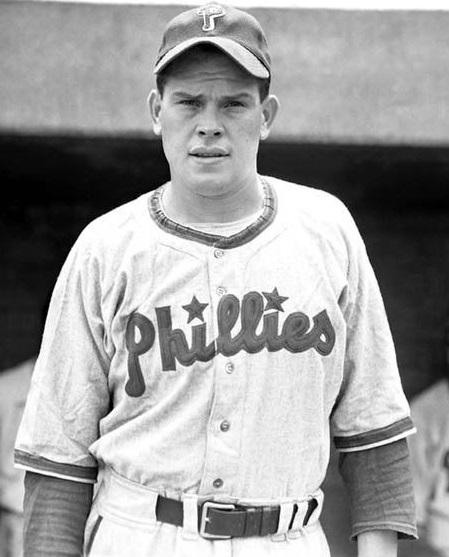
Roberts’ statistical accomplishments were matched by his longevity in the game. His career spanned over two decades, and he was able to remain an effective pitcher well into his late 30s, an impressive feat for any player, especially a pitcher. While his best years were in the 1950s, Roberts continued to provide valuable innings for teams later in his career, including stints with the Baltimore Orioles and the Chicago Cubs. His final season in the majors came in 1966, at the age of 39.
Although Roberts had a strong career, his postseason performances were less frequent than those of some other great pitchers of his era. As a member of the Phillies, Roberts only had a few opportunities to pitch in the postseason, and the team was not always competitive in the years following their 1950 pennant run. However, Roberts’ postseason appearances in 1950 and 1957 showed his resilience and ability to perform in high-pressure situations. He pitched well in the 1950 World Series, despite the Phillies losing to the Yankees, and his experience in the postseason further solidified his place as one of the best pitchers of his generation.
His influence, however, extended far beyond the box scores. Roberts’ leadership in the clubhouse and his mentorship of younger pitchers were vital to the success of his teams. He was known for being a teacher of the game and providing guidance to the pitchers who followed in his footsteps. Throughout his career, Roberts took great pride in helping his teammates and fostering a competitive yet supportive environment. His impact on the next generation of players was a significant part of his legacy, and many of the pitchers he mentored went on to enjoy successful careers of their own.
Robin Roberts’ impact on the game of baseball is immeasurable. His excellence on the mound set a standard for future generations of pitchers, and his longevity in the game helped redefine what was possible for pitchers in an era of intense competition. Roberts’ name is often associated with durability and consistency, and he paved the way for future pitchers to focus not only on talent but on the importance of maintaining their bodies and keeping themselves healthy throughout their careers.
Roberts’ career also helped to establish the Phillies as one of the most respected teams of the 1950s. While the team did not win a World Series during Roberts’ tenure, the franchise’s prominence in the early 1950s was in large part due to his dominance on the mound. His performance in the 1950s helped define the era of Phillies baseball and made him a central figure in the franchise’s history.
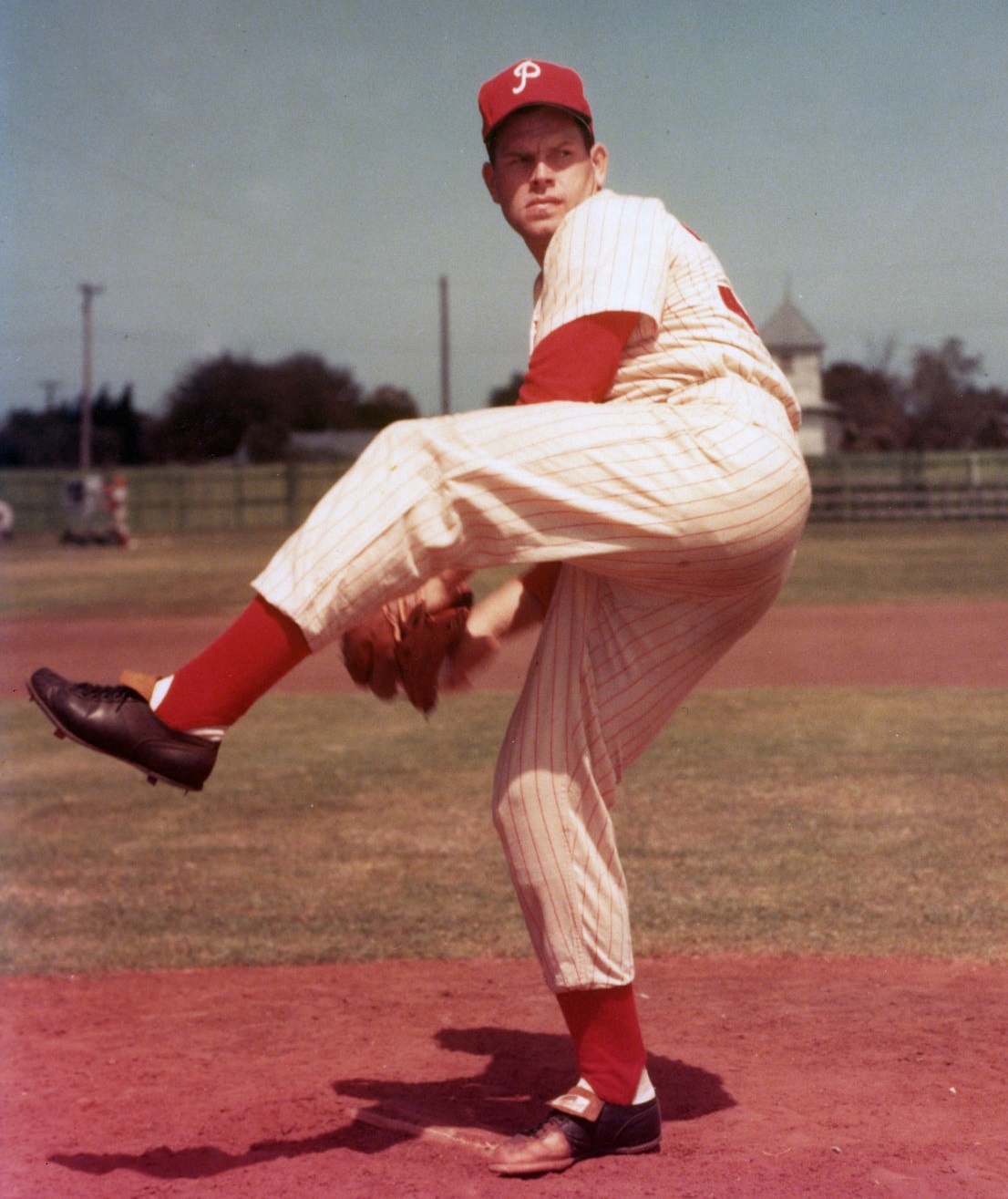
In addition to his contributions to the Phillies, Roberts’ influence was felt across Major League Baseball. His leadership, consistency, and approach to the game inspired pitchers and players from all walks of life. His resilience, particularly in a time when pitchers were expected to pitch long innings and throw complete games regularly, set an example for the future of the game. His place in the history of the sport is secured not only through his statistical achievements but also through his contributions to the culture and fabric of the game.
Robin Roberts’ career in Major League Baseball is one that continues to be remembered and celebrated by baseball fans and historians alike. Through his statistical achievements, remarkable longevity, and impact on the game, Roberts solidified his place as one of the greatest pitchers to ever take the mound. His consistency, durability, and leadership both on and off the field were integral to his success, and his legacy as a true competitor endures to this day.
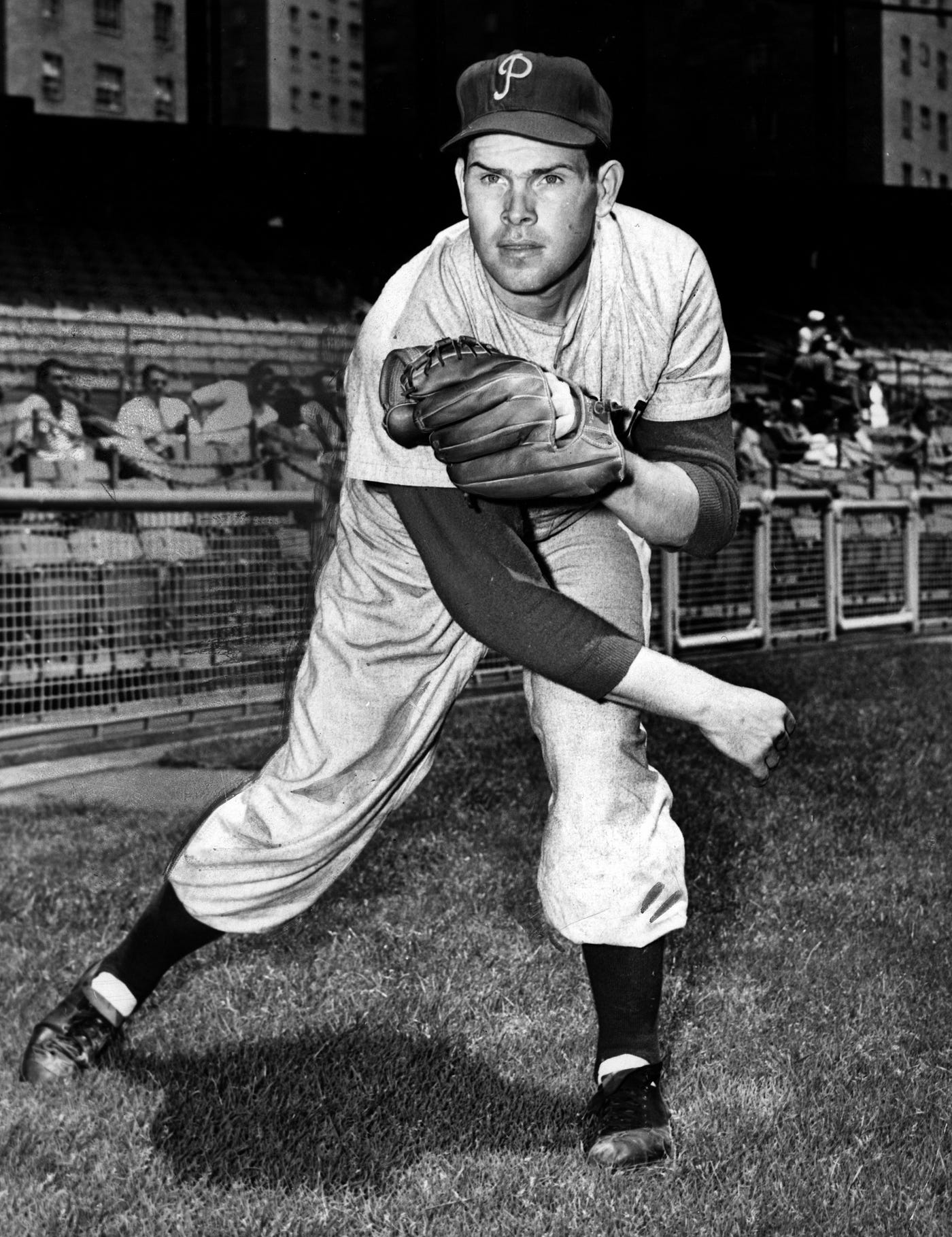
Throughout his career, Roberts exemplified what it meant to be a professional. Whether it was his on-field dominance, his ability to mentor young players, or his commitment to excellence, Roberts set the standard for future generations of pitchers. His influence on the game, his accomplishments, and his contributions to the Phillies’ legacy ensure that Robin Roberts will forever be remembered as one of the greatest pitchers in the history of Major League Baseball.



 The Baseball Scholar
Leave a comment