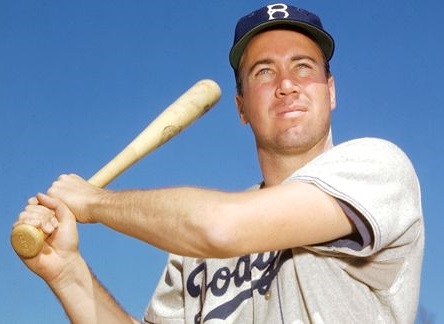
Duke Snider is one of the most iconic players in the history of Major League Baseball, whose name resonates deeply with fans who witnessed his career and with generations that came after. A member of the revered Brooklyn Dodgers, and later the Los Angeles Dodgers, Snider established himself as a transcendent talent in the 1940s and 1950s, a period widely regarded as one of the golden ages of the sport. His skill at the plate, in the field, and his impact on the game as a whole are remembered as emblematic of baseball’s storied history. As one of the primary figures in the era’s fabled “New York City baseball rivalry,” Snider’s MLB career is not only marked by his extraordinary athletic accomplishments but also by his role in the cultural and social fabric of American baseball.
Born Edwin Donald Snider on September 19, 1926, in Los Angeles, California, Duke Snider’s path to MLB superstardom was the product of both innate talent and years of hard work. Snider’s career serves as a testament to the values of perseverance, excellence, and adaptability, as he rose from humble beginnings in California to become a central figure in Brooklyn and Los Angeles baseball lore.

Duke Snider’s early years were spent in a modest Los Angeles neighborhood where he first developed his passion for the game of baseball. Raised in a working-class family, Snider’s father, a postal worker, encouraged him to pursue athletics, recognizing early on his son’s natural ability. Snider was an avid Dodgers fan growing up, which would later add another layer of significance to his future career as one of the franchise’s iconic players. His formative years on the baseball diamond shaped his desire to pursue the sport professionally, even as a young teenager.
Snider’s athletic abilities were apparent even in high school. While at Compton High School, he became known for his impressive hitting and all-around skills. By the time he was 17 years old, Snider had already caught the attention of major league scouts, thanks to his ability to hit for both power and average, combined with his strong arm and speed in the outfield. Although he had the potential to play several positions, including shortstop, Snider was primarily viewed as an outfielder.
After signing with the Brooklyn Dodgers in 1943, Snider was sent to the Dodgers’ minor league affiliate in Nashua, New Hampshire. His early minor league years were marked by a steady rise in performance, showcasing his potential as a major leaguer. Although Snider didn’t immediately make the Dodgers’ roster, his time in the minor leagues allowed him to develop into one of the brightest young talents in the game. His experience in the minors helped him adapt to the professional game’s higher level of competition while polishing his skills for his eventual major league debut.
Duke Snider made his debut with the Brooklyn Dodgers on April 17, 1947, at the age of 20. However, his first few years in the majors were less than spectacular, as Snider struggled to adjust to the higher level of pitching. Nevertheless, the potential was evident, and he slowly began to find his rhythm. Over the next few seasons, Snider’s offensive game became increasingly refined. By 1949, he had cemented himself as a key member of the Dodgers’ outfield, beginning a stretch of years that would define his career.
The 1950s were the prime years of Snider’s career, marked by his emergence as one of the greatest hitters and sluggers in the National League. His 1953 season remains one of the standout campaigns in the history of the Brooklyn and Los Angeles Dodgers franchises. Snider’s 1953 performance was a model of power hitting, as he slugged 40 home runs, drove in 130 RBIs, and batted .336. He was instrumental in the Dodgers’ offensive success during that period, as the team won five National League pennants between 1949 and 1956. Snider finished the 1953 season second in the MVP voting behind his longtime New York Yankees counterpart, Mickey Mantle.

In fact, the rivalry between the Yankees and the Dodgers was one of the most defining aspects of Snider’s career. Snider, Mantle, and Willie Mays of the New York Giants were frequently compared as the elite center fielders in the game during the 1950s. The three players, often referred to as the “Big Three” of the era, represented the pinnacle of offensive and defensive talent in baseball, and their individual performances added to the intensity of the Yankees-Dodgers rivalry. Snider’s ability to match Mantle and Mays in power, speed, and defense made him an unquestionable centerpiece of the Dodgers’ lineup during this time.
While Snider’s offensive numbers are certainly impressive, his contributions to the Dodgers’ success went beyond just the bat. He was an outstanding center fielder who earned a reputation for his exceptional defensive skills. His speed and quickness allowed him to cover large areas of the outfield, and he was known for his ability to track down deep fly balls and make spectacular catches. His defensive prowess, combined with his bat, made him one of the most complete players in the game.
Duke Snider’s career was filled with iconic moments that solidified his place in baseball history. His ability to perform in clutch situations and deliver memorable performances made him a fan favorite, especially in Brooklyn. One of the most famous moments in Snider’s career came during the 1955 World Series, when the Dodgers defeated the Yankees in seven games to win their first-ever championship in Brooklyn. Snider played a key role in the series, hitting .320 with 2 home runs and 6 RBIs. His leadership and playmaking in the World Series contributed significantly to the Dodgers’ ultimate triumph, a victory that would forever change the franchise’s legacy.
Perhaps one of the most iconic individual moments in Snider’s career occurred on May 2, 1956, when he became one of the first players to hit four home runs in a single game. The achievement highlighted his offensive dominance and his ability to step up in memorable moments. It was a testament to his ability to take advantage of every opportunity to display his hitting talent, whether in regular-season games or in the high-pressure atmosphere of postseason play.
Snider was also known for his consistent excellence over many seasons. He played in 2,143 games during his career and finished with 407 career home runs, 1,333 RBIs, and a career batting average of .295. His ability to maintain such a high level of performance over the long haul is a testament to his durability and consistency, two of the most important qualities for any ballplayer.
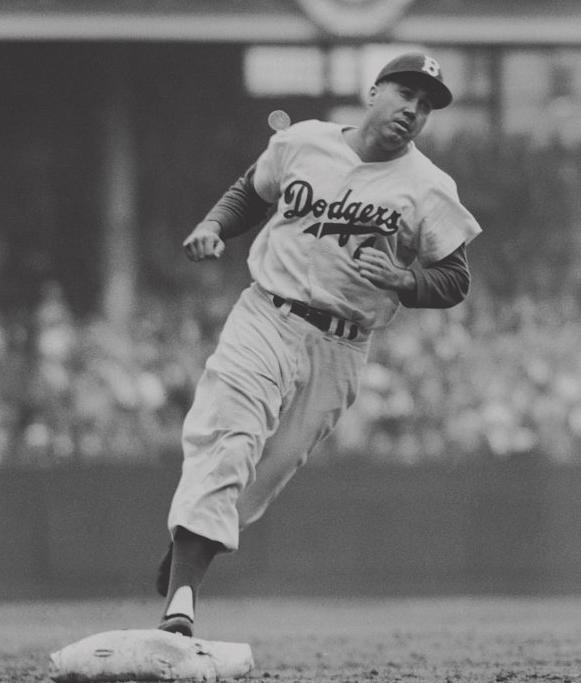
In 1958, the Brooklyn Dodgers made the controversial decision to relocate to Los Angeles, and Snider’s career took a new turn. While the move to the West Coast was exciting for the organization and the city of Los Angeles, it was also a bittersweet moment for Snider. Brooklyn had been home for the entirety of his major league career, and the move forced Snider to adjust to a new environment, both personally and professionally. Despite the changes, Snider continued to be one of the Dodgers’ top players in Los Angeles, helping the team remain competitive in its new home.
However, as the 1960s progressed, Snider’s performance began to decline. Injuries took their toll, and the advent of younger talent on the Dodgers’ roster made Snider less central to the team’s success. After spending a few more years with the Dodgers, he was traded to the New York Mets in 1963, where he played his final seasons in the big leagues. Although his performance with the Mets was not as impactful as in his prime, Snider’s leadership and presence in the locker room helped mentor the next generation of players.

Snider retired from baseball after the 1964 season, bringing an end to a storied career that had spanned nearly two decades.
Duke Snider’s impact on the game of baseball extends far beyond his statistical achievements. He was a central figure in the Brooklyn Dodgers’ transformation into one of the most beloved teams in baseball history, and his contributions to the franchise were immeasurable. Snider’s career was a key part of the Dodgers’ legacy, both in Brooklyn and in Los Angeles. As the team’s leader on the field, Snider represented the essence of what it meant to be a professional baseball player: a combination of skill, determination, and passion for the game.
Snider’s legacy is also defined by his representation of the golden age of baseball in New York City, when three of the game’s most iconic teams—the Yankees, the Dodgers, and the Giants—played in the same city. This rivalry created an electric atmosphere in New York that transcended the sport, and Snider’s place in that narrative remains cemented in the annals of baseball history.
Although Snider was not elected to the Hall of Fame during his lifetime, his legacy continues to resonate with baseball fans and analysts alike. His numbers and impact on the game make him deserving of greater recognition, and his place as one of the greatest center fielders of all time is well-established.

Duke Snider’s career in Major League Baseball was one of exceptional talent, leadership, and influence. From his rise through the minor leagues to his years as a key player on the Dodgers’ championship-winning teams, Snider’s legacy is marked by moments of brilliance, unforgettable performances, and his role in shaping the course of baseball history. Whether he was delivering clutch performances in the World Series, achieving personal milestones, or setting an example for future generations of players, Snider’s contributions to the game are immeasurable.
Duke Snider will always be remembered as one of the greatest players to ever take the field, a symbol of excellence in the golden age of baseball. His place in history is secure, and his influence on the game of baseball will continue to be felt for years to come.



 The Baseball Scholar
Leave a comment