
Richard Anthony “Dick” Allen was a player whose career was as multifaceted and complex as the man himself. Often described as one of the most talented hitters of his generation, Allen’s journey through Major League Baseball was marked by incredible highs and turbulent challenges. From his emergence as a dominant offensive force to the struggles he faced both on and off the field, Allen’s story is one of perseverance, resilience, and an unwavering commitment to excellence. His MLB career, which spanned 15 years from 1963 to 1977, left an indelible mark on the game of baseball.
To fully understand Allen’s impact, it is essential to explore his early life and development, his rise to prominence in the major leagues, the controversies and obstacles he faced, and his enduring influence on the sport. His statistics and achievements underscore his exceptional talent, while the stories and anecdotes from his playing years reveal a complex figure who navigated a challenging era with grace and determination.

Dick Allen was born on March 8, 1942, in Wampum, Pennsylvania, a small town situated about 40 miles northwest of Pittsburgh. The fourth of nine children, Allen grew up in a working-class family that placed a strong emphasis on hard work and determination. From an early age, it was clear that Allen possessed an extraordinary talent for baseball. Alongside his brothers, he honed his skills on the sandlots of Wampum, developing the powerful swing and quick reflexes that would become his trademarks.
Allen excelled as a multi-sport athlete in high school, but his passion for baseball ultimately won out. By the time he graduated, he had already attracted the attention of professional scouts. In 1960, at the age of 18, Allen signed with the Philadelphia Phillies organization. His journey to the majors would not be without challenges, but his raw talent was undeniable.
Allen began his professional career in the minor leagues, where he quickly made a name for himself as one of the most promising young hitters in baseball. However, his time in the minors was not without its difficulties. Allen, an African American player, encountered significant racial prejudice, particularly during his stint with the Phillies’ Triple-A affiliate in Little Rock, Arkansas. As the first Black player on the team, he faced hostility from fans and even teammates. Despite the adversity, Allen performed brilliantly, hitting .289 with 33 home runs in 1963. His success earned him a promotion to the major leagues later that year.
In 1964, Allen’s rookie season with the Phillies, he quickly established himself as one of the most exciting players in baseball. Playing primarily as a third baseman, he hit .318 with 29 home runs, 91 RBIs, and a league-leading 125 runs scored. His 13 triples also led the National League, showcasing his rare combination of power and speed. For his efforts, Allen was unanimously named the National League Rookie of the Year, setting the stage for what appeared to be a meteoric rise.
Over the course of his career, Dick Allen compiled a statistical record that cemented his status as one of the premier hitters of his era. In 1,749 games, he posted a career batting average of .292, hit 351 home runs, and drove in 1,119 runs. His career on-base percentage of .378 and slugging percentage of .534 highlighted his ability to get on base and drive the ball with authority.

Allen’s offensive prowess was perhaps best exemplified by his seven All-Star selections, his 1972 American League Most Valuable Player (MVP) Award, and his reputation as one of the most feared hitters of the 1960s and 1970s. His power-hitting ability was legendary, and he frequently launched prodigious home runs that left fans and opponents in awe. Despite playing in an era when pitchers often held the upper hand, Allen’s offensive output was remarkable.
Throughout his career, Allen delivered numerous unforgettable performances that showcased his immense talent. One such moment came on July 3, 1969, when he hit a towering home run at Connie Mack Stadium that cleared the left-field roof—a feat considered almost mythical at the time. This prodigious blast exemplified the raw power that made Allen one of the game’s most electrifying players.
Another defining season in Allen’s career was 1972, when he played for the Chicago White Sox. That year, he put together one of the greatest offensive campaigns in modern baseball history. Allen batted .308 with 37 home runs and a league-leading 113 RBIs, 99 walks, and an OPS of 1.023. His ability to carry the White Sox offense earned him the American League MVP Award, making him the first player in franchise history to win the honor. His performance that season remains one of the most celebrated in White Sox history.
Despite his incredible talent, Allen’s career was not without controversy. He often found himself at odds with the media, teammates, and management, which contributed to a reputation as a difficult player. Much of this friction stemmed from the racial and cultural tensions of the era, as well as Allen’s refusal to conform to traditional expectations.
Allen’s tenure with the Phillies was particularly fraught. While his performance on the field was stellar, his relationship with the organization and the Philadelphia media deteriorated over time. He frequently clashed with management over contract issues and playing conditions, and he became a target of criticism for his candid demeanor and independent attitude. These conflicts eventually led to his trade to the St. Louis Cardinals in 1970.
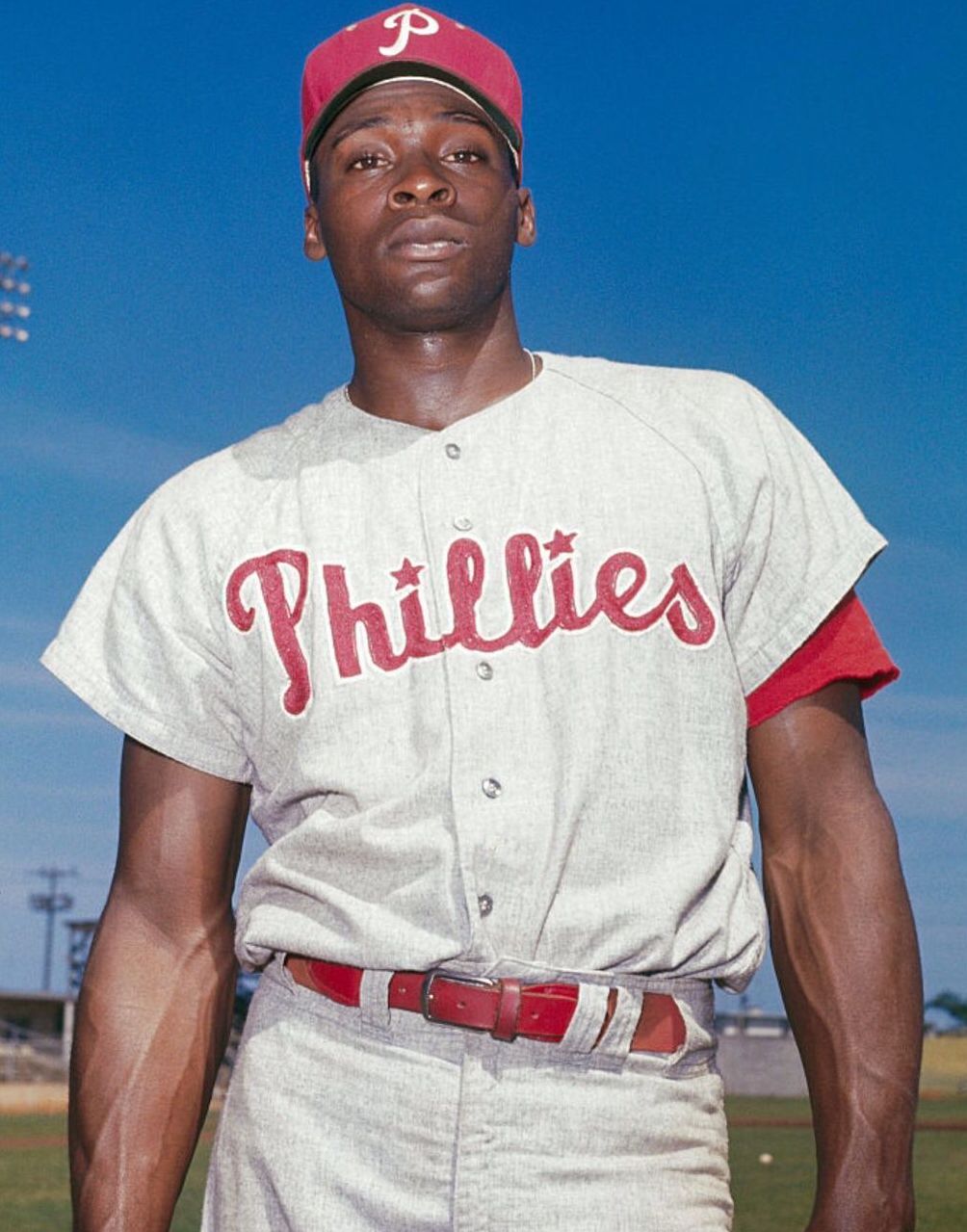
Despite these challenges, Allen’s resilience and determination allowed him to continue excelling on the field. He viewed his battles with the media and management as a necessary fight for respect and fairness, particularly for Black players during a time of significant social upheaval.
Dick Allen’s impact on baseball extends far beyond his impressive statistics and accolades. He was a trailblazer who pushed boundaries and challenged the status quo, paving the way for future generations of players. Allen’s insistence on being treated fairly and his willingness to speak out against injustice resonated with many of his peers and helped to advance the cause of equality in professional sports.
As a player, Allen’s unique combination of power, speed, and versatility redefined what was possible for a middle-of-the-lineup hitter. His ability to excel at multiple positions, including third base, first base, and the outfield, added to his value and showcased his athleticism.
Allen’s contributions were ultimately recognized by the baseball community when he was inducted into the Philadelphia Phillies Wall of Fame and the Chicago White Sox Hall of Fame. While he was not inducted into the National Baseball Hall of Fame during his lifetime, the ongoing discussions about his candidacy underscore the enduring appreciation for his achievements and influence.

Dick Allen’s MLB career was a complex and compelling journey that embodied both the triumphs and challenges of a transformative era in baseball history. His extraordinary talent and determination allowed him to overcome significant obstacles and leave an indelible mark on the sport. Whether it was through his towering home runs, his MVP-winning performances, or his advocacy for fairness and respect, Allen’s legacy is one of excellence, resilience, and inspiration.
Today, Dick Allen is remembered not only as one of the greatest hitters of his generation but also as a symbol of perseverance and courage. His contributions to baseball and society continue to resonate, ensuring that his story remains an essential part of the game’s rich history.


 The Baseball Scholar
Leave a comment