
Steve Carlton, one of the greatest pitchers in the history of Major League Baseball, stands as a towering figure in the annals of the sport. Known for his extraordinary slider, fierce competitiveness, and longevity, Carlton’s career is a testament to what can be achieved through relentless dedication and skill. Over more than two decades in the big leagues, Carlton accumulated an unparalleled record of accomplishments, including four Cy Young Awards, a World Series championship, and membership in the exclusive 300-win club. His journey from a promising young hurler in the Midwest to a Hall of Fame legend is a story filled with triumph, determination, and an unrelenting pursuit of greatness.
Steven Norman Carlton was born on December 22, 1944, in Miami, Florida. Growing up in sunny Florida, Carlton developed a love for sports, showing promise in baseball from an early age. His natural athleticism and strong arm made him a standout player in high school, where he excelled as both a pitcher and a position player. Despite his talent, Carlton’s path to professional baseball was not one of immediate stardom. He was not heavily recruited, and his journey began with a humble start when he was signed by the St. Louis Cardinals in 1963 as an amateur free agent.
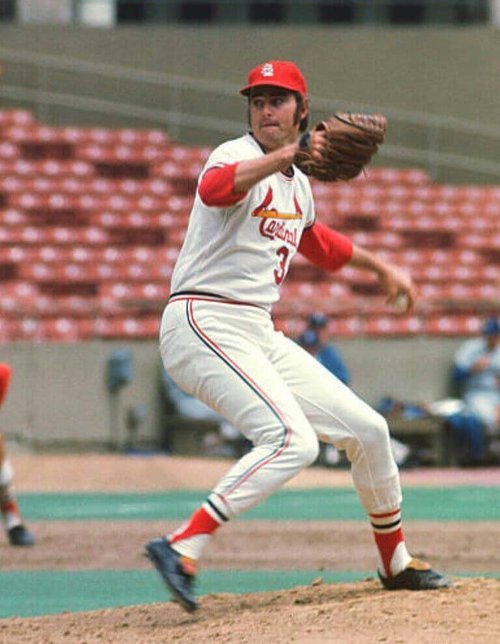
Carlton’s early years in professional baseball were marked by steady development and a focus on refining his craft. The Cardinals saw potential in his live arm and impressive velocity, and they worked with him to develop a repertoire that would maximize his natural talents. Carlton’s signature pitch, the slider, began to take shape during this period, setting the stage for his dominance at the major league level.
Steve Carlton made his major league debut with the St. Louis Cardinals on April 12, 1965, at the age of 20. While his initial outings were modest, it was clear that Carlton possessed a unique blend of talent and poise. Over the next few seasons, he gradually earned a spot in the Cardinals’ rotation, showcasing flashes of brilliance that hinted at the greatness to come.
One of Carlton’s most memorable early performances came in 1969, when he struck out 19 batters in a game against the New York Mets, setting a National League record for a nine-inning game at the time. This remarkable feat underscored his ability to overpower hitters and cemented his reputation as one of the league’s rising stars. Despite his individual success, Carlton often clashed with Cardinals management over salary disputes, a recurring theme that would eventually lead to his departure from the team.
In one of the most lopsided trades in baseball history, Steve Carlton was traded to the Philadelphia Phillies before the 1972 season in exchange for pitcher Rick Wise. The trade proved to be a transformative moment in Carlton’s career and in the fortunes of the Phillies. While Wise was a capable pitcher, Carlton quickly established himself as one of the most dominant hurlers in the game, turning the trade into a coup for Philadelphia.
Carlton’s first season with the Phillies in 1972 was nothing short of historic. In a remarkable display of pitching brilliance, he won 27 games for a team that managed only 59 victories overall. His 1.97 ERA, 310 strikeouts, and 30 complete games earned him his first Cy Young Award, making him the unanimous choice for the honor. The 1972 season, often referred to as “Carlton’s season,” remains one of the greatest individual performances by a pitcher in MLB history.
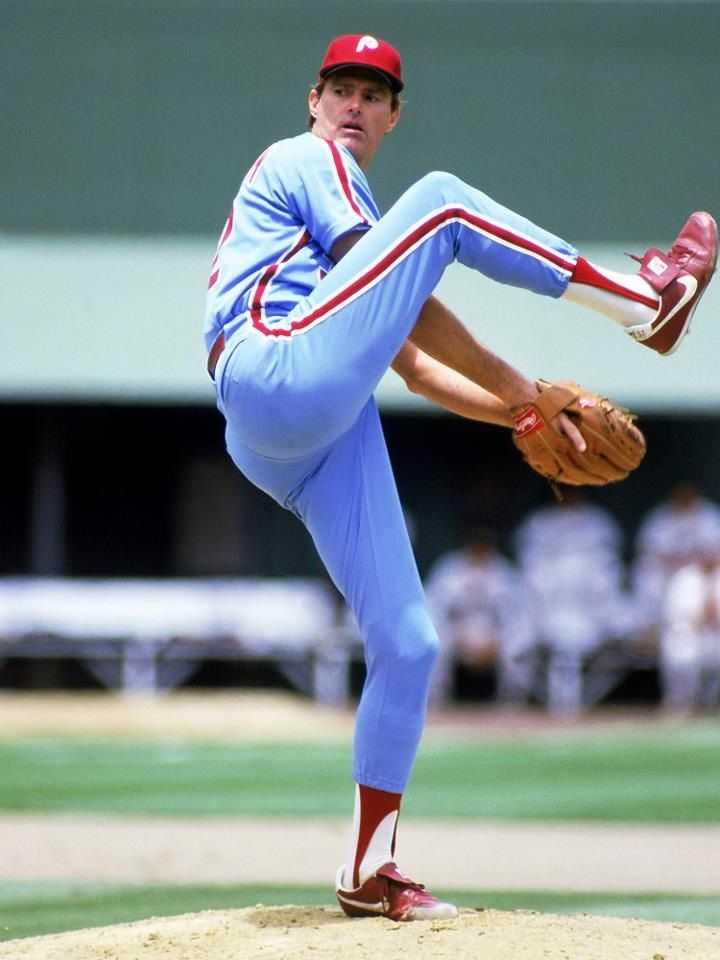
Throughout the 1970s and early 1980s, Steve Carlton continued to establish himself as one of the preeminent pitchers in baseball. He was a workhorse on the mound, consistently ranking among the league leaders in innings pitched, strikeouts, and complete games. Carlton’s durability and effectiveness were unmatched, and he became known for his ability to rise to the occasion in big games.
Carlton’s pitching arsenal was built around his devastating slider, a pitch that baffled hitters and became his signature weapon. Complementing the slider was a powerful fastball and a deceptive changeup, giving him a versatile repertoire that allowed him to attack hitters in a variety of ways. His ability to locate pitches with precision made him a nightmare for opposing batters, and he routinely posted strikeout totals that ranked among the best in the league.
In 1977, Carlton enjoyed another standout season, winning 23 games and leading the National League in strikeouts with 198. His dominance earned him his second Cy Young Award, and he continued to solidify his status as the ace of the Phillies’ pitching staff.
The 1980 season represented the culmination of Steve Carlton’s career and the peak of the Philadelphia Phillies’ success. Carlton was instrumental in leading the Phillies to their first World Series championship in franchise history, delivering a series of masterful performances in the postseason. During the regular season, he won 24 games, posted a 2.34 ERA, and struck out 286 batters, earning his third Cy Young Award.
In the World Series against the Kansas City Royals, Carlton was dominant, winning two critical games and helping the Phillies secure the title in six games. His performance in Game 6, where he pitched seven strong innings and allowed only one earned run, was a defining moment in his career. The victory cemented Carlton’s legacy as one of the greatest postseason performers of his era.
As the 1980s progressed, Carlton continued to pitch at an elite level, defying the aging curve and remaining one of the most effective pitchers in the game. In 1982, he won his fourth Cy Young Award after posting a 23-11 record, a 3.10 ERA, and leading the league with 286 strikeouts. At the age of 37, Carlton’s ability to maintain his dominance was a testament to his conditioning, preparation, and mental toughness.
Carlton’s late career was marked by milestones and achievements that further solidified his place in baseball history. In 1983, he recorded his 300th career win, becoming one of only a handful of pitchers to reach that exclusive club. He also surpassed 4,000 career strikeouts, joining Nolan Ryan as one of the first two pitchers to achieve the feat. His longevity and consistent excellence made him a revered figure in the game, and his accomplishments set a standard for future generations of pitchers.
Steve Carlton’s impact on baseball extends far beyond his statistical achievements. His approach to pitching, characterized by meticulous preparation and an unwavering commitment to his craft, served as a model for aspiring pitchers. Carlton’s ability to reinvent himself as he aged, adapting his pitching style to compensate for a loss of velocity, demonstrated his intelligence and resilience.
Carlton’s influence can also be seen in the evolution of the slider as a dominant pitch in the game. His mastery of the pitch set a benchmark for its effectiveness, and countless pitchers have sought to emulate his technique. The slider became a staple in the arsenal of many great pitchers who followed in Carlton’s footsteps.
Off the field, Carlton was known for his intense focus and often enigmatic personality. He maintained a famously private demeanor, rarely granting interviews and preferring to let his performance on the mound speak for itself. This mystique only added to his legend, making him one of the most intriguing figures in baseball history.
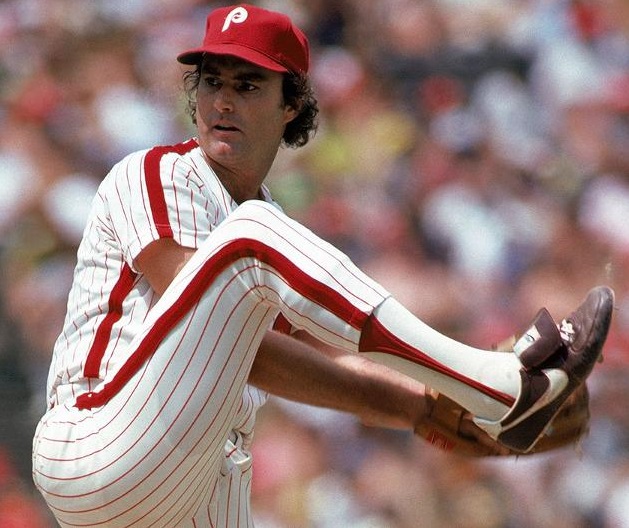
Steve Carlton’s MLB career is a testament to the heights that can be achieved through talent, dedication, and an unwavering pursuit of excellence. With 329 career wins, 4,136 strikeouts, four Cy Young Awards, and a World Series championship, Carlton’s legacy is firmly etched in the history of the game. His dominance on the mound, highlighted by his devastating slider and remarkable consistency, set a standard that few pitchers have matched.
Carlton’s impact on baseball extends beyond his impressive numbers. He was a pioneer in his approach to pitching, a role model for future generations, and a symbol of excellence in an era defined by legendary players. As one of the greatest left-handed pitchers in history, Steve Carlton’s contributions to the game will continue to be celebrated and remembered for generations to come.




 The Baseball Scholar
Leave a comment