
Johnny Mize, nicknamed “The Big Cat,” is one of the most celebrated hitters in the history of Major League Baseball. Renowned for his powerful swing, exceptional bat control, and graceful defensive play at first base, Mize’s career spanned a transformative era in baseball, encompassing the challenges of World War II, the golden age of the sport, and the early days of post-war modernity. His journey through baseball is a story of resilience, excellence, and an enduring impact on the game that continues to be felt.
From his early years in Georgia to his Hall of Fame induction, Mize’s career is marked by consistent greatness at the plate, a knack for delivering in clutch situations, and a reputation as one of the finest gentlemen to ever play the game. Exploring his life and career provides insight not only into the achievements of a singular player but also into the broader evolution of baseball during one of its most exciting eras.

John Robert Mize was born on January 7, 1913, in Demorest, Georgia, a small town nestled in the northeastern part of the state. Growing up in a tight-knit community, Mize developed a love for sports at an early age, with baseball quickly emerging as his favorite pastime. His natural athleticism and hand-eye coordination made him a standout on the diamond, and he began to cultivate the skills that would one day make him a star.
Mize attended Piedmont College, where he continued to excel in baseball, showcasing his powerful bat and adept fielding. His abilities caught the attention of professional scouts, and he began his journey in organized baseball in the mid-1930s. Signed by the St. Louis Cardinals, Mize worked his way through the minor league system, refining his game and establishing himself as a hitter with extraordinary potential. His minor league success laid the groundwork for what would become a stellar major league career.
Johnny Mize made his major league debut with the St. Louis Cardinals in 1936 at the age of 23. From the outset, it was clear that Mize was no ordinary rookie. In his first full season in 1937, he batted .329 with 25 home runs, 113 RBIs, and a .937 OPS. His combination of power and precision at the plate immediately placed him among the league’s elite hitters, and he finished sixth in the National League MVP voting.
Over the next several years, Mize continued to solidify his reputation as one of the most fearsome sluggers in the game. He became a cornerstone of the Cardinals’ lineup, regularly finishing among the league leaders in home runs, RBIs, and batting average. His 1939 season was particularly impressive, as he led the league in home runs (28), RBIs (108), and slugging percentage (.626). His ability to hit for both power and average made him a rare and invaluable asset.
Mize’s swing was a marvel of efficiency and power. Unlike many sluggers of his era, he did not rely on brute force alone. Instead, his approach was rooted in exceptional bat control and a keen understanding of the strike zone. This allowed him to avoid excessive strikeouts, a rarity for power hitters, and maintain consistently high batting averages. His graceful swing earned him the nickname “The Big Cat,” a moniker that also reflected his agility and elegance at first base.
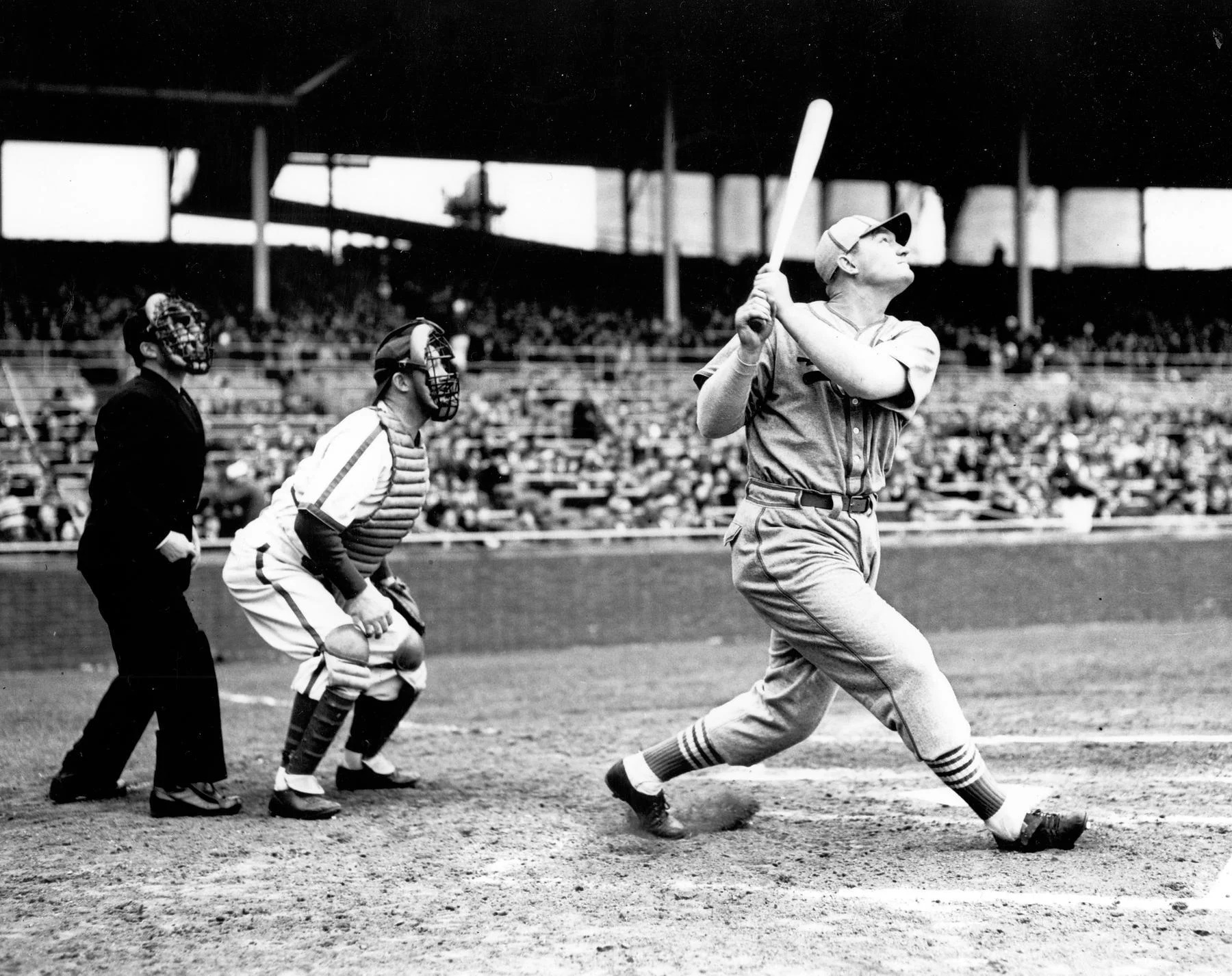
The 1940s represented the prime of Johnny Mize’s career, a period in which he established himself as one of the premier hitters in baseball history. In 1940, Mize led the National League in batting average (.349) and OPS (1.040), further cementing his status as an elite offensive force. He was a perennial All-Star during this era, earning selections in 1937, 1939, 1940, and 1941, and he consistently ranked among the league leaders in nearly every offensive category.
One of Mize’s most remarkable achievements came in 1947 when he hit 51 home runs for the New York Giants. This feat made him the first player in National League history to surpass the 50-home run mark while striking out fewer than 50 times in a season. His discipline at the plate and ability to make consistent contact were unparalleled, and his performance that year remains one of the most extraordinary in baseball history.
Mize also achieved the rare distinction of leading the league in home runs and RBIs multiple times throughout his career. He led the National League in home runs four times (1939, 1940, 1947, 1948) and RBIs three times (1940, 1942, 1947). His ability to drive in runs in crucial situations made him a valuable asset to every team he played for.
In addition to his power numbers, Mize was a career .312 hitter, a testament to his well-rounded offensive skills. He finished his career with 359 home runs, 1,337 RBIs, and a .959 OPS. His career WAR (Wins Above Replacement) of 70.7 further underscores his impact on the field and his value to his teams.
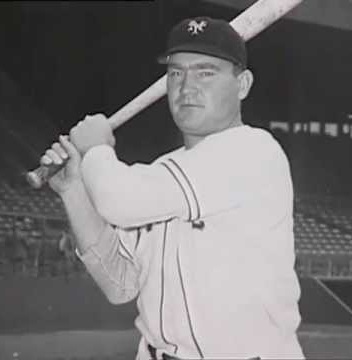
Johnny Mize’s career was interrupted by World War II, a period that saw many of baseball’s greatest stars put their careers on hold to serve their country. Mize enlisted in the United States Navy in 1943 and spent three years away from the game, missing the entirety of the 1943, 1944, and 1945 seasons. His decision to serve was a reflection of his character and sense of duty, qualities that endeared him to fans and teammates alike.
When Mize returned to baseball in 1946, he quickly resumed his dominant form. Despite the physical toll of military service, he demonstrated remarkable resilience, hitting .337 with 22 home runs and 103 RBIs in his first season back. His ability to regain his pre-war form is a testament to his dedication and work ethic.
In 1949, Mize was traded to the New York Yankees, a move that would position him for success in the later stages of his career. While his days as a full-time starter were behind him, Mize embraced a new role as a part-time player and pinch-hitter. His leadership and clutch hitting proved invaluable to the Yankees, who were in the midst of their historic dynasty.
Mize played a key role in the Yankees’ World Series victories in 1949, 1950, 1951, 1952, and 1953. His postseason performances were particularly memorable, including a standout showing in the 1952 World Series, where he hit three home runs and drove in six runs. His ability to deliver in high-pressure situations made him a vital component of the Yankees’ success during this era.
Johnny Mize’s impact on baseball extends far beyond his impressive statistics. He was a pioneer in the art of hitting, combining power and precision in a way that was ahead of his time. His approach to the plate, characterized by patience, discipline, and efficiency, set a standard for future generations of hitters.
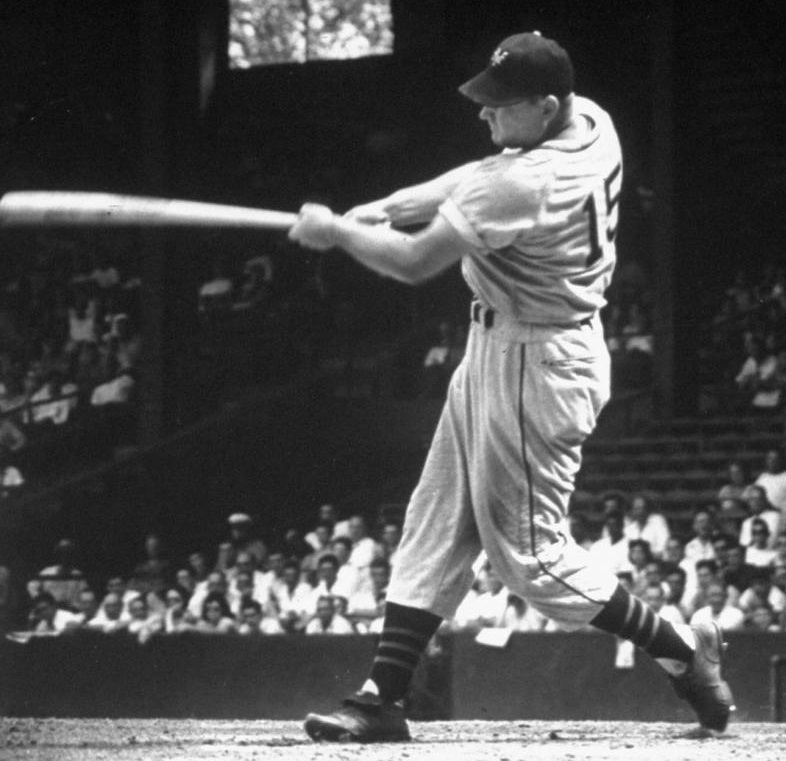
Mize’s legacy also includes his contributions to the integration of baseball. While not directly involved in the civil rights movement within the sport, he was a member of the Yankees during a period when integration was reshaping the game. His professionalism and respect for all players helped foster a more inclusive environment in the league.
In 1981, Johnny Mize was inducted into the Baseball Hall of Fame, a fitting recognition of his extraordinary career. His contributions to the game, both on and off the field, continue to be celebrated by fans and historians alike.
Johnny Mize’s MLB career is a testament to the power of talent, determination, and integrity. From his early days in Georgia to his emergence as one of baseball’s premier hitters, Mize’s journey is a story of greatness achieved through hard work and perseverance. His statistical achievements, including 359 home runs, 1,337 RBIs, and a .312 batting average, place him among the all-time greats. Beyond the numbers, Mize’s impact on the game is reflected in his influence on future generations of players and his role as a model of sportsmanship and excellence. Johnny Mize’s legacy is one of lasting greatness, and his contributions to baseball will be celebrated for generations to come.


 The Baseball Scholar
Leave a comment