
Frank Thomas, affectionately known as “The Big Hurt,” is one of the most formidable hitters in Major League Baseball history. His career spanned from 1990 to 2008, a period marked by unparalleled offensive production, numerous accolades, and a reputation as one of the game’s most disciplined and powerful hitters. From his early days as a promising athlete to his peak years with the Chicago White Sox and his eventual induction into the Baseball Hall of Fame, Thomas’s career is a study in excellence, consistency, and impact on the game of baseball.
Frank Thomas’s journey to MLB stardom begins with his early life and development as an athlete, continues through his years of dominance in the majors, and extends to his enduring legacy as a transformative figure in baseball. His statistics, achievements, and influence on the sport make his story one of the most compelling in the annals of baseball history.

Frank Edward Thomas Jr. was born on May 27, 1968, in Columbus, Georgia. From a young age, it was evident that Thomas was a gifted athlete. Growing up in a sports-loving family, he excelled in multiple sports, including baseball, football, and basketball. His early exposure to baseball ignited a passion that would drive him throughout his life.
Thomas attended Columbus High School, where he continued to display his athletic prowess. However, his path to professional baseball was not linear. Despite his talent on the diamond, Thomas was not drafted out of high school. Instead, he accepted a scholarship to Auburn University, where he initially played both football and baseball. His decision to focus on baseball proved to be transformative.
At Auburn, Thomas blossomed into a baseball star. Under the guidance of head coach Hal Baird, he honed his skills as a hitter, combining raw power with a keen understanding of the strike zone. By his junior year, Thomas was widely regarded as one of the top collegiate hitters in the country. His performance earned him a spot on the United States National Team and caught the attention of MLB scouts.
In the 1989 MLB Draft, the Chicago White Sox selected Thomas with the seventh overall pick. His selection marked the beginning of a professional career that would change the trajectory of the franchise and leave an indelible mark on baseball.
Frank Thomas made his major league debut on August 2, 1990, at the age of 22. From the outset, it was clear that he was no ordinary rookie. In just 60 games during his debut season, Thomas hit .330 with seven home runs, 31 RBIs, and a .983 OPS. His advanced plate discipline and natural hitting ability were immediately apparent, setting the stage for a breakout campaign in 1991.

In his first full season, Thomas established himself as one of the most dominant hitters in the game. He batted .318 with 32 home runs, 109 RBIs, and a league-leading 138 walks, resulting in an on-base percentage of .453. His unique combination of power and patience was rare, and he quickly became the centerpiece of the White Sox lineup. Thomas finished third in the American League MVP voting that year, signaling the start of a career-long trend of offensive excellence.
The 1993 and 1994 seasons represent the peak of Frank Thomas’s career. In 1993, he won his first American League MVP award after hitting .317 with 41 home runs, 128 RBIs, and a 1.033 OPS. He led the White Sox to the playoffs for the first time since 1983, further cementing his status as the face of the franchise. Thomas’s ability to combine raw power with an exceptional batting eye made him a nightmare for opposing pitchers and a model of consistency.
The following year, Thomas continued his dominance, winning his second consecutive MVP award. In the strike-shortened 1994 season, he hit .353 with 38 home runs, 101 RBIs, and a league-leading 1.217 OPS. His performance during this period is widely regarded as one of the greatest stretches of offensive production in baseball history. Thomas became the first player since Roger Maris in 1961 to win back-to-back MVP awards in the American League, a testament to his unparalleled impact on the game.
Throughout the mid-1990s, Thomas continued to post staggering numbers. He was a perennial All-Star, a regular Silver Slugger winner, and one of the most feared hitters in the league. His ability to hit for both power and average, combined with his exceptional plate discipline, set him apart from his peers. By the end of the decade, Thomas had firmly established himself as one of the greatest hitters of his generation.
While Frank Thomas’s career was defined by success, it was not without its challenges. Injuries began to take a toll in the late 1990s and early 2000s, limiting his playing time and effectiveness. Despite these setbacks, Thomas continued to demonstrate his resilience and commitment to the game. In 2000, he enjoyed a resurgent season, hitting .328 with 43 home runs, 143 RBIs, and a 1.061 OPS. He finished second in the MVP voting, narrowly missing out on what would have been his third MVP award.
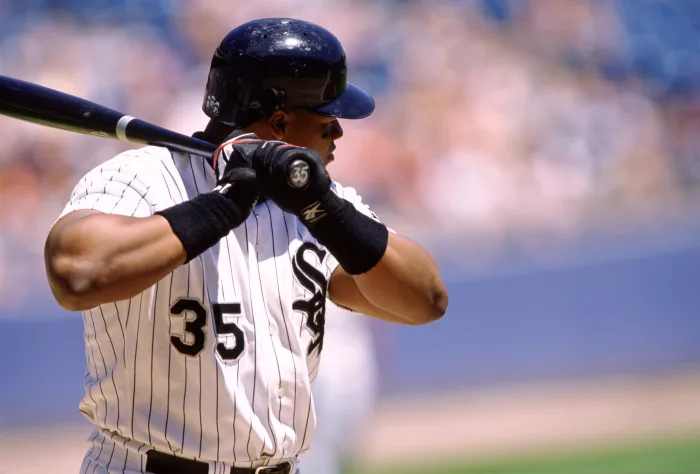
In 2005, after spending 16 seasons with the White Sox, Thomas’s tenure with the team came to an end. Injuries had limited his contributions during the team’s historic World Series run that year, and he parted ways with the organization in the offseason. While his departure marked the end of an era in Chicago, it also provided an opportunity for Thomas to showcase his resilience and adaptability.
Frank Thomas signed with the Oakland Athletics in 2006, where he experienced a career renaissance. At the age of 38, he hit .270 with 39 home runs, 114 RBIs, and a .926 OPS, leading the A’s to the American League Championship Series. His performance earned him a fourth-place finish in the MVP voting, a remarkable achievement for a player in the twilight of his career.
Thomas spent the final years of his career with the Toronto Blue Jays and a second stint with the Athletics before retiring after the 2008 season. He finished his career with a .301 batting average, 521 home runs, 1,704 RBIs, and a .974 OPS. His ability to maintain such a high level of production over nearly two decades is a testament to his skill, work ethic, and dedication to the game.
Frank Thomas’s impact on baseball extends far beyond his impressive statistics. As one of the most disciplined and productive hitters of his era, he helped redefine what it meant to be a power hitter. His approach at the plate, characterized by patience and precision, set a standard for future generations of players.
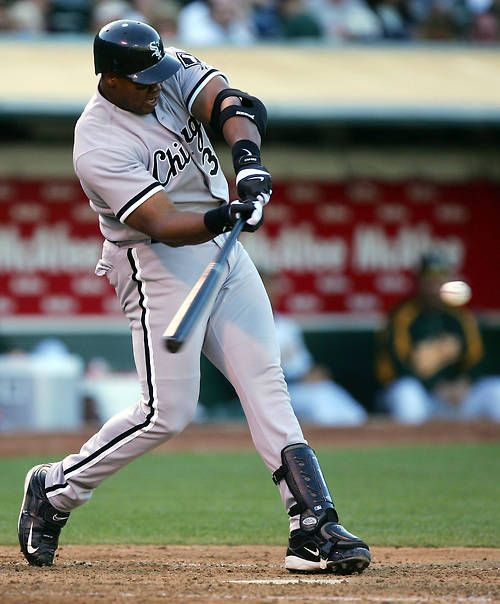
Thomas’s legacy also includes his role as a trailblazer for the designated hitter position. While he spent much of his early career as a first baseman, he transitioned to a full-time DH later in his career, proving that the position could be a legitimate and valuable role for elite players. His success helped pave the way for other sluggers to extend their careers as designated hitters.
In 2014, Frank Thomas was inducted into the Baseball Hall of Fame in his first year of eligibility. His induction speech reflected his deep appreciation for the game and the people who supported him throughout his journey. As one of the few players of his era untouched by the controversies of performance-enhancing drugs, Thomas’s legacy remains untarnished and serves as a model of integrity and excellence.
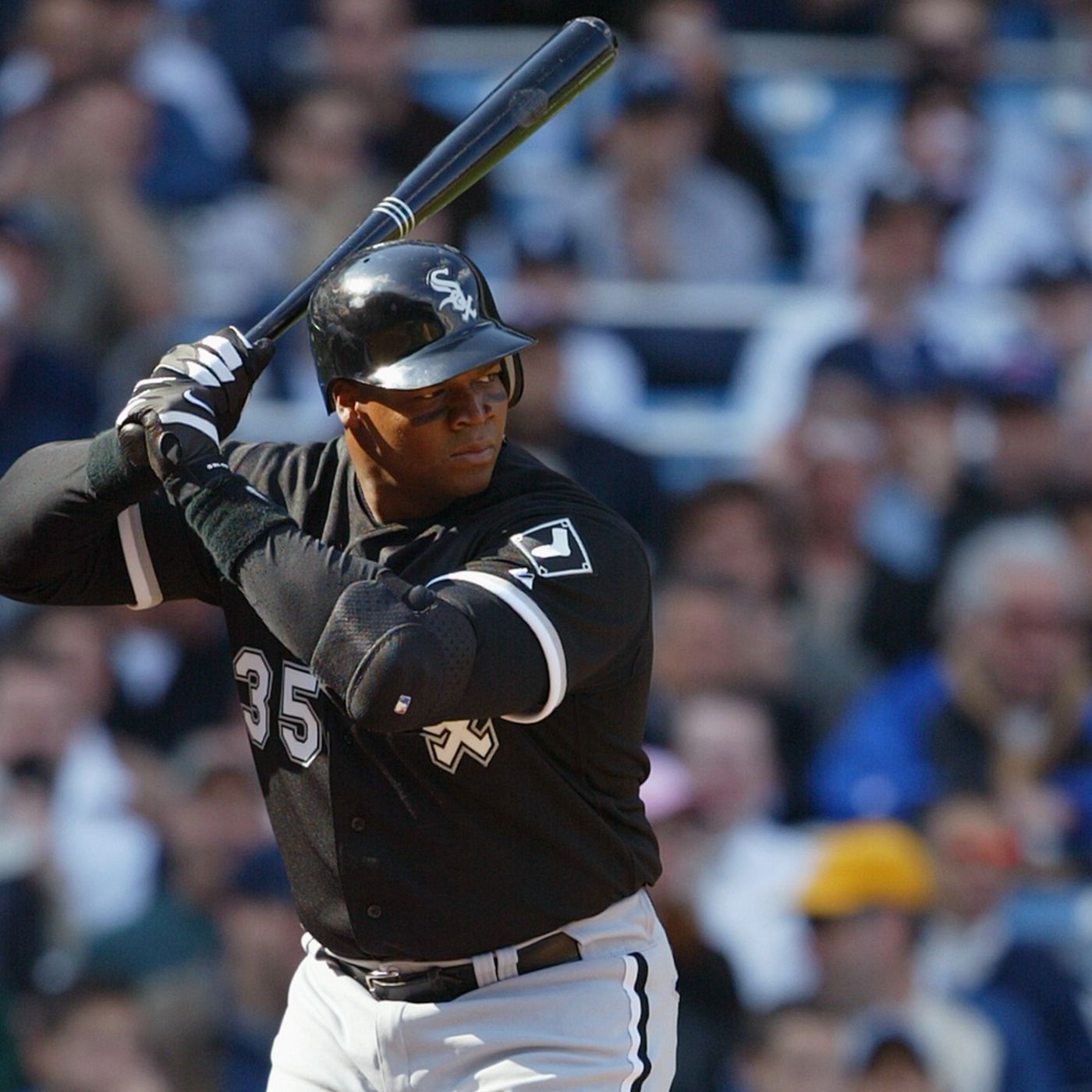
Frank Thomas’s MLB career is a testament to the power of talent, discipline, and perseverance. From his early days as a promising athlete in Georgia to his emergence as one of the most feared hitters in baseball, Thomas’s journey is a story of greatness achieved through hard work and dedication. His statistical achievements, including 521 home runs, 1,704 RBIs, and two MVP awards, place him among the all-time greats. Beyond the numbers, Thomas’s impact on the game is reflected in his influence on future generations of players and his role as a symbol of integrity in an era often marked by controversy. Frank Thomas’s legacy is one of lasting greatness, and his contributions to baseball will be celebrated for generations to come.



 The Baseball Scholar
Leave a comment