
Bert Blyleven’s career in Major League Baseball is a remarkable story of resilience, consistency, and extraordinary skill. Known for his devastating curveball and longevity on the mound, Blyleven became one of the most reliable and productive pitchers in MLB history. Spanning 22 seasons from 1970 to 1992, his career was marked by statistical milestones, significant contributions to championship teams, and a gradual recognition of his greatness. Despite facing challenges in gaining the acclaim he deserved during his playing days, Blyleven’s eventual induction into the Baseball Hall of Fame in 2011 cemented his legacy as one of the finest pitchers of his generation.
To fully appreciate Bert Blyleven’s impact on the game of baseball, it is important to examine his early life and development as an athlete, his key accomplishments and moments of dominance, the challenges he faced during his career, and his lasting influence on the sport. His journey is a testament to the importance of persistence, precision, and the evolution of how greatness is measured in baseball.
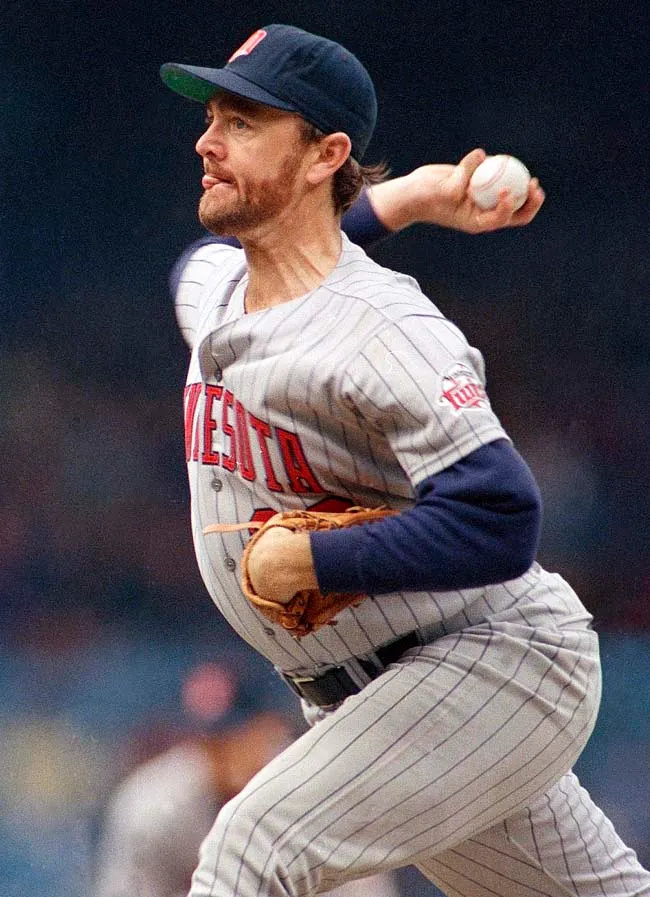
Rik Aalbert Blyleven was born on April 6, 1951, in Zeist, Netherlands. His family immigrated to the United States when he was a young child, eventually settling in Southern California. It was there, in the sun-drenched fields of Garden Grove, that Blyleven’s love for baseball began to take root. Growing up, he was inspired by the great pitchers of the era, particularly Sandy Koufax, whose mastery of the curveball left a lasting impression on the young Blyleven.
Blyleven honed his craft at Santiago High School, where his talent on the mound quickly set him apart from his peers. Scouts were captivated by his poise, command, and, most notably, his curveball—a pitch that would become his signature weapon throughout his career. By the time he graduated, Blyleven was regarded as one of the most promising young pitchers in the country.
In the 1969 MLB Draft, the Minnesota Twins selected Blyleven in the third round. His professional career began in earnest as he worked his way through the minor leagues, where he continued to refine his skills and develop a reputation as a strikeout artist. Blyleven’s rapid ascent through the Twins’ farm system was a testament to his advanced abilities and readiness to compete at the highest level.
Blyleven made his MLB debut for the Twins on June 5, 1970, at just 19 years old. He immediately displayed the composure and effectiveness that would define his career, pitching seven innings and allowing only two runs in his first start. Despite his youth, Blyleven quickly became a mainstay in the Twins’ rotation, finishing his rookie season with a 10-9 record, a 3.18 ERA, and 135 strikeouts in 164 innings pitched. His performance earned him third place in the American League Rookie of the Year voting, signaling the arrival of a new pitching star.
Over the next several seasons, Blyleven established himself as one of the most reliable and dominant pitchers in baseball. His ability to consistently throw strikes and generate strikeouts made him a valuable asset for the Twins, even as the team struggled to contend in the competitive American League. In 1973, Blyleven enjoyed his first 20-win season, finishing with a 20-17 record, a 2.52 ERA, and an impressive 258 strikeouts. His 325 innings pitched that year underscored his incredible durability and stamina, qualities that would become hallmarks of his career.

Blyleven’s time with the Twins also showcased his ability to perform under pressure. His pinpoint control and devastating curveball allowed him to neutralize some of the league’s most potent offenses, earning him a reputation as one of the most feared pitchers of the era. Despite playing for teams that often failed to provide strong run support, Blyleven’s individual brilliance shone through, as evidenced by his consistently low ERAs and high strikeout totals.
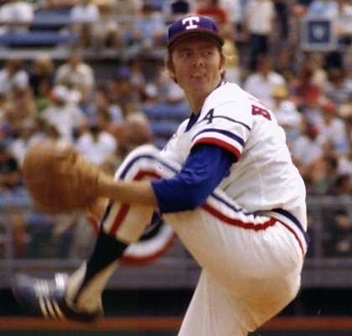
In 1976, Blyleven’s tenure with the Twins came to an end when he was traded to the Texas Rangers. While his time in Texas was relatively short, it was marked by continued excellence on the mound. Blyleven posted a 2.76 ERA in 1976 and a 2.72 ERA in 1977, further cementing his reputation as one of the game’s most dependable pitchers. However, he was not always satisfied with his situation, and his dissatisfaction with team dynamics occasionally led to tensions with management.
Blyleven’s career took another turn in 1978 when he was traded to the Pittsburgh Pirates. It was during his time with the Pirates that Blyleven experienced one of the most rewarding moments of his career: winning the World Series in 1979. As a key member of the “We Are Family” Pirates, Blyleven contributed significantly to the team’s success, both during the regular season and in the postseason. In the World Series, he pitched effectively out of the bullpen in a crucial Game 5, helping the Pirates secure their championship. The experience of winning a title was a highlight of Blyleven’s career, validating years of hard work and perseverance.
After a stint with the Cleveland Indians from 1981 to 1985, Blyleven returned to the Twins in 1985, bringing his career full circle. During this period, he continued to pile up strikeouts and climb the all-time leaderboards. In 1986, he achieved a remarkable milestone by recording his 3,000th career strikeout, becoming just the 10th pitcher in MLB history to reach that mark. His ability to sustain a high level of performance over such a long period was a testament to his skill, adaptability, and work ethic.
Blyleven’s second stint with the Twins proved to be just as impactful as his first. In 1987, he played a crucial role in helping the team win its first World Series title since 1924. Blyleven’s postseason experience and steady presence on the mound were invaluable assets for the Twins, and his contributions in the playoffs demonstrated his ability to rise to the occasion when it mattered most. The 1987 World Series victory was a crowning achievement for Blyleven and a fitting reward for his years of dedication to the game.
After leaving the Twins, Blyleven spent the final years of his career with the California Angels. While his effectiveness began to decline as he entered his 40s, he remained a respected and valuable member of the team. Blyleven retired after the 1992 season, having compiled a career record of 287-250, a 3.31 ERA, and 3,701 strikeouts—good for fifth on the all-time strikeout list at the time of his retirement.
Bert Blyleven’s impact on the game of baseball extends far beyond his impressive statistics. As a pitcher, he was a master of the craft, combining pinpoint control with a devastating curveball that baffled hitters for over two decades. His ability to consistently perform at a high level, even in the face of adversity, made him a model of durability and resilience.
Despite his remarkable accomplishments, Blyleven’s career was often underappreciated during his playing days. He was sometimes overshadowed by flashier pitchers with higher win totals or more dominant single seasons. However, as advanced metrics like WAR (Wins Above Replacement) and FIP (Fielding Independent Pitching) gained prominence in the evaluation of players, Blyleven’s true value became more apparent. These metrics highlighted his ability to prevent runs, generate strikeouts, and limit walks, solidifying his status as one of the greatest pitchers of all time.
Blyleven’s eventual induction into the Baseball Hall of Fame in 2011 was a long-overdue recognition of his contributions to the game. His induction was celebrated not only by his peers but also by a new generation of baseball fans and analysts who appreciated the nuances of his career. Today, Blyleven is remembered as a trailblazer who bridged the gap between traditional and modern evaluations of pitching excellence.

Bert Blyleven’s MLB career is a testament to the power of perseverance, precision, and a deep love for the game of baseball. From his early days as a young phenom with the Minnesota Twins to his role as a World Series champion and his eventual enshrinement in the Hall of Fame, Blyleven’s journey is one of remarkable achievement and enduring impact. His 3,701 strikeouts, two World Series titles, and reputation as one of the greatest curveball pitchers in history ensure that his legacy will continue to inspire future generations of players and fans. Through his skill, determination, and unwavering commitment to excellence, Bert Blyleven left an indelible mark on the sport he loved.



 The Baseball Scholar
Leave a comment