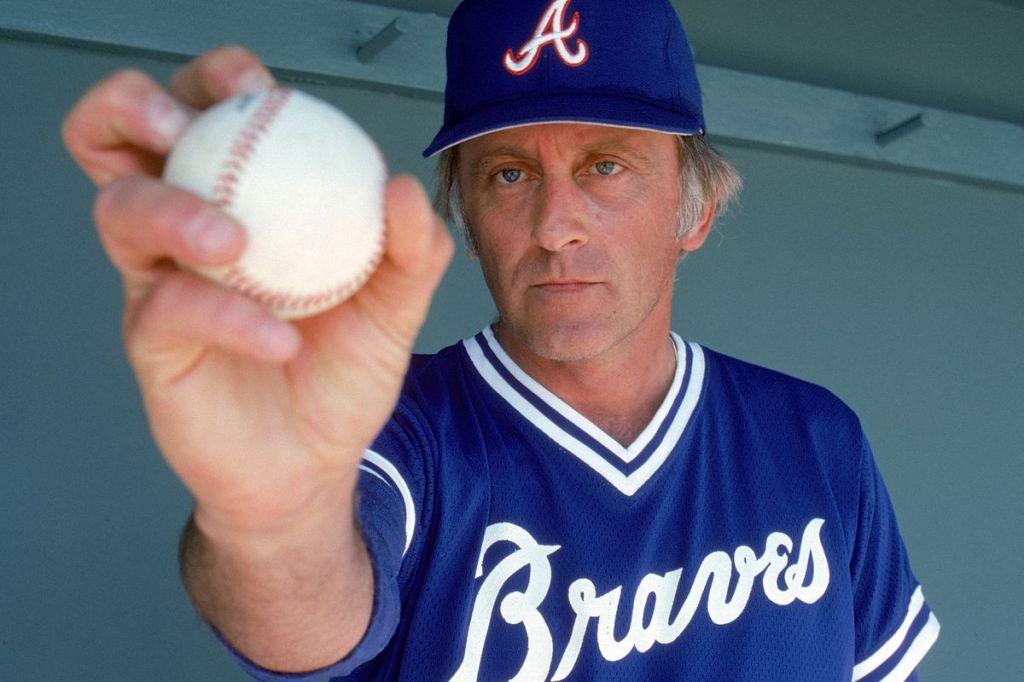
Phil Niekro’s career is a story of mastery over a unique and enigmatic pitch, the knuckleball, and an extraordinary display of longevity in Major League Baseball. Over a career that spanned 24 seasons, Niekro became one of the most successful and respected pitchers in the history of the game. His ability to sustain success well into his 40s, coupled with his contributions to the Atlanta Braves and his impact on the craft of pitching, has solidified his legacy in the sport.
Philip Henry Niekro was born on April 1, 1939, in Blaine, Ohio. He grew up in a small, blue-collar town where baseball was a central part of community life. Niekro’s father, a coal miner and a former semi-professional baseball player, was instrumental in introducing Phil and his younger brother, Joe Niekro, to the game. It was their father who taught them the basics of the knuckleball, a pitch that would become synonymous with Phil’s career.
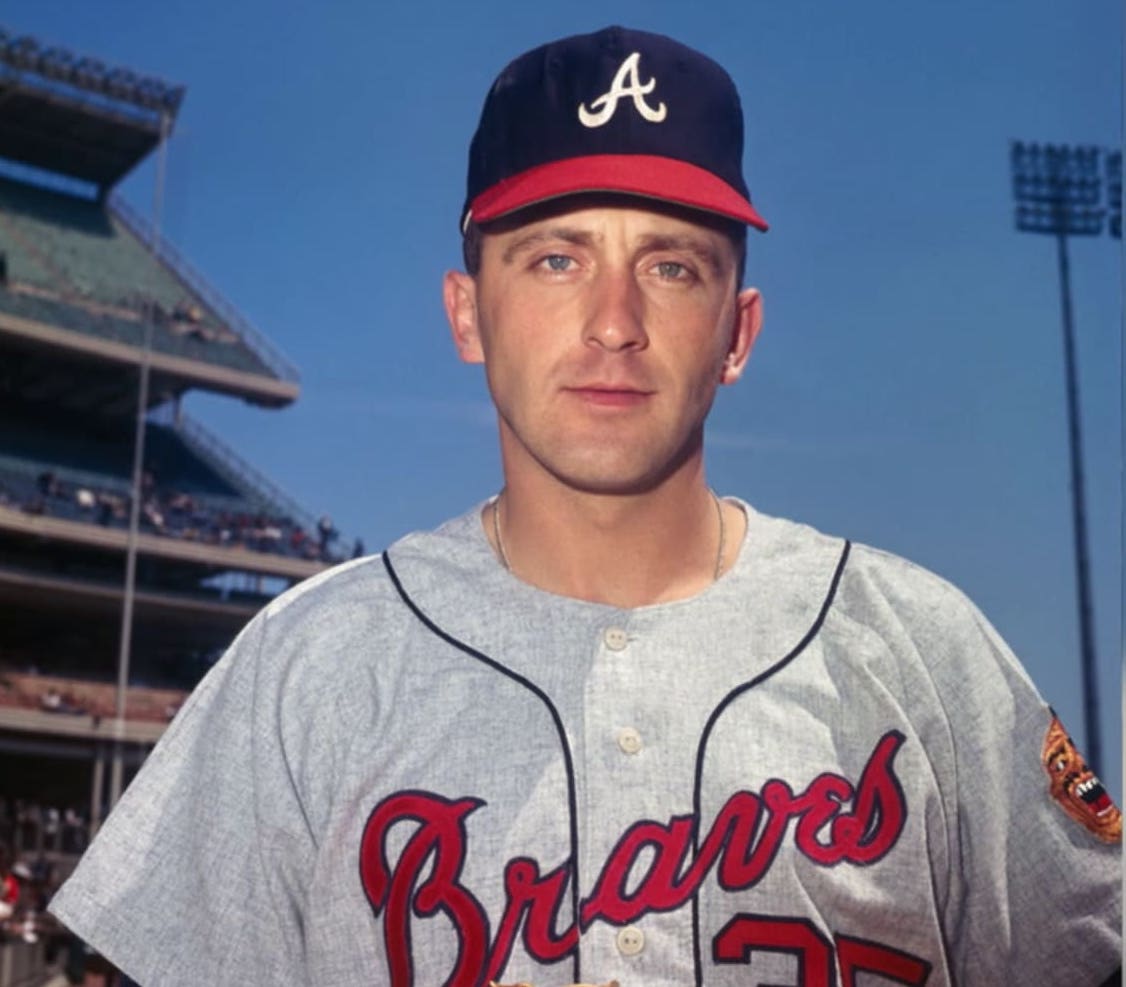
The knuckleball, a pitch thrown with minimal spin to create erratic movement, became a tool for Niekro during his teenage years. Although difficult to control and master, the pitch suited Niekro’s style and helped him stand out. He continued to develop the knuckleball alongside more conventional pitches as he played high school and American Legion baseball, eventually drawing the attention of scouts.
In 1958, Niekro was signed by the Milwaukee Braves as an amateur free agent. At the time, he was considered a modest prospect, and his unorthodox reliance on the knuckleball raised questions about his potential for success at the professional level. Nevertheless, Niekro was determined to prove himself.
Niekro’s journey through the minor leagues was marked by inconsistency, as he worked to refine his knuckleball and gain the trust of his managers. The pitch’s unpredictable nature often led to high walk totals and frustrating outings, but Niekro persisted. By the early 1960s, he had earned a reputation as a durable pitcher with an ability to keep hitters off balance.
Phil made his MLB debut with the Milwaukee Braves on April 15, 1964, at the age of 25. Initially used as a reliever, Niekro’s transition to the major leagues was gradual. He spent parts of the 1964 and 1965 seasons shuttling between the Braves and their minor league affiliates, continuing to hone his craft.
It wasn’t until the Braves relocated to Atlanta in 1966 that Niekro began to establish himself as a key contributor. In 1967, he transitioned to a starting role and posted a 1.87 ERA in 207 innings pitched, leading the National League in ERA. His breakout performance signaled the beginning of a stellar career.
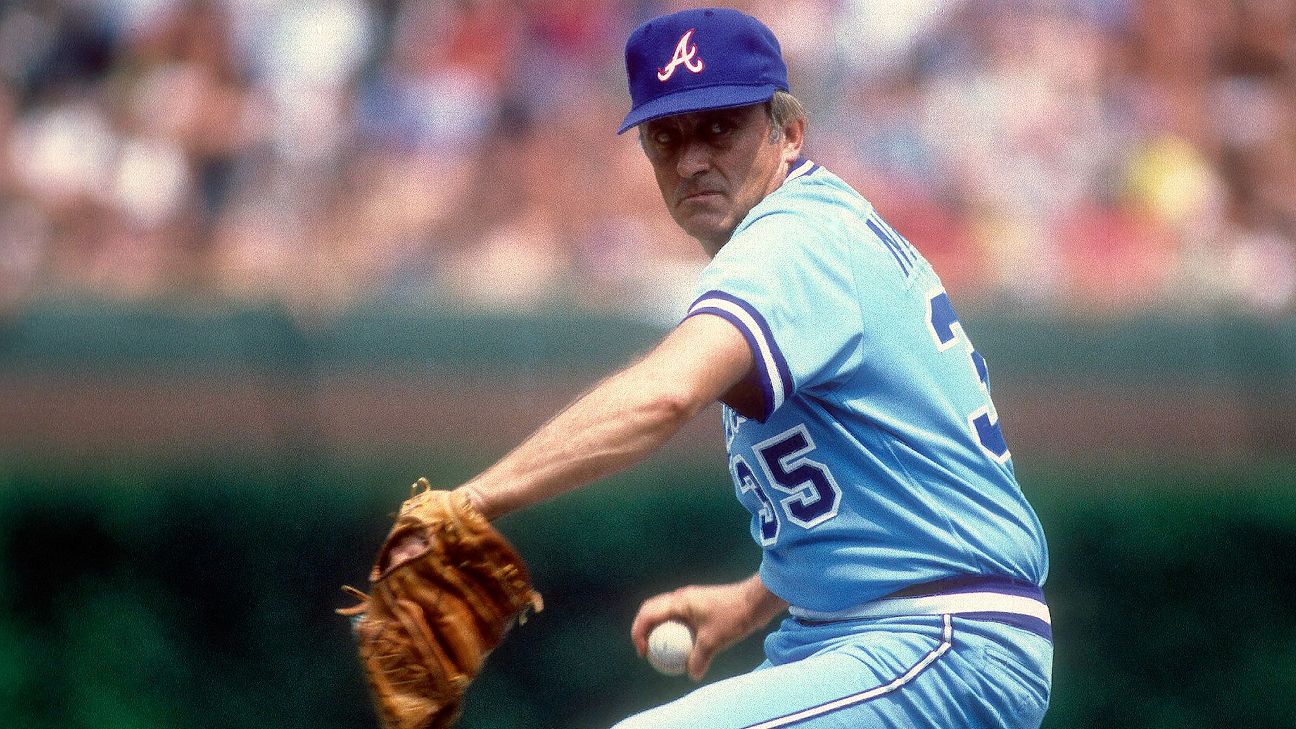
Phil Niekro’s career is defined by his sustained excellence and his mastery of the knuckleball. Over 24 seasons, Niekro compiled a record of 318-274 with a 3.35 career ERA and 3,342 strikeouts. He remains one of only 24 pitchers in MLB history to reach the 300-win milestone, a testament to his durability and skill.
One of Niekro’s most remarkable seasons came in 1979 when he posted a 21-20 record with a 3.39 ERA in 342 innings pitched. His 20 losses are an anomaly in the context of his overall dominance, reflecting the limitations of the Braves’ roster during that era rather than any shortcomings in Niekro’s performance. He led the league in complete games (23) and innings pitched (342), showcasing his remarkable endurance.
Niekro’s career was also marked by several no-hitters and near-no-hitters. Although he never achieved an official no-hitter, he came tantalizingly close on multiple occasions, using his knuckleball to confound hitters and keep them guessing.
The knuckleball is a pitch that demands patience, precision, and confidence. Unlike traditional pitches, which rely on velocity and spin, the knuckleball’s success is rooted in its lack of spin and its unpredictable movement. Few pitchers in MLB history have been able to master the pitch as effectively as Phil Niekro.
Niekro’s knuckleball was a weapon that made him one of the most difficult pitchers to face. Hitters struggled to time their swings against the pitch, and catchers often found it challenging to handle due to its erratic behavior. Niekro’s ability to locate the pitch in the strike zone and vary its movement made him a perennial All-Star and a Cy Young Award contender.

Niekro’s mastery of the knuckleball also allowed him to pitch effectively into his late 40s, a rarity in the demanding world of professional baseball. The pitch’s low physical strain on the arm gave him an advantage over conventional pitchers, enabling him to maintain his velocity and effectiveness long after most players had retired.
One of the most remarkable aspects of Phil Niekro’s career is his longevity. He pitched until the age of 48, defying the expectations of what a pitcher could achieve late in their career. Niekro’s work ethic, dedication to physical fitness, and reliance on the knuckleball all contributed to his ability to compete at a high level for more than two decades.
Niekro’s longevity was particularly evident in his consistency. He recorded at least 10 wins in 20 different seasons, a feat matched by only a handful of pitchers in MLB history. His 5,404⅓ career innings pitched rank fourth all-time, underscoring his remarkable durability and stamina.
Phil Niekro’s impact on the Atlanta Braves is immeasurable. As the franchise’s ace for much of the 1970s and 1980s, he provided stability and leadership during a period of rebuilding and transition. Niekro’s contributions to the Braves helped lay the foundation for the team’s eventual success in the 1990s, when they became perennial contenders.
Niekro’s influence also extends to the broader baseball community. As one of the most successful knuckleball pitchers in history, he inspired a new generation of players to embrace the pitch. His willingness to mentor younger players and share his knowledge of the knuckleball has left a lasting legacy on the game.

Phil Niekro’s career is filled with memorable moments and anecdotes that highlight his unique approach to the game. One of the most famous stories involves his final MLB appearance on September 27, 1987, at the age of 48. Pitching for the Atlanta Braves, Niekro recorded a complete-game victory against the San Francisco Giants, demonstrating his enduring skill and competitiveness.
Another memorable moment came during the 1982 season when Niekro helped lead the Braves to their first playoff appearance in over a decade. His leadership and clutch performances were instrumental in the team’s success, and his contributions were celebrated by fans and teammates alike.
Phil Niekro was inducted into the Baseball Hall of Fame in 1997, cementing his place among the game’s all-time greats. His induction was a celebration of his remarkable career and his contributions to the sport. Niekro’s 318 career wins, five All-Star selections, and five Gold Glove Awards are a testament to his excellence and versatility.
Niekro’s legacy is also reflected in his impact on the art of pitching. His success with the knuckleball demonstrated the pitch’s potential and inspired future generations of pitchers to embrace its challenges. Niekro’s dedication to his craft and his ability to adapt and evolve over the course of his career have made him a role model for aspiring players.

Phil Niekro’s MLB career is a story of perseverance, innovation, and excellence. From his humble beginnings in Ohio to his status as a Hall of Famer, Niekro’s journey is a testament to the power of determination and the enduring appeal of the knuckleball. His impressive statistics, including 318 wins and 3,342 strikeouts, are a reflection of his remarkable talent and work ethic.
As a leader, a mentor, and a master of the knuckleball, Phil Niekro has left an indelible mark on the game of baseball. His impact on the Atlanta Braves, his contributions to the art of pitching, and his enduring legacy as one of the game’s all-time greats ensure that his story will be celebrated for generations to come.



 The Baseball Scholar
Leave a comment