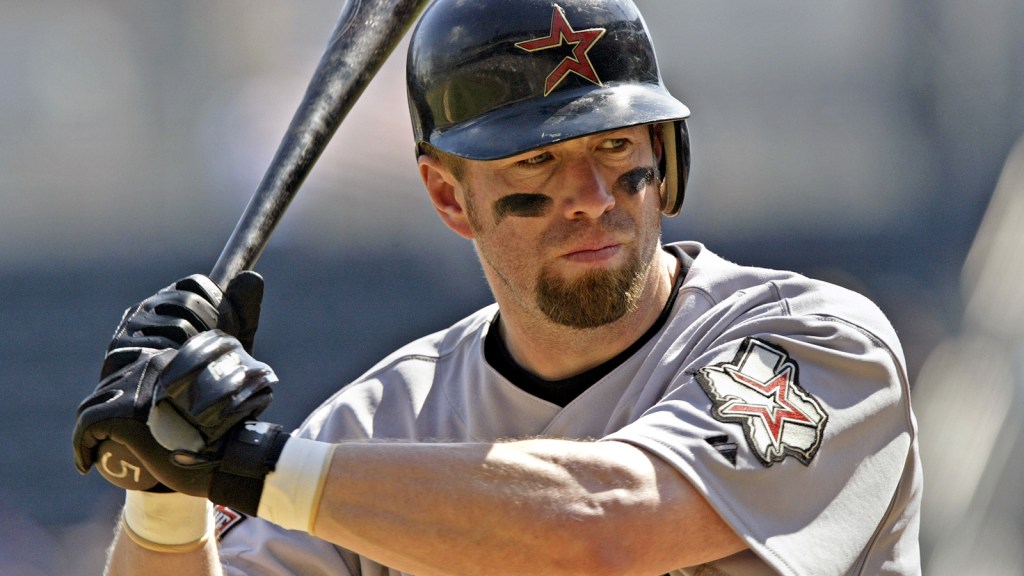
Jeff Bagwell’s career in Major League Baseball (MLB) is a testament to the power of perseverance, adaptability, and excellence. As one of the most accomplished first basemen in the history of the sport, Bagwell’s tenure with the Houston Astros is marked by extraordinary individual achievements, a pivotal role in his team’s success, and a unique impact on the game of baseball. His path to stardom, though unconventional, is a story of determination and transformation, as he defied expectations and carved out a Hall of Fame legacy.
Jeffrey Robert Bagwell was born on May 27, 1968, in Boston, Massachusetts. He grew up in Killingworth, Connecticut, where he developed a passion for sports from a young age. Bagwell excelled in both soccer and baseball during his high school years at Xavier High School in Middletown, Connecticut. His skills on the soccer field were particularly noteworthy, and he initially seemed destined for a career in that sport. However, his love for baseball ultimately prevailed, and he pursued it with unwavering dedication.
Bagwell attended the University of Hartford, where he continued to excel as a baseball player. Despite his relatively small stature compared to typical power hitters, Bagwell displayed exceptional plate discipline, a keen eye for the strike zone, and an innate ability to hit for both average and power. He was primarily a third baseman during his college career, and his offensive prowess caught the attention of professional scouts.
In the 1989 MLB Draft, Bagwell was selected in the fourth round by the Boston Red Sox. Although he showed promise as a prospect, he was not initially viewed as a future star. His unorthodox batting stance and his status as a third baseman in an organization with an entrenched starter at the position limited his opportunities to rise through the ranks.
One of the most pivotal moments in Jeff Bagwell’s career came on August 30, 1990, when he was traded from the Boston Red Sox to the Houston Astros in exchange for relief pitcher Larry Andersen. At the time, the trade was largely seen as a minor move to bolster Boston’s bullpen for a playoff push. However, it would later be recognized as one of the most lopsided trades in MLB history.
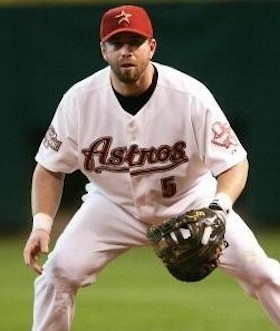
The Astros immediately transitioned Bagwell from third base to first base, a move that would prove to be transformative. The position change allowed him to focus on his offensive development without the defensive challenges of playing third base. Houston’s faith in Bagwell’s potential was quickly rewarded, as he made an immediate impact at the major league level.
Bagwell made his MLB debut with the Astros on April 8, 1991, and his rookie season was nothing short of spectacular. He hit .294 with 15 home runs, 82 RBIs, and a .387 on-base percentage, demonstrating a blend of power, patience, and consistency. His performance earned him the National League Rookie of the Year Award, making him the first player in Astros history to win the honor.
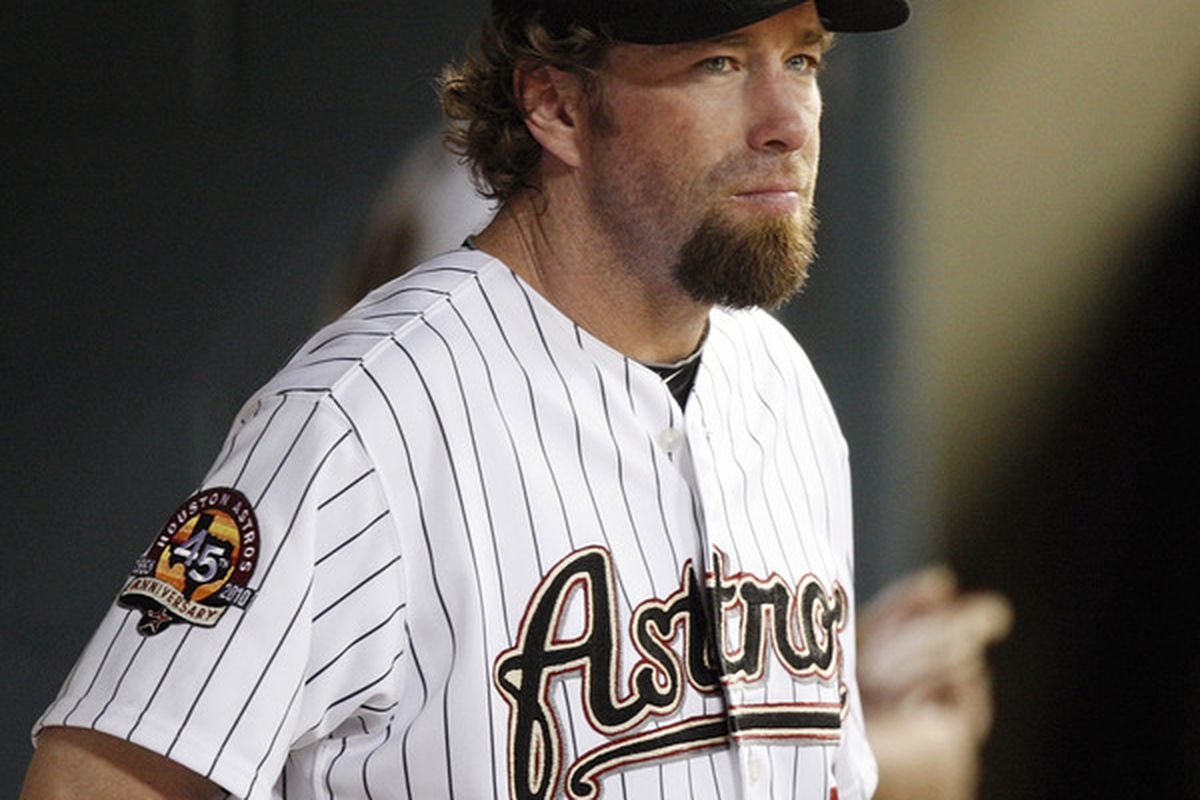
The early 1990s marked a period of growth and adaptation for Bagwell. As he adjusted to major league pitching and refined his approach at the plate, he steadily improved his offensive production. By the mid-1990s, Bagwell had established himself as one of the premier hitters in the game, combining a keen batting eye with the ability to drive the ball to all fields.
The 1994 season stands as one of the most remarkable in Jeff Bagwell’s career and in MLB history, despite being cut short by a players’ strike. Bagwell posted video game-like numbers, hitting .368 with 39 home runs, 116 RBIs, and a staggering 1.201 OPS (on-base plus slugging percentage) in just 110 games. His performance was particularly impressive considering the challenges of playing in the spacious Astrodome, which was notorious for suppressing offensive production.
Bagwell’s dominance in 1994 earned him the National League Most Valuable Player (MVP) Award, making him the first Astro to win the honor. He led the league in several key offensive categories, including RBIs, runs scored, slugging percentage, and OPS, and his combination of power and plate discipline was unmatched. The strike-shortened season denied Bagwell the opportunity to further pad his stats, but it did nothing to diminish the significance of his achievements.
Throughout the remainder of the 1990s and early 2000s, Jeff Bagwell continued to excel as one of the most complete players in baseball. His offensive consistency was matched by his defensive reliability at first base, where he won a Gold Glove Award in 1994. Bagwell’s ability to contribute in all facets of the game set him apart from many of his contemporaries.
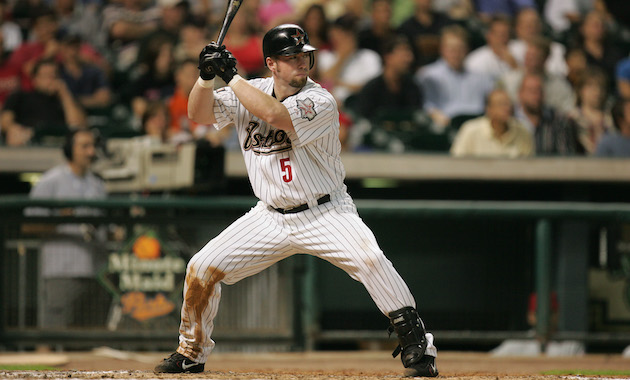
Bagwell’s offensive approach was characterized by his unorthodox stance, which saw him crouch low to the ground, and his quick, compact swing. This unique style allowed him to generate tremendous power while maintaining exceptional bat control. Over the course of his career, Bagwell recorded eight seasons with at least 30 home runs and nine seasons with 100 or more RBIs. He also drew over 100 walks in seven different seasons, a testament to his plate discipline and ability to work deep counts.
One of Bagwell’s most impressive statistical achievements was joining the exclusive 30-30 club (30 home runs and 30 stolen bases) in 1997. As a first baseman, his combination of power and speed was rare, and his 202 career stolen bases remain a notable aspect of his legacy.
As the face of the Houston Astros, Jeff Bagwell played a central role in the team’s success during his tenure. Alongside fellow Hall of Famer Craig Biggio, Bagwell formed the core of the Astros’ lineup for over a decade. The duo, affectionately known as the “Killer B’s,” helped propel the Astros to multiple playoff appearances and became synonymous with the franchise.
Bagwell’s leadership extended beyond his on-field performance. He was known for his work ethic, professionalism, and dedication to the game, qualities that inspired his teammates and earned him the respect of opponents. His steady presence in the lineup and ability to deliver in clutch situations made him a cornerstone of the Astros’ success.
The culmination of Bagwell’s career came in 2005, when the Astros reached the World Series for the first time in franchise history. Although injuries limited his playing time during the latter stages of his career, Bagwell’s contributions to the team’s journey to the Fall Classic were undeniable. The Astros ultimately fell to the Chicago White Sox in the World Series, but the achievement marked a significant milestone for the franchise and for Bagwell personally.
The final years of Jeff Bagwell’s career were marred by injuries, particularly to his shoulder, which hindered his ability to perform at his peak. Despite these challenges, Bagwell continued to contribute to the Astros, demonstrating resilience and a determination to finish his career on his own terms.
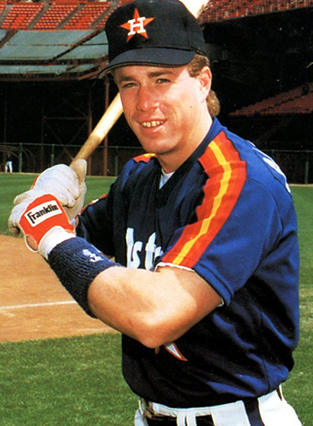
In 2006, Bagwell officially retired from baseball, bringing an end to a career that spanned 15 seasons. He finished with a .297 career batting average, 449 home runs, 1,529 RBIs, and a .948 OPS. His 79.9 career Wins Above Replacement (WAR) ranks among the best for first basemen in MLB history, highlighting his all-around excellence.
Jeff Bagwell’s impact on baseball extends far beyond his impressive statistics. As one of the most consistent and productive players of his era, he set a standard for offensive excellence and defensive reliability at the first base position. His ability to combine power, patience, and speed made him a unique talent, and his influence on the game continues to be felt.
In 2017, Bagwell was inducted into the Baseball Hall of Fame, an honor that solidified his place among the all-time greats. His induction was a moment of celebration for Astros fans and a recognition of his contributions to the game.
Bagwell’s legacy is also tied to his role in elevating the Houston Astros as a franchise. His leadership and performance during his career helped transform the Astros into perennial contenders, and his presence in the organization remains a source of pride for fans and players alike.
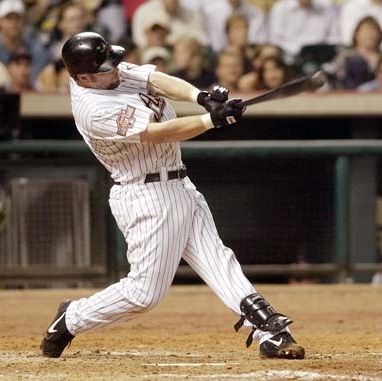
Jeff Bagwell’s MLB career is a story of perseverance, excellence, and impact. From his early days as an underrated prospect to his emergence as one of the most complete players in the game, Bagwell’s journey is a testament to the power of hard work and adaptability. His impressive statistics, including 449 home runs and 1,529 RBIs, are a reflection of his consistency and dedication to his craft.
As a leader, a cornerstone of the Houston Astros, and a Hall of Famer, Jeff Bagwell’s legacy is firmly entrenched in the annals of baseball history. His impact on the game, both as a player and as an ambassador for the sport, ensures that his contributions will be remembered and celebrated for generations to come.



 The Baseball Scholar
Leave a comment