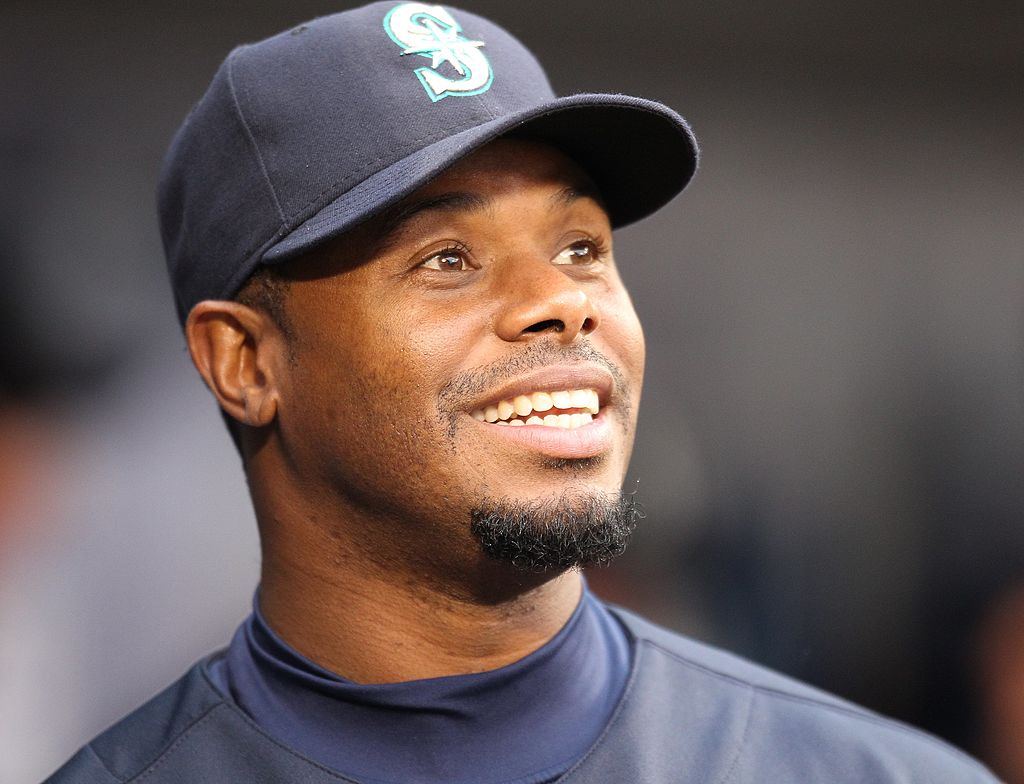
Ken Griffey, Jr., also known as “The Kid,” is one of the most iconic and beloved figures in Major League Baseball (MLB) history. Over a career that spanned 22 seasons, Griffey dazzled fans with his combination of athleticism, power, and grace. A 13-time All-Star, 10-time Gold Glove Award winner, and member of the Baseball Hall of Fame, Griffey’s career achievements place him among the game’s all-time greats. His influence extended beyond the diamond, as his charisma, style, and accessibility helped reinvigorate baseball’s appeal to a younger generation.
George Kenneth Griffey, Jr. was born on November 21, 1969, in Donora, Pennsylvania, the same town that had produced another baseball legend, Stan Musial. Baseball was in Griffey’s blood. His father, Ken Griffey, Sr., was a successful MLB player who enjoyed a 19-year career and won two World Series titles with the Cincinnati Reds as part of the legendary “Big Red Machine.” Growing up in a baseball household, Griffey was immersed in the sport from an early age, learning the game’s nuances and developing a natural love for it.
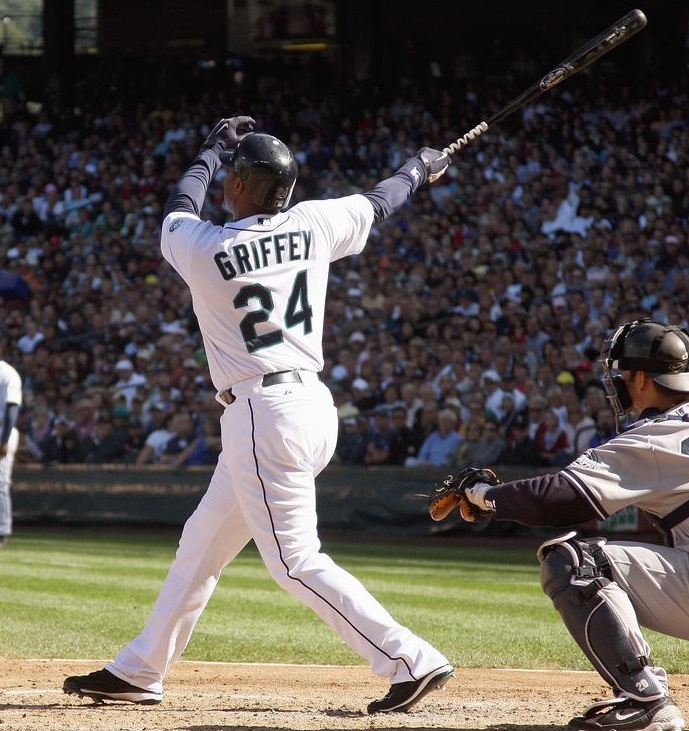
Griffey’s athletic talents became evident during his high school years in Cincinnati, Ohio, where he excelled in baseball, basketball, and football. Ultimately, his prodigious baseball skills set him apart. At Moeller High School, he gained national attention for his hitting and fielding abilities, cementing his status as one of the top amateur prospects in the country. In 1987, the Seattle Mariners selected Griffey with the first overall pick in the MLB Draft, a decision that would alter the trajectory of the franchise and baseball history.
Ken Griffey, Jr. made his MLB debut on April 3, 1989, at the age of 19, becoming the youngest player in the league at the time. From the outset, it was clear that Griffey was a special talent. In his first at-bat, he doubled off Oakland Athletics ace Dave Stewart, showcasing the effortless swing that would become his signature. That rookie season, Griffey hit .264 with 16 home runs, 61 RBIs, and 16 stolen bases, earning a third-place finish in the American League (AL) Rookie of the Year voting. Beyond the numbers, his infectious smile, energy, and acrobatic catches quickly endeared him to fans.
The Mariners, a struggling franchise at the time, suddenly had a player who could captivate audiences and change the perception of baseball in the Pacific Northwest. Griffey’s arrival marked the beginning of a new era for Seattle baseball, one defined by optimism and excitement.
Over the course of his career, Ken Griffey, Jr. compiled remarkable statistics that rank him among the greatest players in MLB history. He finished with 2,781 hits, 630 home runs, 1,836 RBIs, and a .284 career batting average. His 630 home runs rank seventh all-time, and he is one of only a handful of players to reach the 600-home run milestone without being linked to performance-enhancing drugs.
Griffey was at his best during the 1990s, a decade in which he became the face of baseball. From 1993 to 2000, he hit 40 or more home runs in seven seasons, including back-to-back 56-homer campaigns in 1997 and 1998. His 1997 season, in which he batted .304 with 56 home runs, 147 RBIs, and a league-leading 125 runs scored, earned him the AL Most Valuable Player (MVP) award. Griffey’s combination of power and speed made him a perennial threat; he stole 184 bases in his career and often turned singles into doubles with his aggressive baserunning.
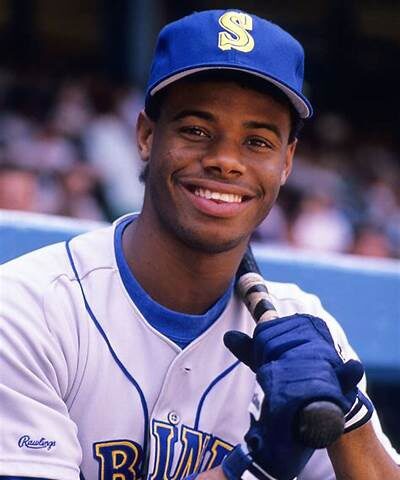
Defensively, Griffey was one of the best outfielders of his era. His 10 Gold Glove Awards are a testament to his range, arm strength, and ability to make spectacular plays. Few players in history have matched Griffey’s ability to rob home runs, a skill he displayed time and again with his perfectly timed leaps at the wall.
Griffey’s career was filled with moments of brilliance that solidified his place as a generational talent. One of his most iconic performances came in the 1995 AL Division Series against the New York Yankees. The Mariners, fighting to save their season, won Game 5 in dramatic fashion when Edgar Martinez hit a double down the left-field line, scoring Griffey from first base with a headlong sprint. Griffey’s jubilant teammates mobbed him at home plate, and the image of his radiant smile became one of the most memorable in baseball history. The Mariners’ success that year not only saved baseball in Seattle but also solidified Griffey’s status as the team’s cornerstone.
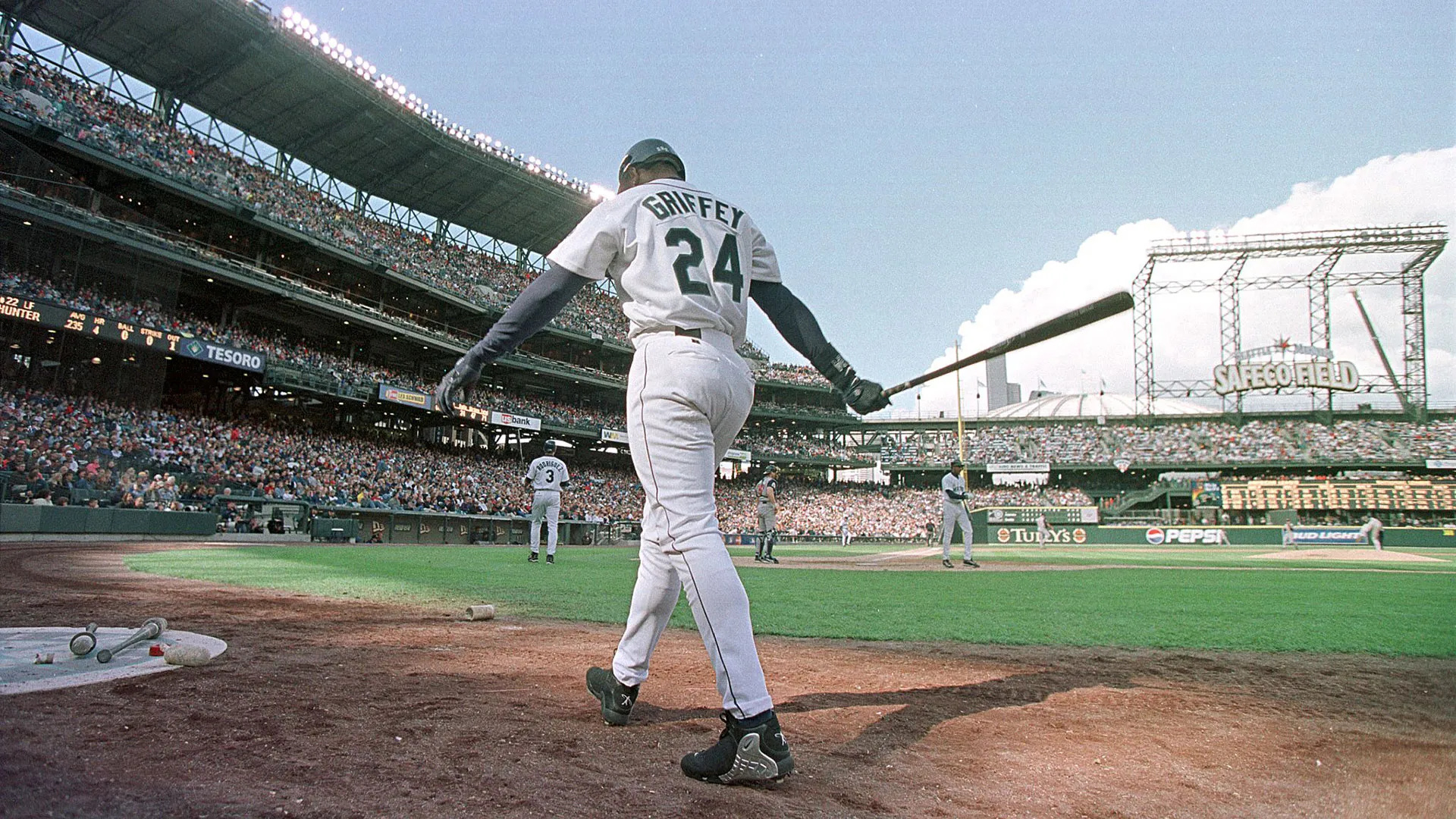
Another defining moment was Griffey’s return to Seattle in 2009 after stints with the Cincinnati Reds and Chicago White Sox. While his production had declined, his homecoming was a heartfelt celebration of his legacy. Mariners fans packed Safeco Field to honor the player who had put their team on the map. Griffey retired in 2010, leaving behind a legacy that transcended statistics.
Griffey was not just a player; he was a cultural phenomenon. His iconic backward cap during batting practice symbolized his youthful exuberance and flair. The effortless elegance of his swing, often described as “the most beautiful in baseball,” was a marvel to behold. His joy for the game was infectious, and he played with a sense of fun that resonated with fans of all ages.
One memorable anecdote from Griffey’s career occurred in 1990 when he and his father, Ken Griffey, Sr., made history as the first father-son duo to play on the same MLB team. In one game, the Griffeys hit back-to-back home runs, a moment that underscored the unique bond between them and their shared love for baseball.
Off the field, Griffey’s approachable personality made him a favorite among fans and teammates. He was the face of numerous advertising campaigns, including his association with Nike, which produced the popular Air Griffey Max shoes. His charisma and marketability helped grow the sport’s appeal, particularly among younger audiences.
While Griffey’s career was marked by incredible highs, it was not without its challenges. Injuries began to take their toll in the early 2000s, particularly after his trade to the Cincinnati Reds in 2000. Hamstring injuries, knee problems, and other ailments limited his playing time and diminished his production. Despite these setbacks, Griffey remained a dedicated and respected player, earning admiration for his perseverance.
Even during these injury-plagued years, Griffey continued to achieve milestones. In 2004, he hit his 500th career home run, and in 2007, he reached the 600-home run mark. These achievements reaffirmed his place among the all-time greats, even as injuries curtailed his ability to dominate as he once had.
Ken Griffey, Jr.’s impact on baseball is profound and multifaceted. As a player, he redefined the center field position, combining offensive firepower with defensive brilliance. His athleticism and skill set inspired a generation of players, many of whom modeled their games after his. Griffey’s influence extended beyond the field, as he became one of the first athletes to bridge the gap between sports and popular culture.
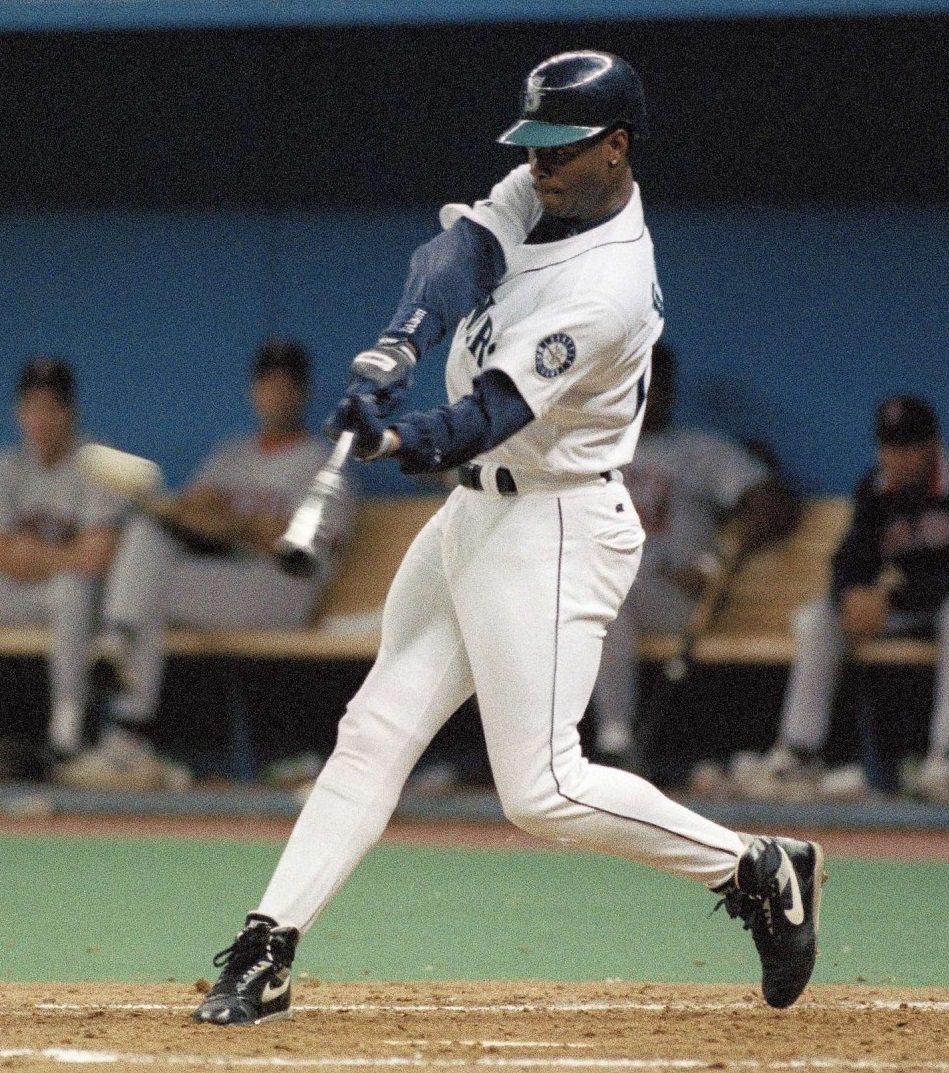
Griffey’s presence helped revitalize baseball during a time when the sport faced challenges from labor disputes and competition from other professional leagues. His appeal to younger fans, coupled with his clean image, made him a perfect ambassador for the game. In 2016, Griffey was inducted into the Baseball Hall of Fame with a then-record 99.3% of the vote, further solidifying his legacy.
Ken Griffey, Jr. is more than a Hall of Famer; he is a symbol of baseball at its best. His career, defined by awe-inspiring talent, joy for the game, and a deep connection with fans, has left an enduring legacy. From his early days as “The Kid” in Seattle to his final seasons as a revered veteran, Griffey’s impact on baseball is immeasurable. His achievements, both on and off the field, continue to inspire future generations and remind us of the timeless allure of America’s pastime.


 The Baseball Scholar
Leave a comment