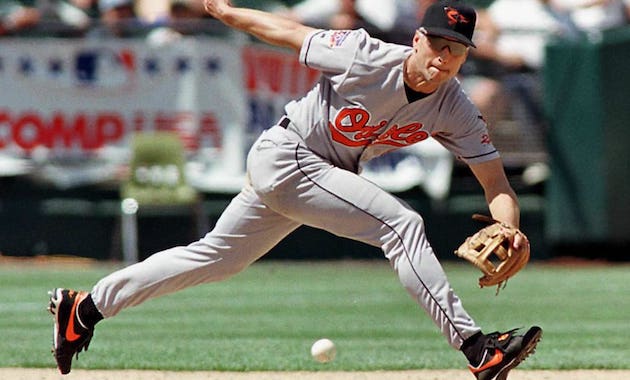
Calvin Edwin Ripken, Jr., known affectionately as “The Iron Man,” is one of Major League Baseball’s most enduring and iconic figures. Over a career that spanned 21 seasons, all spent with the Baltimore Orioles, Ripken not only demonstrated unparalleled durability but also showcased elite skill at one of the game’s most demanding positions: shortstop. His remarkable journey through baseball is a testament to perseverance, adaptability, and a relentless pursuit of excellence. Ripken’s achievements, which include his record-breaking consecutive games streak and his revolutionary approach to playing shortstop, have left an indelible mark on the game.
Cal Ripken, Jr. was born on August 24, 1960, in Havre de Grace, Maryland, into a baseball family. His father, Cal Ripken, Sr., was a long-time coach, manager, and player in the Baltimore Orioles organization. Growing up immersed in the game, Ripken developed a deep understanding of baseball’s intricacies and a love for the sport. His father’s influence was instrumental in shaping his work ethic and dedication, traits that would define his career.
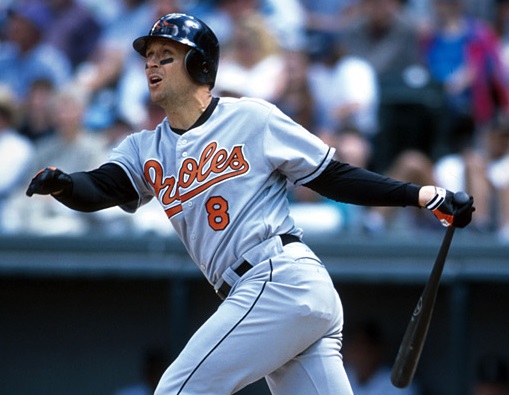
As a teenager, Ripken attended Aberdeen High School in Aberdeen, Maryland, where he excelled in baseball. A pitcher in his early years, Ripken’s arm strength and size hinted at his potential. He was drafted in the second round of the 1978 MLB Draft by the Baltimore Orioles, joining the same organization where his father had built his career. Ripken’s journey through the Orioles’ minor league system was marked by steady improvement, as he transitioned from pitcher to infielder, ultimately settling at shortstop—a position that would become synonymous with his name.
Cal Ripken, Jr. made his MLB debut on August 10, 1981, during a strike-shortened season. Although his first taste of the majors was brief, it offered a glimpse of what was to come. In 1982, Ripken secured a permanent spot in the Orioles’ lineup, primarily as a third baseman. That season, he displayed remarkable consistency, hitting .264 with 28 home runs and 93 RBIs, and earning the American League (AL) Rookie of the Year award. His performance not only established him as a rising star but also signaled the beginning of a new era for the Orioles.
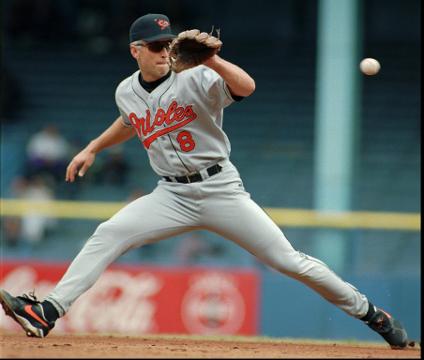
In 1983, Ripken transitioned to shortstop, a move that would redefine the position. Traditionally, shortstops were known more for their defensive prowess than their offensive contributions. However, Ripken, standing at 6’4″ and weighing 200 pounds, broke the mold with his power-hitting and run production. That year, he won his first AL MVP award, hitting .318 with 27 home runs, 102 RBIs, and 211 hits. Ripken’s performance was instrumental in leading the Orioles to a World Series title, their first since 1970. His heroics on the field and leadership off it quickly endeared him to fans, cementing his status as the face of the franchise.
Ripken’s career statistics underscore his extraordinary contributions to the game. Over 21 seasons, he amassed 3,184 hits, 431 home runs, 1,695 RBIs, and a .276 batting average. He was a 19-time All-Star, a two-time AL MVP, and an eight-time Silver Slugger Award winner. Ripken’s ability to combine offensive production with defensive excellence set him apart from his peers.
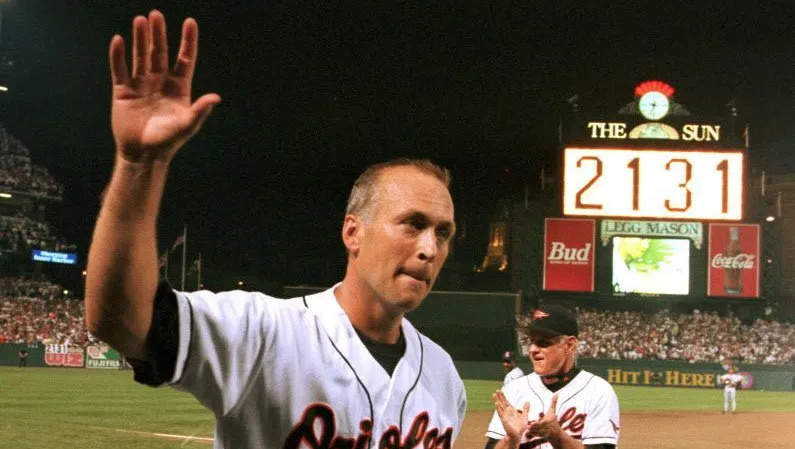
Of course, Ripken is best known for his record-breaking consecutive games streak. On September 6, 1995, he played his 2,131st consecutive game, surpassing Lou Gehrig’s long-standing record. The achievement, celebrated in a game against the California Angels at Camden Yards, was a transcendent moment in baseball history. As Ripken completed a victory lap around the stadium, acknowledging the roaring crowd, he became a symbol of perseverance and dedication. By the time his streak ended in 1998, Ripken had played 2,632 consecutive games—a record that may never be broken.
Ripken’s impact on the field was not limited to his longevity. He led the AL in doubles twice and posted eight seasons with 20 or more home runs. His 345 career home runs as a shortstop set a record for the position at the time, showcasing his ability to provide power from a traditionally light-hitting role. Defensively, Ripken was a two-time Gold Glove winner, known for his strong arm, reliability, and cerebral approach to positioning.
Throughout his career, Ripken delivered numerous standout performances that highlighted his ability to shine on the biggest stages. One of the most memorable came during the 1991 All-Star Game, where he hit a three-run home run and was named the game’s MVP. The honor was particularly special because it coincided with his resurgence that season, during which he won his second AL MVP award by hitting .323 with 34 home runs and 114 RBIs.
Another iconic moment occurred on July 10, 2001, during the All-Star Game at Seattle’s Safeco Field. In what would be his final All-Star appearance, Ripken hit a home run in his first at-bat and was named the game’s MVP. The scene of Ripken being moved to shortstop by Alex Rodriguez as a tribute underscored the respect and admiration he commanded among his peers.
Ripken’s final game on October 6, 2001, was a fitting farewell to a legendary career. Played at Camden Yards, the game was a celebration of Ripken’s contributions to the Orioles and the game of baseball. Fans, teammates, and opponents alike paid tribute to his enduring legacy.
Ripken was known for his meticulous preparation and unwavering commitment to excellence. His approach to hitting and defense was rooted in discipline and an analytical understanding of the game. Ripken famously studied opposing pitchers and hitters, gaining an edge that allowed him to excel in all facets of the game.
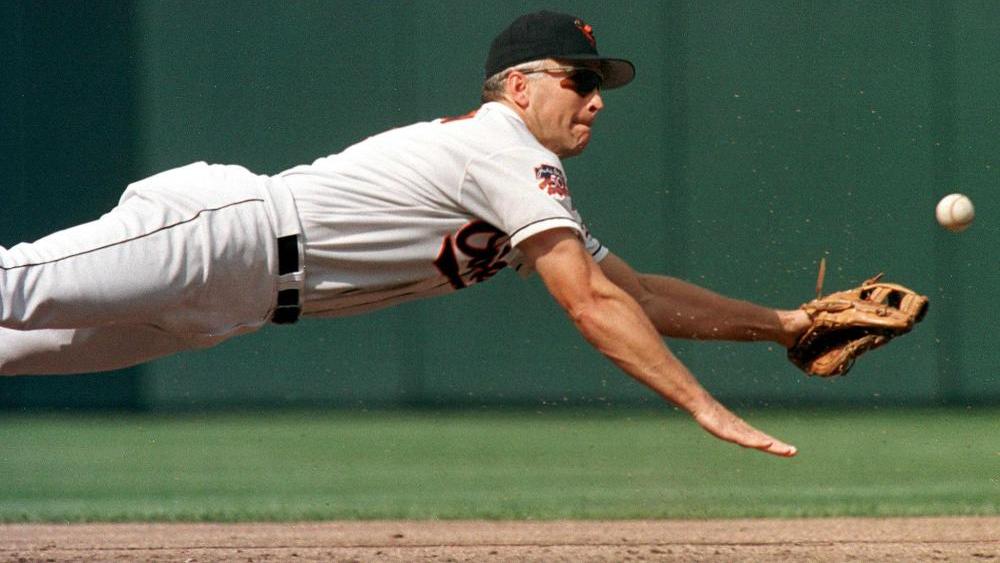
One often-cited anecdote about Ripken’s preparation involved his defensive positioning. He would often study hitters’ tendencies and make adjustments accordingly, sometimes moving only a few feet but consistently placing himself in the right spot to make a play. This attention to detail contributed to his reputation as one of the smartest players in the game.
Off the field, Ripken was admired for his humility and professionalism. Despite his status as a superstar, he remained grounded and approachable, earning the respect of teammates, fans, and opponents. His leadership extended beyond the diamond, as he became a role model for younger players and an ambassador for the sport.
Cal Ripken, Jr.’s impact on baseball extends far beyond his impressive statistics. He revolutionized the shortstop position, proving that players could combine size, power, and defensive skill to become complete athletes. His success paved the way for future generations of larger, more offensively minded shortstops, such as Alex Rodriguez and Derek Jeter.
Ripken’s consecutive games streak is perhaps his most enduring legacy. In an era often marked by player strikes and controversies, Ripken’s record-breaking achievement served as a unifying moment for baseball. His dedication to the game and refusal to take a day off resonated with fans, embodying the values of hard work and perseverance.
Beyond his playing career, Ripken has continued to contribute to the game through his philanthropic efforts and involvement in youth baseball. The Cal Ripken, Sr. Foundation, established in honor of his father, focuses on providing opportunities for underprivileged children to participate in sports and develop life skills. Ripken’s commitment to giving back has solidified his reputation as one of the sport’s most respected figures.
Cal Ripken, Jr.’s MLB career is a story of excellence, endurance, and transformative impact. From his early days as a promising young player to his record-breaking streak and his role as an ambassador for the game, Ripken exemplified the best of baseball. His achievements on the field, including his statistical milestones and standout performances, are matched only by the respect and admiration he earned off the field.
Ripken’s legacy as “The Iron Man” endures as a symbol of what is possible through dedication and perseverance. His influence on the game is seen not only in the records he set but also in the inspiration he provided to players and fans around the world. Cal Ripken, Jr. remains a timeless figure in baseball history, a testament to the enduring power of the sport and the values it represents.


 The Baseball Scholar
Leave a comment