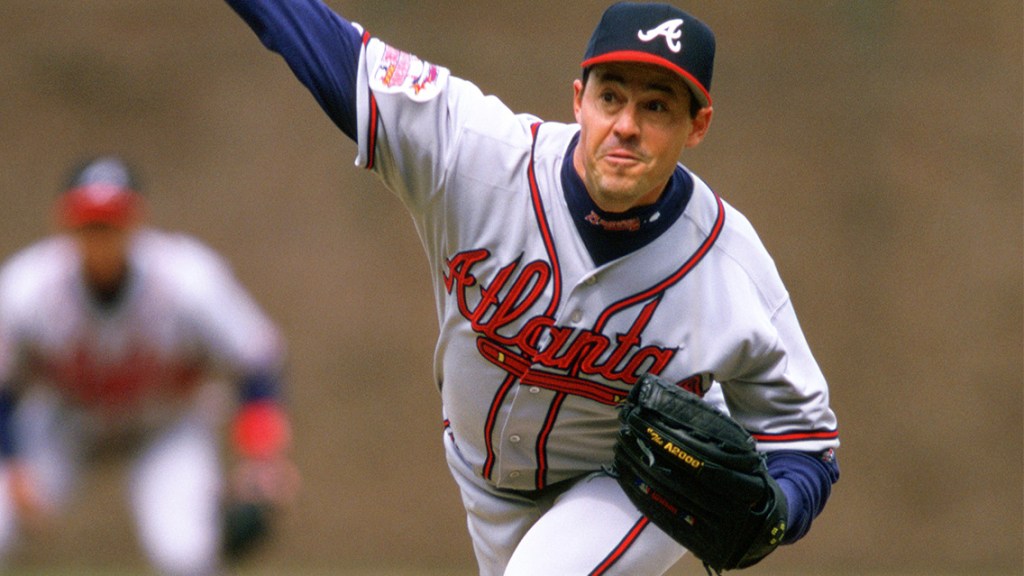
Greg Maddux is one of the most dominant pitchers in the history of Major League Baseball (MLB). His career spanned over two decades, from 1986 to 2008, and he established himself as a pitcher who mastered the art of control, precision, and strategy. Unlike many of his contemporaries, Maddux did not rely on overpowering velocity. Instead, his success was driven by an exceptional command of the strike zone, a brilliant understanding of hitters, and the ability to make adjustments mid-game. Maddux’s contributions to the game and his long-lasting impact on baseball have solidified him as one of the greatest pitchers ever to take the mound.
Gregory Alan Maddux was born on April 14, 1966, in San Angelo, Texas. He was raised in a family that loved sports, and from an early age, Maddux demonstrated an affinity for baseball. His father, a former minor league baseball player, recognized his son’s potential and nurtured Greg’s interest in the game. Maddux grew up playing baseball in the backyards of San Angelo, where his love for the sport blossomed. He attended MacArthur High School in San Antonio, where he was a standout pitcher. Despite his smaller frame—standing at 6 feet tall and weighing just 170 pounds—Maddux’s pitching abilities were undeniable.

Maddux’s high school career caught the attention of scouts, and it didn’t take long for him to emerge as one of the top prospects in Texas. Though he wasn’t the hardest thrower, his command of the game and his ability to hit his spots made him stand out. His curveball, in particular, was a weapon that drew attention. Maddux was drafted by the Chicago Cubs in the second round of the 1984 MLB Draft, at the age of 18. This was the start of a career that would redefine the art of pitching.
After being drafted, Maddux began his professional career in the minor leagues. He spent several years honing his skills in the Cubs’ farm system, gradually refining his mechanics and learning how to become a more efficient pitcher. By the time he reached the MLB in 1986, Maddux was ready to make his mark, despite having only a few years of professional experience. His early days in the big leagues were filled with ups and downs as he adjusted to the rigors of Major League Baseball. However, even in his early years, Maddux showed glimpses of the precision and control that would define his career.
Maddux made his MLB debut on September 3, 1986, for the Chicago Cubs at the age of 20. He faced the New York Mets and pitched a respectable game, although the Cubs lost. In his early years, Maddux struggled with consistency, a common challenge for many young pitchers adjusting to the major leagues. However, he had moments of brilliance that suggested a future of success.
Over the next few seasons, Maddux continued to develop his pitching, learning how to adapt and improve with each start. In 1987, he posted a solid 3.18 ERA in 28 starts, showcasing his potential as a key player for the Cubs. But it wasn’t until 1989 that Maddux truly began to establish himself as a force on the mound. That year, he earned his first All-Star selection and finished the season with a 3.21 ERA and a career-high 16 wins.
By the early 1990s, Maddux was gaining a reputation as one of the most consistent and durable pitchers in the league. In 1992, he won his first Cy Young Award, marking the beginning of what would become a legendary run of dominance. Maddux’s ability to change speeds, control the strike zone, and keep hitters off balance was unparalleled. His fastball, which never exceeded 90 miles per hour, was complemented by a devastating changeup and a curveball that seemed to dance through the air. Maddux’s approach was based on precision, and his success was a testament to the value of location over raw power.

Greg Maddux’s career statistics are a testament to his excellence and longevity in the game. Over his 23 seasons in Major League Baseball, he accumulated a remarkable 355 career wins, which ranks him among the all-time leaders in the category. He finished his career with an ERA of 3.16, a figure that places him among the best pitchers in the history of the game. Maddux’s consistency in the strike zone was legendary, and it is reflected in his career WHIP (walks plus hits per inning pitched) of 1.14, a remarkable number for any pitcher, especially one with such an extensive career.
Maddux’s control was one of his defining characteristics. He ranks 10th all-time in strikeouts with 3,371, but his mastery was not built on overpowering hitters with raw velocity. Instead, he utilized precise pitch placement and an exceptional ability to read hitters’ tendencies. His five Cy Young Awards (1992, 1993, 1994, 1995, and 1998) are a testament to his dominance during the 1990s, a decade in which he was virtually untouchable. His four consecutive Cy Young Awards, a record for the National League, highlighted his peak performance and his status as the most dominant pitcher in the game during that period.
Maddux was also known for his remarkable durability and ability to eat up innings. He consistently threw over 200 innings per season, and his 18 seasons with 200 or more innings pitched ranks among the best in MLB history. His ability to stay healthy and pitch deep into games allowed his teams to rely on him as a cornerstone of their pitching staff year after year. His remarkable control is further reflected in his career strikeout-to-walk ratio of 4.02, one of the highest in baseball history.
Maddux’s achievements were not limited to the regular season. He was also known for his success in the postseason. Although his playoff numbers do not reflect the same dominance as his regular-season performance, Maddux delivered some memorable postseason moments. He helped lead the Atlanta Braves to a World Series championship in 1995, pitching with characteristic precision and poise in the postseason. That championship was the pinnacle of a successful decade for Maddux and the Braves, during which they became a perennial contender.
The peak years of Maddux’s career came in the mid-1990s when he established himself as one of the best pitchers of all time. From 1992 to 1995, he was virtually unstoppable, winning four consecutive Cy Young Awards. During this stretch, Maddux posted an ERA under 2.00 for three consecutive seasons, an incredible feat in any era of baseball. His success was a result of his pinpoint accuracy, strategic pitch selection, and ability to exploit the weaknesses of hitters.

In 1995, Maddux’s brilliance was on full display as he helped lead the Braves to their only World Series championship of his tenure in Atlanta. Maddux finished the regular season with a 1.63 ERA, the lowest in the National League, and continued his excellence in the postseason, cementing his legacy as one of the best pitchers in the history of the game. The Braves’ rotation, which also featured Tom Glavine and John Smoltz, was one of the most dominant of its time, and Maddux was the ace that anchored it.
Maddux’s consistency was remarkable, as he continued to perform at an elite level year after year. Even as he aged, his command of the strike zone remained impeccable. In his late 30s and early 40s, Maddux was still able to adapt and remain effective, proving that mastery of the game could overcome the inevitable decline in raw physical ability.
Greg Maddux’s career was filled with unforgettable moments. His rivalry with hitters, especially in the postseason, made for some of the most exciting games of his career. One of the most famous moments came in 1995 when Maddux pitched a masterpiece in Game 1 of the World Series against the Cleveland Indians. He allowed just one run over seven innings, leading the Braves to a critical victory. His performance in the postseason was a testament to his ability to rise to the occasion and pitch under pressure.
Another memorable moment came in 1994 when Maddux achieved a rare feat by winning his fourth consecutive Cy Young Award. This achievement highlighted not only his talent but his consistency. Over this four-year period, Maddux’s ERA never exceeded 2.36, and he averaged over 20 wins per season. He was a model of consistency and control, and his success was based on his preparation and his ability to exploit hitters’ weaknesses.
Maddux also became known for his work ethic and intelligence on the mound. His approach to pitching was deeply analytical, and he was always prepared for each hitter he faced. He studied opposing hitters meticulously and used this knowledge to craft the perfect pitch sequence. His “pitching IQ” was one of the highest in the game, and he often outsmarted hitters, even when they knew exactly what was coming.
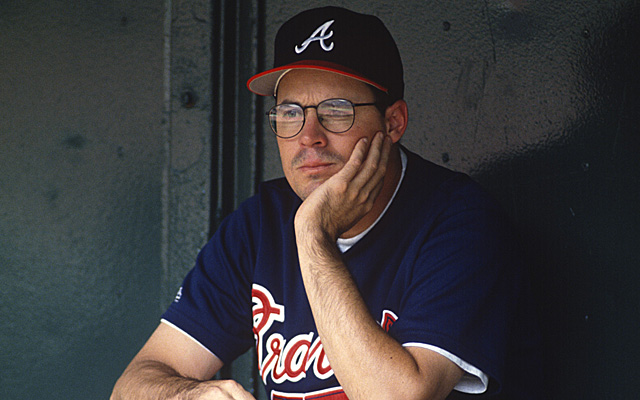
One anecdote that stands out from Maddux’s career involves his ability to predict the outcome of certain pitches. On multiple occasions, Maddux was known to predict the result of a pitch before he threw it, something that few pitchers in baseball could do with the same level of confidence. His control, precision, and understanding of the game allowed him to make these bold claims, and more often than not, they turned out to be true.
Greg Maddux’s impact on the game of baseball cannot be overstated. His style of pitching, characterized by command, control, and intelligence, influenced an entire generation of pitchers. In an era where velocity often overshadowed other aspects of pitching, Maddux showed that a pitcher could succeed with precision and strategy alone. His approach to pitching was a blueprint for future generations, emphasizing the importance of hitting the right spots and making adjustments during the course of a game.
Maddux’s influence also extended beyond his pitching. He was known for his leadership and his ability to mentor younger pitchers. As a veteran of the game, Maddux often took on the role of a teacher, helping to guide younger pitchers in their development. His mentorship extended to other teams as well, including his time with the Chicago Cubs, Atlanta Braves, and Los Angeles Dodgers, where his leadership in the clubhouse was as important as his pitching on the field.

Moreover, Maddux’s sustained excellence over such a long period helped solidify the role of the starting pitcher in an era when bullpen usage began to take a more prominent role. Maddux demonstrated that starting pitchers could still dominate games and provide length, even as baseball moved toward a more bullpen-focused style. His ability to go deep into games and throw quality innings was a testament to his conditioning and his understanding of the game.
Greg Maddux’s career is a blueprint for excellence in pitching. His statistical achievements, including 355 wins, 3,371 strikeouts, and five Cy Young Awards, place him among the all-time greats in MLB history. His approach to the game, based on precision, strategy, and intelligence, revolutionized the way pitchers thought about their craft. Maddux’s impact on the game of baseball is far-reaching, and his legacy as one of the greatest pitchers to ever play the game is secure. From his early days with the Chicago Cubs to his later years with the Atlanta Braves and beyond, Greg Maddux’s career is a testament to the power of preparation, consistency, and a deep understanding of the game. He will always be remembered as one of the finest pitchers the sport has ever seen.



 The Baseball Scholar
Leave a comment