
Tom Seaver, known as “Tom Terrific” and “The Franchise,” is one of the most revered figures in Major League Baseball (MLB) history. A Hall of Fame pitcher whose career spanned over two decades, Seaver epitomized excellence on the mound, combining extraordinary talent with an unmatched work ethic and a cerebral approach to the game.
George Thomas Seaver was born on November 17, 1944, in Fresno, California. From an early age, Seaver demonstrated a natural athletic ability, excelling in multiple sports, including basketball and baseball. However, his path to baseball stardom was not straightforward. Seaver was initially undersized as a teenager, which limited his opportunities in high school sports. After graduating from Fresno High School, he enrolled at Fresno City College, where he began to develop his pitching skills and physical stature.
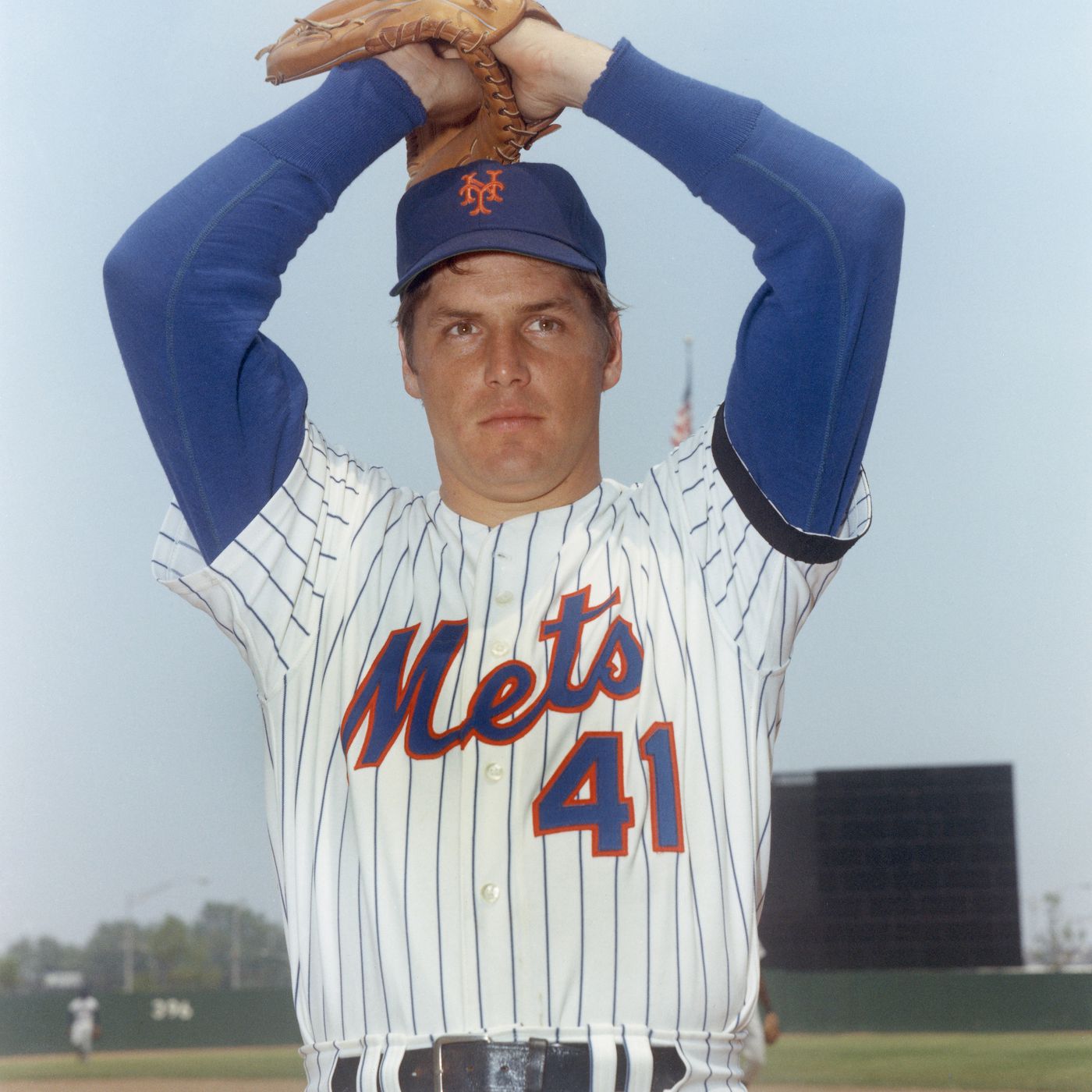
Seaver’s breakthrough came when he transferred to the University of Southern California (USC). Under the guidance of legendary coach Rod Dedeaux, Seaver honed his mechanics and learned the finer points of pitching. In 1965, the New York Mets selected him in a special draft lottery after a contract dispute with the Atlanta Braves. This fortuitous turn of events set the stage for Seaver’s meteoric rise in professional baseball.
Seaver made his MLB debut with the New York Mets in 1967, a franchise that had been synonymous with futility since its inception in 1962. From the outset, Seaver’s presence signaled a new era for the Mets. In his rookie season, he posted a 16-13 record with a 2.76 ERA and 170 strikeouts in 251 innings. His poise, command, and competitive spirit earned him the National League Rookie of the Year award and established him as the cornerstone of the Mets’ pitching staff.
The pinnacle of Seaver’s career with the Mets came in 1969, a season forever etched in baseball lore as the “Miracle Mets” campaign. Seaver’s dominance was instrumental in transforming the Mets from perennial cellar-dwellers into World Series champions. That year, Seaver went 25-7 with a 2.21 ERA and 208 strikeouts in 273.1 innings, earning him his first National League Cy Young Award.
One of the defining moments of Seaver’s 1969 season came on July 9, when he pitched a near-perfect game against the Chicago Cubs. Seaver retired the first 25 batters he faced before Cubs hitter Jimmy Qualls broke up the perfect game with a single in the ninth inning. Despite the near miss, the performance underscored Seaver’s dominance and earned him widespread acclaim.
In the postseason, Seaver continued to shine. In Game 4 of the National League Championship Series (NLCS), he pitched 10 innings to secure a crucial victory over the Atlanta Braves. In the World Series against the heavily favored Baltimore Orioles, Seaver delivered a masterful performance in Game 4, pitching a complete game to give the Mets a 2-1 series lead. The Mets went on to win the series in five games, cementing their place in history and solidifying Seaver’s status as a franchise icon.
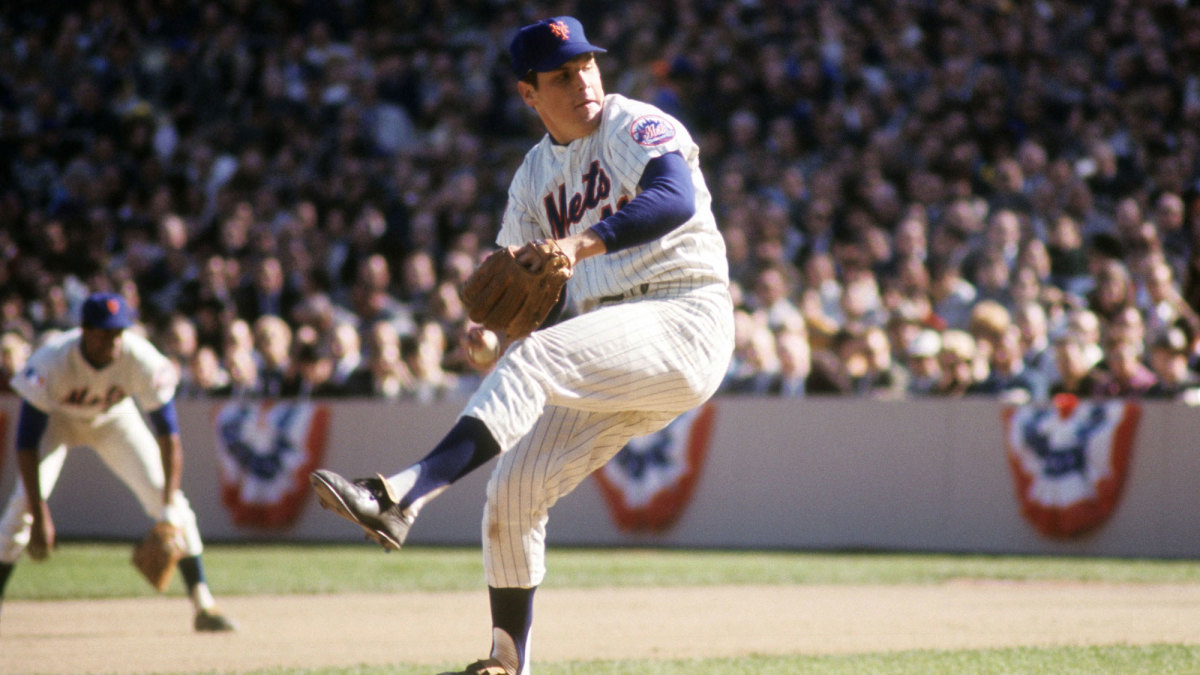
Throughout the 1970s, Seaver remained the standard-bearer for pitching excellence. He consistently ranked among the league leaders in ERA, strikeouts, and innings pitched. Seaver won two more Cy Young Awards in 1973 and 1975, making him the first pitcher in Mets history to win the award multiple times.
The 1973 season saw Seaver play a pivotal role in leading the Mets to another National League pennant. Despite a regular-season record of just 82-79, the Mets rode the strength of their pitching staff to the World Series. Seaver’s performance in the NLCS against the Cincinnati Reds was exemplary. In Game 1, he pitched eight strong innings, striking out 13 batters and setting the tone for the series.
In the World Series against the Oakland Athletics, Seaver pitched in two games, including a memorable start in Game 3, where he allowed only two runs over eight innings. Although the Mets ultimately lost the series in seven games, Seaver’s contributions further solidified his reputation as one of the game’s premier pitchers.
In 1977, Seaver’s tenure with the Mets came to an abrupt and controversial end. Amid a contract dispute and tensions with Mets management, Seaver was traded to the Cincinnati Reds in what became known as the “Midnight Massacre.” The trade shocked the baseball world and marked the end of an era in New York.
Seaver continued to excel after joining the Reds. In his first full season with Cincinnati in 1978, he went 16-14 with a 2.88 ERA and 226 strikeouts, earning yet another All-Star selection. On June 16, 1978, Seaver achieved a milestone that had eluded him throughout his career—a no-hitter. Pitching against the St. Louis Cardinals, Seaver struck out three batters and allowed no hits in a 4-0 victory.

Although Seaver never reached the World Series with the Reds, his time in Cincinnati reaffirmed his status as one of the best pitchers in baseball. His professionalism and consistency set a standard for his teammates and further cemented his legacy.
In 1983, Seaver returned to the Mets in a trade, bringing his career full circle. While no longer the dominant ace he had been in his prime, Seaver provided valuable leadership and experience to a young Mets team. He went 9-14 with a 3.55 ERA in 1983, serving as a mentor to emerging stars like Dwight Gooden and Ron Darling.
Seaver’s final seasons included a stint with the Chicago White Sox, where he continued to defy Father Time. In 1985, at the age of 40, he won 16 games and posted a 3.17 ERA. On August 4, 1985, Seaver recorded his 300th career win in a complete-game victory over the New York Yankees at Yankee Stadium, a fitting milestone for one of the game’s all-time greats.
Seaver retired after a brief stint with the Boston Red Sox in 1986. He finished his career with 311 wins, 3,640 strikeouts, and a 2.86 ERA over 20 seasons. His 61 career shutouts rank sixth all-time, and his 231 complete games are a testament to his durability and dominance.
Tom Seaver’s statistical achievements place him among the elite pitchers in baseball history. He ranks in the top 20 all-time in wins, strikeouts, and WAR (Wins Above Replacement) for pitchers. Seaver’s career WAR of 106.3 underscores his immense value to the teams he played for and his sustained excellence over two decades.

Seaver’s three Cy Young Awards and 12 All-Star selections highlight his dominance during his era. He led the league in ERA three times and strikeouts five times, consistently demonstrating his ability to overpower hitters and control games. His remarkable consistency is evident in his 16 seasons with an ERA below 3.00 and his 10 seasons with over 200 strikeouts.
In 1992, Seaver was inducted into the Baseball Hall of Fame in his first year of eligibility. He received 98.84% of the vote, the highest percentage at the time, reflecting the universal respect and admiration he commanded. Seaver’s induction solidified his place among the immortals of the game and ensured his legacy would endure for generations.
Tom Seaver’s impact on baseball extends far beyond his statistical achievements. He revolutionized the role of the starting pitcher, combining power, precision, and intellect in a way that few had before. Seaver’s meticulous preparation and attention to detail set a new standard for pitchers, inspiring countless players who followed in his footsteps.
As the face of the Mets franchise, Seaver brought credibility and respectability to a team that had been a laughingstock. His leadership and excellence transformed the Mets into perennial contenders and made them a source of pride for their fans. Seaver’s influence extended beyond the field, as he became a beloved ambassador for the game and a symbol of class and integrity.
One of the enduring anecdotes about Seaver is his relentless competitiveness. Teammates and opponents alike marveled at his intensity and drive to win. Seaver was known for his meticulous preparation, studying hitters’ tendencies and constantly refining his craft. Hall of Famer Johnny Bench, who caught Seaver during his time with the Reds, once remarked that Seaver’s combination of talent and intelligence made him one of the toughest pitchers to face and work with.

Seaver’s legacy also includes his contributions as a broadcaster and mentor. After retiring, he remained involved in baseball, sharing his insights and experiences with fans and aspiring players. His eloquence and passion for the game made him a natural in the broadcast booth, where he continued to inspire a new generation of baseball enthusiasts.
Tom Seaver’s MLB career is a testament to greatness, defined by extraordinary talent, relentless determination, and an enduring love for the game. From his early days as a promising young pitcher to his emergence as a franchise icon and Hall of Famer, Seaver’s journey is one of excellence and inspiration. His statistical achievements, including 311 wins, 3,640 strikeouts, and three Cy Young Awards, place him among the greatest pitchers in history. Beyond the numbers, Seaver’s impact on baseball and his legacy as a symbol of integrity and professionalism ensure that his name will forever be synonymous with the best of the sport.



 The Baseball Scholar
Leave a comment