
Randy Johnson, often referred to by his nickname “The Big Unit,” is one of the most dominant and iconic pitchers in the history of Major League Baseball. With a career spanning over two decades, Johnson’s impact on the game transcends statistics, as he became a symbol of power pitching and intimidation on the mound. We’ll explore Randy Johnson’s MLB career in detail, examining his statistical achievements, milestones, and influence on the sport of baseball.
Born on September 10, 1963, in Walnut Creek, California, Randall David Johnson was a multi-sport athlete in high school, excelling in baseball and basketball. His towering 6-foot-10 frame and left-handed delivery made him an imposing presence on the mound from an early age. Johnson attended the University of Southern California (USC), where he played under legendary coach Rod Dedeaux. While his control was a work in progress, his velocity and potential caught the attention of MLB scouts.
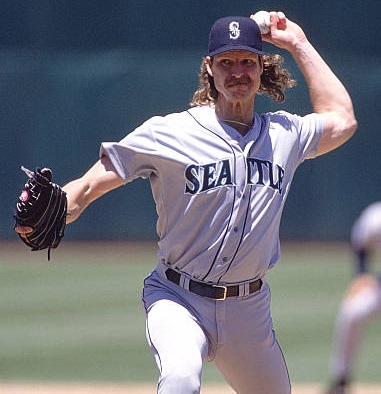
In the 1985 MLB Draft, the Montreal Expos selected Johnson in the second round. His professional career began in the minors, where he continued to refine his mechanics and harness his exceptional raw talent.
Randy Johnson made his MLB debut with the Montreal Expos on September 15, 1988. While his time with the Expos was brief, he demonstrated flashes of brilliance that hinted at his potential. In 1989, he was traded to the Seattle Mariners as part of a package deal for pitcher Mark Langston, a move that would prove pivotal for both Johnson and the Mariners.
During his early years in Seattle, Johnson struggled with control issues, leading the league in walks several times. Despite these challenges, his fastball, which regularly exceeded 100 mph, and his devastating slider made him a strikeout machine. In 1990, he recorded 194 strikeouts in 219.2 innings, a sign of things to come.
A turning point came in 1992 when Johnson began working with renowned pitching coach Tom House. Through adjustments to his mechanics and mental approach, Johnson improved his control, reducing his walk rate and unlocking his full potential.
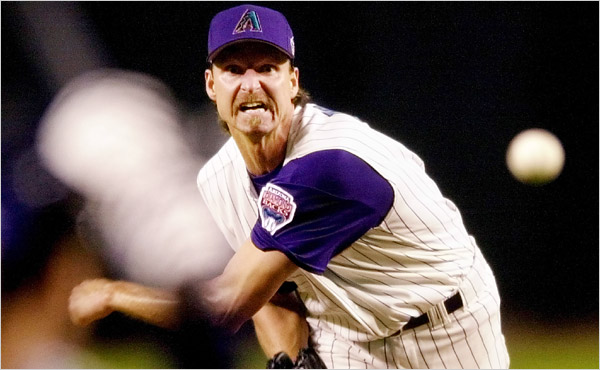
The mid-1990s marked Randy Johnson’s emergence as one of the premier pitchers in MLB. In 1993, he earned his first All-Star selection, finishing the season with a 19-8 record, a 3.24 ERA, and an MLB-leading 308 strikeouts. Johnson’s ability to overpower hitters with his fastball-slider combination became his trademark, and he quickly became the ace of the Mariners’ rotation.
In 1995, Johnson delivered one of the best seasons of his career, leading the Mariners to their first playoff appearance. He went 18-2 with a 2.48 ERA and 294 strikeouts, earning his first Cy Young Award. His performance in the American League Division Series (ALDS) against the New York Yankees, including a heroic relief appearance in Game 5, cemented his status as a postseason hero.
By the late 1990s, Johnson had established himself as one of the most feared pitchers in baseball. He consistently ranked among the league leaders in strikeouts, ERA, and innings pitched, while his intimidating presence on the mound became the stuff of legend.
In 1999, Randy Johnson signed a free-agent contract with the Arizona Diamondbacks, a relatively new franchise at the time. This move marked the beginning of the most dominant stretch of his career. Over the next six seasons, Johnson redefined excellence in pitching, earning four consecutive Cy Young Awards from 1999 to 2002.

Key Statistical Achievements with Arizona:
– 1999: Johnson posted a 17-9 record with a 2.48 ERA and a career-high 364 strikeouts in 271.2 innings. He led MLB in strikeouts, ERA, and innings pitched, setting the tone for his tenure in Arizona.
– 2000: Johnson improved on his previous season, recording 19 wins, a 2.64 ERA, and 347 strikeouts. He once again led the league in strikeouts and innings pitched.
– 2001: Johnson’s 2001 season is widely regarded as one of the greatest pitching campaigns in MLB history. He went 21-6 with a 2.49 ERA and 372 strikeouts, leading the Diamondbacks to the postseason. His dominance continued in the playoffs, where he played a crucial role in Arizona’s World Series victory over the New York Yankees. Johnson shared World Series MVP honors with teammate Curt Schilling.
– 2002: Johnson capped his Cy Young streak with a 24-5 record, a 2.32 ERA, and 334 strikeouts. His 24 wins were a career high, and he continued to set the standard for power pitching.
During his time with the Diamondbacks, Johnson became only the third pitcher in MLB history to record 300 or more strikeouts in five consecutive seasons (1998-2002). He also threw a perfect game on May 18, 2004, against the Atlanta Braves, becoming the oldest pitcher in MLB history (40 years old) to achieve this feat.
After his dominant run in Arizona, Johnson was traded to the New York Yankees in 2005. While his two seasons in New York were solid, they did not match the extraordinary standards he had set in previous years. He recorded a combined 34 wins and surpassed the 4,500-strikeout mark during his time with the Yankees.
In 2007, Johnson returned to the Diamondbacks for two seasons before concluding his career with the San Francisco Giants in 2009. On June 4, 2009, he achieved one of baseball’s most prestigious milestones by recording his 300th career win, becoming just the 24th pitcher in MLB history to reach this mark.

Randy Johnson’s career statistics are a testament to his dominance and longevity:
– Wins: 303
– Losses: 166
– ERA: 3.29
– Strikeouts: 4,875 (second all-time, behind Nolan Ryan)
– Innings Pitched: 4,135.1
– Complete Games: 100
– Shutouts: 37
Notable Records and Achievements:
1. Second-most strikeouts in MLB history (4,875).
2. Most strikeouts by a left-handed pitcher.
3. Five-time Cy Young Award winner (1995, 1999-2002).
4. 10-time All-Star selection.
5. Two-time ERA leader (1995, 2001).
6. Pitched two no-hitters, including a perfect game.
Randy Johnson’s impact on baseball extends beyond his impressive statistics. He redefined the role of a power pitcher, combining velocity, movement, and a relentless competitive spirit. His ability to dominate hitters with a fastball-slider combination inspired a generation of pitchers to prioritize strikeouts and velocity.
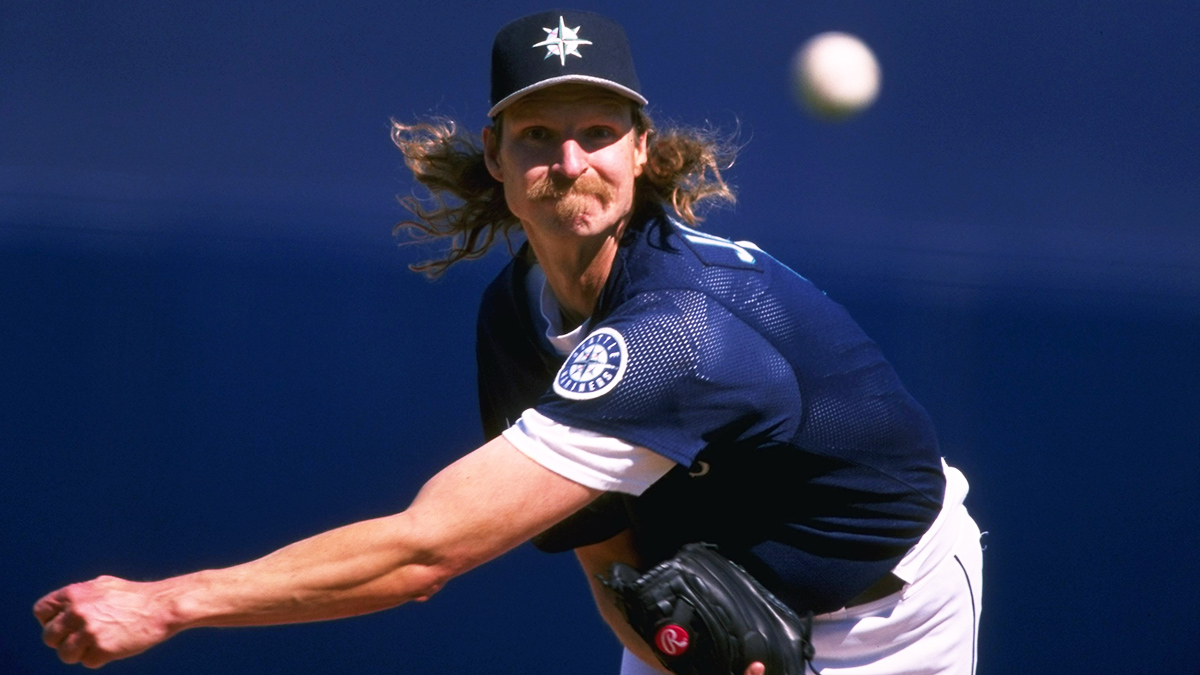
Johnson’s towering presence and fiery demeanor also made him a fan favorite and a feared opponent. His iconic moments, such as striking out 20 batters in a single game (May 8, 2001) and his performance in the 2001 World Series, remain etched in baseball history.
Off the field, Johnson’s commitment to the sport and his community further solidified his legacy. He has been involved in various charitable initiatives and continues to serve as an ambassador for baseball.
In 2015, Randy Johnson was inducted into the Baseball Hall of Fame on his first ballot, receiving 97.3% of the vote. His plaque in Cooperstown commemorates his extraordinary career and contributions to the game.
Johnson’s legacy endures as one of the greatest pitchers in MLB history. His combination of dominance, longevity, and competitive fire set him apart, making him a true icon of the sport.



 The Baseball Scholar
Leave a comment