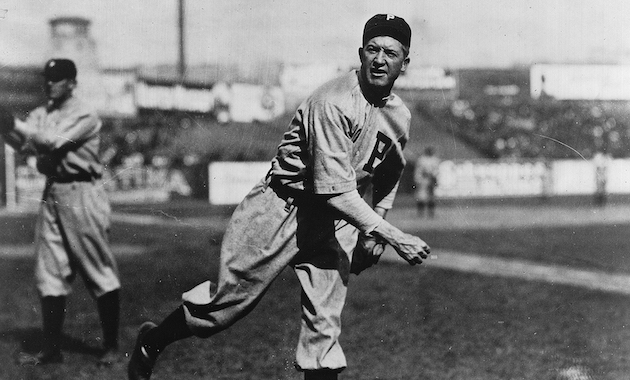
Grover Cleveland Alexander, born on February 26, 1887, in Elba, Nebraska, is one of the most celebrated pitchers in Major League Baseball (MLB) history. Known for his pinpoint control, durability, and unwavering poise, Alexander enjoyed a remarkable career that spanned from 1911 to 1930. His dominance on the mound earned him a place among baseball’s immortals, and his legacy as one of the greatest pitchers ever remains unchallenged.
Grover Cleveland Alexander grew up in rural Nebraska, where he developed a strong work ethic and love for baseball. Named after the U.S. President Grover Cleveland, Alexander began playing organized baseball in his teenage years. His talent as a pitcher quickly became apparent, and by 1909, he was playing for the Galesburg Boosters of the Illinois-Missouri League, a Class D minor league team.
Alexander’s journey to the majors was temporarily derailed in 1909 when he was struck in the head by a baserunner while fielding a bunt. The injury caused temporary blindness and raised doubts about his future in baseball. However, he made a full recovery and returned to the game with even greater determination. By 1910, he was pitching for the Syracuse Stars of the New York State League, where his stellar performance caught the attention of the Philadelphia Phillies.
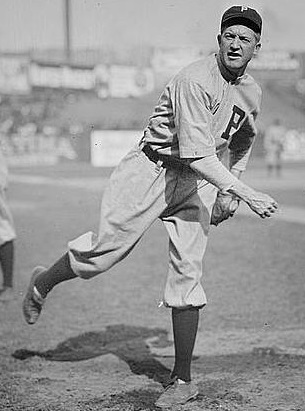
Grover Alexander made his MLB debut with the Philadelphia Phillies on April 15, 1911, and immediately established himself as a star. His rookie season was nothing short of spectacular; he posted a 28-13 record with a 2.57 ERA and 227 strikeouts, leading the league in wins, complete games (31), and innings pitched (367). Alexander’s dominance set the tone for the rest of his career.
Over the next six seasons, Alexander solidified his reputation as one of the best pitchers in baseball. From 1915 to 1917, he won three consecutive Triple Crowns, leading the National League (NL) in wins, ERA, and strikeouts each year. His 1915 season was particularly impressive, as he went 31-10 with a 1.22 ERA and 241 strikeouts. That year, Alexander led the Phillies to their first-ever World Series appearance, though they ultimately lost to the Boston Red Sox.
Alexander’s control was one of his defining attributes. He consistently ranked among the league leaders in fewest walks allowed per nine innings, demonstrating his ability to dominate hitters without issuing free passes. His durability was another hallmark of his career; he routinely pitched over 300 innings per season, a testament to his resilience and workhorse mentality.
In 1918, Alexander’s baseball career was interrupted by World War I. He was drafted into the U.S. Army and served as an artilleryman in France. The war took a significant toll on Alexander, both physically and emotionally. He suffered from hearing loss due to artillery fire and developed epilepsy, which was exacerbated by his experiences on the battlefield. Despite these challenges, Alexander returned to baseball in 1919, eager to resume his career.
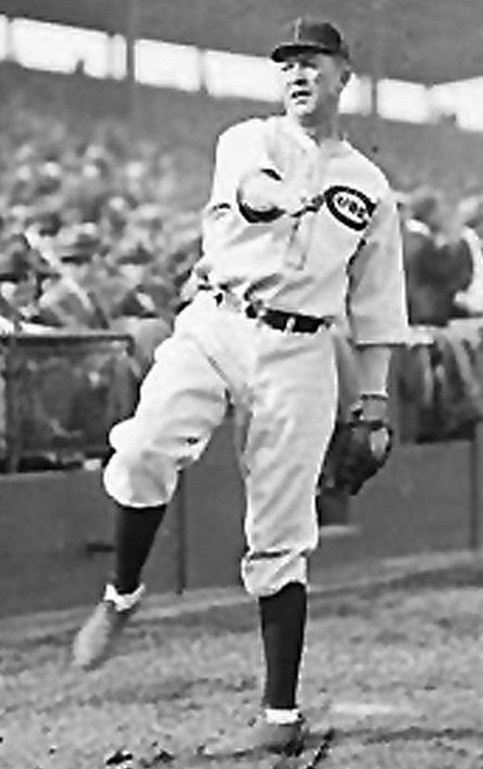
Shortly before his deployment, the Phillies traded Alexander to the Chicago Cubs, a move motivated by financial concerns. The trade marked the beginning of a new chapter in Alexander’s career. Although his performance initially dipped as he adjusted to life after the war, he quickly regained his form. In 1920, he posted a 27-14 record with a 1.91 ERA, leading the league in wins, ERA, and shutouts (9).
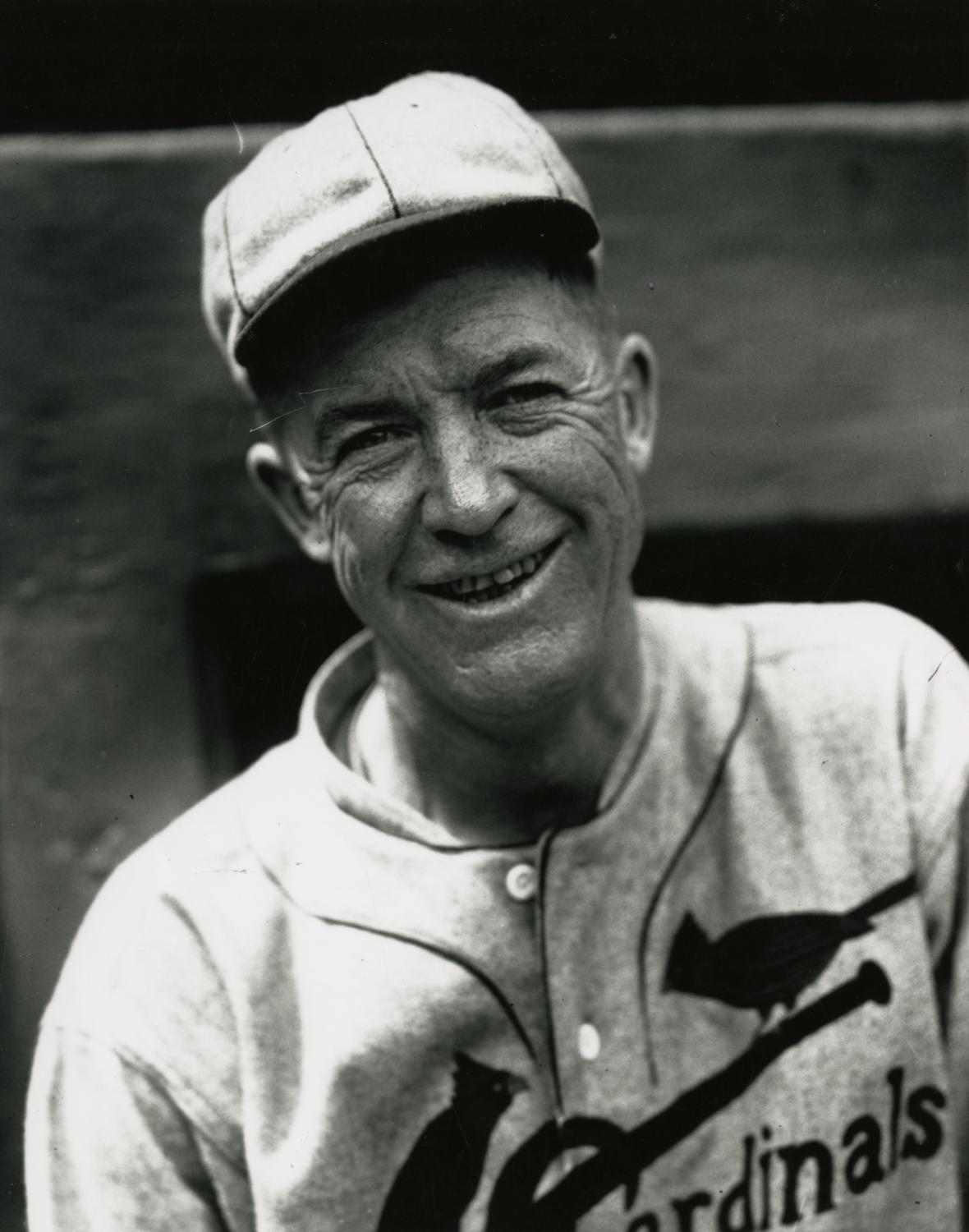
In 1926, Alexander’s career took another significant turn when the Cubs sold him to the St. Louis Cardinals. At 39 years old, many believed his best years were behind him, but Alexander proved otherwise. He played a pivotal role in the Cardinals’ 1926 World Series championship run, delivering one of the most iconic performances in baseball history.
During Game 7 of the 1926 World Series against the New York Yankees, Alexander was called upon in the seventh inning to protect a 3-2 lead with the bases loaded. Facing Tony Lazzeri, one of the Yankees’ most dangerous hitters, Alexander struck him out to end the threat. He then pitched two more scoreless innings to secure the Cardinals’ victory, cementing his place in baseball lore.
Alexander continued to pitch for the Cardinals until 1929, though his effectiveness waned in his final seasons. He briefly returned to the Phillies in 1930 before retiring from professional baseball. Despite his struggles in the later stages of his career, Alexander’s contributions to the game remained unparalleled.
Grover Alexander’s career statistics are a testament to his greatness. Over 20 seasons, he compiled a record of 373-208, a 2.56 ERA, and 2,198 strikeouts. His 373 career wins rank third all-time, behind only Cy Young and Walter Johnson. He also ranks second in shutouts, with 90, highlighting his ability to dominate opponents and preserve leads.
Alexander’s control was legendary. He issued just 951 walks over 5,190 innings pitched, resulting in a career walk rate of 1.6 walks per nine innings. His consistency and durability set him apart, as he led the league in wins six times, ERA five times, and strikeouts six times. He also pitched 30 or more complete games in seven different seasons, showcasing his endurance and reliability.
Beyond the numbers, Alexander’s impact on the game is immeasurable. His calm demeanor and unflappable poise made him a role model for aspiring pitchers, while his ability to perform under pressure earned him the admiration of fans and peers alike. Alexander’s performance in the 1926 World Series remains one of the most celebrated moments in baseball history, epitomizing his competitive spirit and clutch ability.
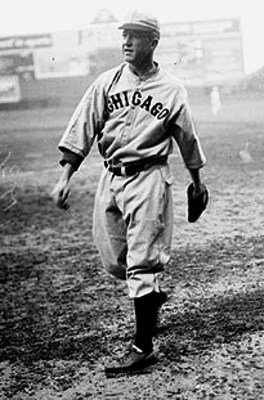
Despite his on-field success, Grover Alexander faced significant challenges off the field. His epilepsy, likely exacerbated by his wartime experiences, posed a constant obstacle throughout his career. Additionally, Alexander struggled with alcoholism, a battle that began during his military service and persisted into his post-playing days. These personal struggles often overshadowed his achievements and contributed to a tumultuous post-retirement life.
In 1938, Grover Alexander was inducted into the Baseball Hall of Fame as part of its third class, alongside legends such as Tris Speaker and Nap Lajoie. His induction recognized his extraordinary contributions to the game and solidified his status as one of the greatest pitchers in baseball history.
Alexander’s legacy endures as a symbol of perseverance and excellence. His remarkable achievements on the mound, combined with his ability to overcome adversity, continue to inspire players and fans alike. Today, he is remembered not only for his statistical accomplishments but also for his unwavering dedication to the game he loved.
Grover Cleveland Alexander’s MLB career is a story of triumph, resilience, and unparalleled skill. From his dominant performances with the Philadelphia Phillies to his unforgettable heroics with the St. Louis Cardinals, Alexander’s journey is a testament to the enduring power of talent and determination. His career statistics, including 373 wins, 2,198 strikeouts, and 90 shutouts, place him among the all-time greats, while his impact on the game transcends numbers. Despite facing significant personal challenges, Alexander’s legacy remains one of inspiration and excellence, ensuring his place as one of baseball’s true legends.



 The Baseball Scholar
Leave a comment