
Tris Speaker, often referred to as “The Grey Eagle,” is one of the most celebrated figures in Major League Baseball history. Renowned for his extraordinary defensive prowess, impeccable batting skills, and leadership both on and off the field, Speaker played a pivotal role in shaping the early era of professional baseball. His career, which spanned from 1907 to 1928, remains a benchmark of excellence, with achievements that have stood the test of time. We’ll explore Tris Speaker’s MLB career, his statistical accomplishments, and the enduring impact he had on the game of baseball.
Tristram E. Speaker was born on April 4, 1888, in Hubbard, Texas. Speaker grew up with a deep love for sports, excelling in baseball during his youth despite facing challenges, including a severe arm injury that led him to become a left-handed thrower. His adaptability and determination would later define his career. Speaker’s talents on the baseball field caught the attention of scouts, and he began his professional career in the minor leagues before making his MLB debut with the Boston Americans (later the Red Sox) in 1907.
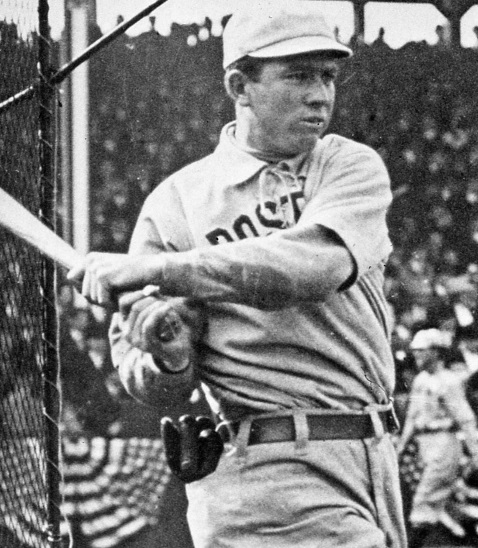
Tris Speaker’s tenure with the Boston Red Sox was the foundation of his Hall of Fame career. After a brief stint in 1907, Speaker became a regular in the Red Sox lineup by 1909. Over the next several years, he evolved into one of the most complete players in the league, excelling both offensively and defensively. His unique combination of power and consistency at the plate, paired with his exceptional fielding abilities, made him an indispensable asset.
In 1912, Speaker enjoyed one of the finest seasons of his career, helping the Red Sox secure their first World Series championship since 1903. That year, Speaker batted .383 with 10 home runs and 90 RBIs, leading the league in doubles with 53. His performance earned him the Chalmers Award, which was the precursor to the modern MVP Award. Speaker’s leadership and clutch performances during the World Series were instrumental in Boston’s victory over the New York Giants.
During his time with the Red Sox, Speaker developed a reputation as a revolutionary center fielder. His ability to play shallow in center field while still tracking down deep fly balls was unprecedented. This approach not only disrupted opposing offenses but also set a standard for future outfielders.
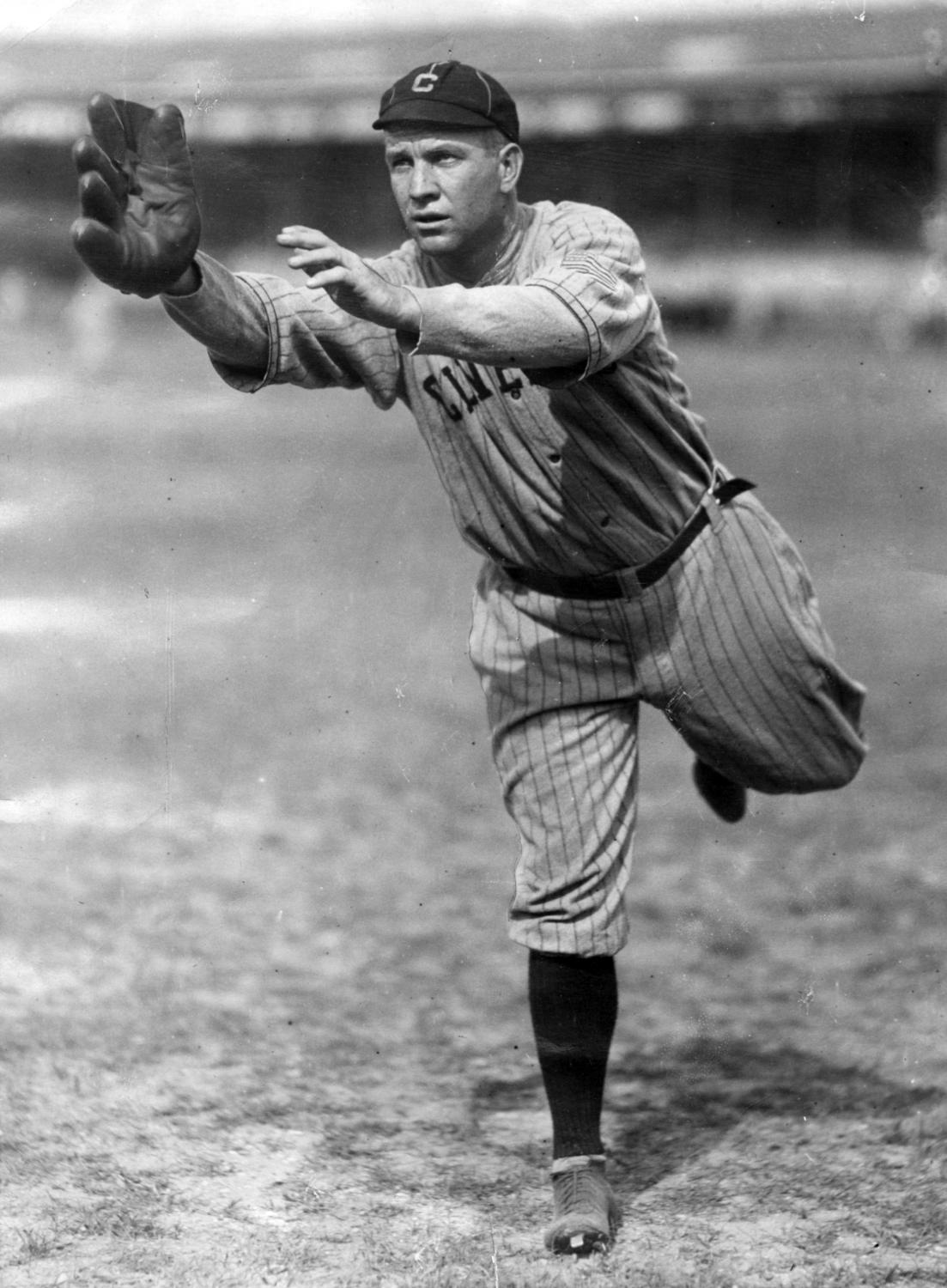
In 1916, Speaker was traded to the Cleveland Indians in one of the most notable transactions of the era. The move did little to hinder his success; in fact, Speaker’s career reached new heights in Cleveland. In his first season with the Indians, he led the league with a .386 batting average, a mark that would remain the highest single-season average of his career. Speaker’s impact extended beyond the field, as he became a player-manager for the Indians in 1919, a role that allowed him to shape the team’s strategy and culture.
Speaker’s tenure as a player-manager culminated in 1920, when he led the Indians to their first World Series championship. That year, Speaker batted .388 with 50 doubles, 107 RBIs, and a league-leading .477 on-base percentage. His leadership during the World Series, particularly in the wake of the tragic death of teammate Ray Chapman, galvanized the team and solidified his legacy as one of baseball’s great leaders.

Over his 11 seasons with Cleveland, Speaker continued to post remarkable numbers. He consistently ranked among the league leaders in batting average, on-base percentage, and doubles, showcasing his unparalleled ability to drive the ball to all fields. His time with the Indians further cemented his reputation as one of the most complete players in MLB history.
After leaving the Indians, Speaker spent brief stints with the Washington Senators in 1927 and the Philadelphia Athletics in 1928. Though his production declined as he entered his 40s, Speaker remained a valuable contributor and a respected veteran presence. He retired at the conclusion of the 1928 season, bringing an end to a 22-year career that left an indelible mark on the game.
Tris Speaker’s career statistics are a testament to his extraordinary talent and consistency. He retired with a .345 lifetime batting average, which ranks sixth all-time. His 3,514 hits place him fifth on the all-time hits list, and his 792 doubles remain the most in MLB history. Speaker also recorded 1,529 RBIs, 1,882 runs scored, and 436 stolen bases, highlighting his well-rounded skill set.
Defensively, Speaker is widely regarded as one of the greatest outfielders of all time. His ability to read hitters and anticipate plays allowed him to make spectacular catches and record 449 career assists as an outfielder, a record that still stands. Speaker’s innovative approach to playing center field, including his shallow positioning and aggressive throws, revolutionized defensive strategy in baseball.
Speaker was a three-time World Series champion (1912, 1915, 1920) and was inducted into the Baseball Hall of Fame in 1937 as part of its second class. His numerous accolades include leading the league in batting average once, doubles eight times, and on-base percentage four times. Speaker’s consistency and excellence over two decades made him a perennial All-Star in the pre-All-Star Game era.
Tris Speaker’s impact on baseball extends far beyond his impressive statistics. As a player, he redefined the role of the center fielder, setting a standard for defensive excellence that influenced generations of players. His innovative positioning and ability to cut off hits in the outfield changed the way teams approached both defense and baserunning.
Offensively, Speaker’s approach at the plate emphasized contact hitting, situational awareness, and the ability to drive the ball to all fields. His mastery of the hit-and-run play and his unparalleled ability to hit doubles made him one of the most productive hitters in baseball history. Speaker’s style of play emphasized strategy and execution, qualities that remain fundamental to the game.
As a leader, Speaker’s role as a player-manager with the Indians demonstrated his deep understanding of the game and his ability to inspire teammates. His leadership during the 1920 World Series, in particular, exemplified his ability to rise to the occasion and guide his team through adversity. Speaker’s influence extended beyond the field, as he was an advocate for fair play and sportsmanship throughout his career.
Tris Speaker’s legacy as one of the greatest players in baseball history is unquestionable. His combination of offensive and defensive prowess, coupled with his leadership and strategic acumen, set him apart as a true pioneer of the game. Speaker’s records, particularly his all-time doubles mark, continue to stand as a testament to his skill and consistency.

Speaker’s influence can be seen in the generations of players who have followed in his footsteps. His innovative approach to center field defense inspired future greats such as Willie Mays and Ken Griffey Jr., while his emphasis on situational hitting and strategic play remains a cornerstone of modern baseball. As one of the early stars of the game, Speaker helped elevate baseball’s popularity and establish it as America’s national pastime.
Tris Speaker’s MLB career is a story of excellence, innovation, and leadership. From his early days with the Boston Red Sox to his championship-winning years with the Cleveland Indians, Speaker’s impact on the game was profound. His remarkable statistics, including his .345 career batting average and record-setting 792 doubles, are a testament to his extraordinary talent and dedication. Beyond the numbers, Speaker’s contributions to the evolution of defensive strategy and his leadership during pivotal moments in baseball history solidify his place as one of the game’s true legends. Tris Speaker’s legacy endures as a symbol of what it means to excel in all facets of the game, and his influence continues to shape the way baseball is played and appreciated today.


 The Baseball Scholar
Leave a comment