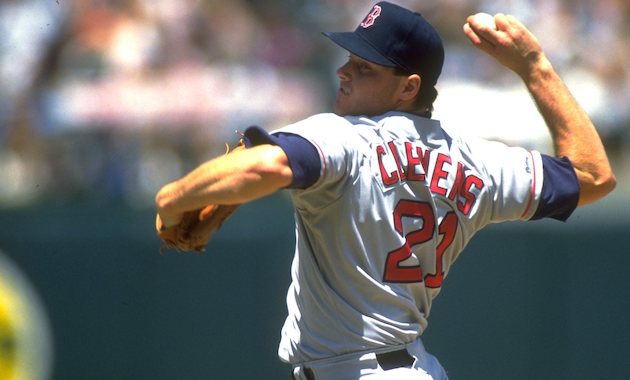
Roger Clemens, often referred to as “The Rocket,” is one of the most dominant and polarizing pitchers in the history of Major League Baseball. Over a 24-season career that spanned from 1984 to 2007, Clemens established himself as a force on the mound, compiling an unparalleled resume of statistical achievements, individual accolades, and team successes. His remarkable longevity, unmatched competitive drive, and dominance over multiple decades solidified his place as one of baseball’s all-time greats. However, his legacy has been marred by allegations of performance-enhancing drug (PED) use, creating a complex narrative around his career. This essay will explore Roger Clemens’ MLB career in depth, highlighting his statistics, records, and lasting impact on the game.
William Roger Clemens was born on August 4, 1962, in Dayton, Ohio. Growing up in a working-class family, Clemens developed a strong work ethic that would become a hallmark of his career. He excelled in baseball during high school and college, attending the University of Texas at Austin, where he helped the Longhorns win the 1983 College World Series. Clemens’ collegiate success caught the attention of MLB scouts, and he was selected by the Boston Red Sox in the first round of the 1983 MLB Draft.
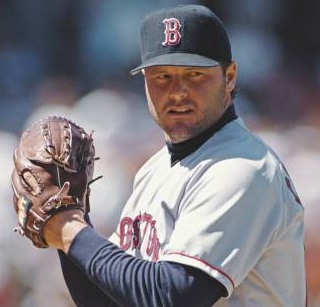
Clemens made his MLB debut on May 15, 1984, for the Red Sox, quickly showcasing his potential as a frontline starter. By 1986, his third season, Clemens had emerged as one of the best pitchers in the league, setting the stage for a career that would redefine pitching excellence.
Roger Clemens spent the first 13 seasons of his career with the Boston Red Sox, where he established himself as one of the premier pitchers in MLB. His breakout year came in 1986, when he won both the American League Cy Young Award and the AL Most Valuable Player Award, becoming the first pitcher since Vida Blue in 1971 to win both honors in the same season. Clemens posted a 24-4 record with a 2.48 ERA and 238 strikeouts, leading the Red Sox to the AL pennant.
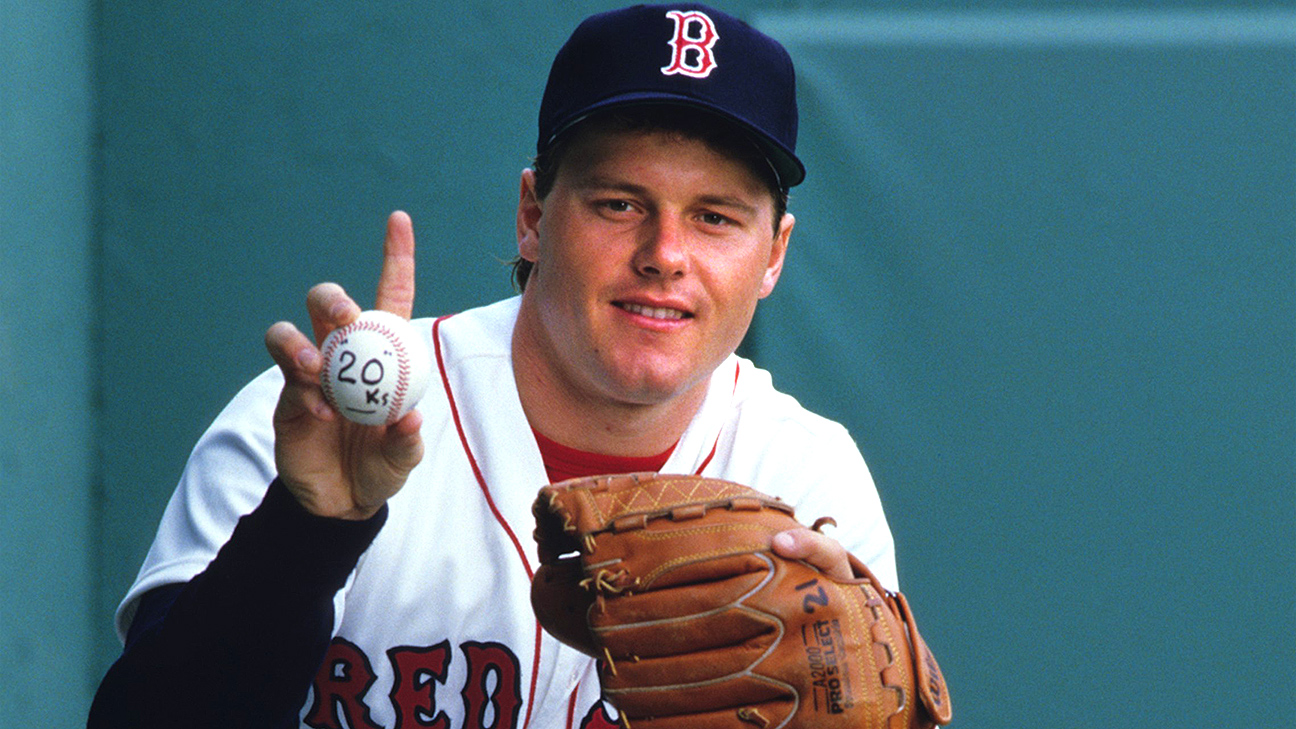
Clemens’ 1986 season also included one of the most iconic moments of his career: a 20-strikeout performance against the Seattle Mariners on April 29. This feat set a single-game strikeout record, a mark he would tie again in 1996 against the Detroit Tigers. Over his tenure with the Red Sox, Clemens earned three Cy Young Awards (1986, 1987, 1991) and was named an All-Star five times. He led the league in ERA four times and strikeouts three times during this period, cementing his reputation as the most dominant pitcher of his era.
Despite his individual success, Clemens’ time in Boston was marked by postseason frustration. The Red Sox reached the World Series in 1986 but lost to the New York Mets in a heartbreaking seven-game series. Clemens’ relationship with Red Sox management became strained in the mid-1990s, culminating in his departure as a free agent after the 1996 season.
After leaving Boston, Clemens signed with the Toronto Blue Jays, where he experienced a remarkable career resurgence. In both 1997 and 1998, Clemens won the AL Cy Young Award, becoming the first pitcher in MLB history to win the award in consecutive seasons with different teams. During this period, Clemens led the league in wins, ERA, and strikeouts in both seasons, achieving the pitching Triple Crown each year.

In 1997, Clemens posted a 21-7 record with a 2.05 ERA and 292 strikeouts. He followed that with a 20-6 record, a 2.65 ERA, and 271 strikeouts in 1998. His dominance during these two seasons silenced critics who believed his best years were behind him and reestablished him as one of the game’s elite pitchers.
In 1999, Clemens was traded to the New York Yankees, where he joined a team in the midst of building a dynasty. His tenure with the Yankees was highlighted by team success, as the Yankees won two World Series titles (1999, 2000) and reached the Fall Classic four times during his five seasons in New York.
Clemens continued to perform at a high level, winning his sixth Cy Young Award in 2001 at the age of 39. That season, he posted a 20-3 record with a 3.51 ERA and 213 strikeouts, demonstrating his ability to remain dominant well into his late 30s. Clemens’ competitiveness and fiery demeanor endeared him to Yankees fans and made him a key figure in their postseason runs.
One of Clemens’ most memorable moments with the Yankees came in Game 4 of the 2000 World Series against the New York Mets. In a heated and controversial game, Clemens threw a shattered bat fragment near Mets player Mike Piazza, igniting tensions between the two teams. While the incident drew criticism, it also underscored Clemens’ intense competitive nature.
After leaving the Yankees following the 2003 season, Clemens signed with the Houston Astros, where he continued to defy age and expectations. In 2004, he won his seventh Cy Young Award, setting a record that still stands. That season, Clemens posted an 18-4 record with a 2.98 ERA, helping the Astros reach the National League Championship Series.

Clemens’ 2005 season was equally impressive, as he recorded a league-leading 1.87 ERA, the lowest of his career, at age 42. He played a pivotal role in leading the Astros to their first-ever World Series appearance, though they were swept by the Chicago White Sox.
Clemens returned to the Yankees in 2007 for a final stint, making 18 starts and contributing to their playoff push. Despite his advanced age, Clemens remained an effective pitcher, showcasing his longevity and dedication to the game.
Roger Clemens’ career statistics are a testament to his dominance and consistency. Over 24 seasons, he compiled a 354-184 record, a 3.12 ERA, and 4,672 strikeouts, ranking third all-time in strikeouts behind Nolan Ryan and Randy Johnson. He is one of only four pitchers in MLB history to win 350 games and strike out over 4,000 batters.
Clemens’ seven Cy Young Awards are the most in MLB history, and he is one of only three pitchers to achieve the pitching Triple Crown multiple times. He was an 11-time All-Star and twice named the All-Star Game MVP (1986, 2001). Clemens also won two World Series titles and was named to MLB’s All-Century Team in 1999.
Despite his remarkable achievements, Clemens’ legacy has been overshadowed by allegations of PED use. His name was prominently mentioned in the 2007 Mitchell Report, which investigated the use of PEDs in baseball. Former trainer Brian McNamee alleged that he injected Clemens with anabolic steroids and human growth hormone during the late 1990s and early 2000s. Clemens has consistently denied these allegations, but the controversy has clouded his Hall of Fame candidacy.

The PED allegations have sparked debates about how Clemens’ career should be evaluated. Despite his statistical dominance, he has not been elected to the Baseball Hall of Fame, with voters citing concerns about integrity and the legitimacy of his achievements.
Roger Clemens’ impact on baseball extends beyond his statistical accomplishments. As one of the most dominant pitchers in MLB history, he set a standard for excellence that inspired future generations of players. His fiery competitiveness and work ethic exemplified the qualities of a true ace, and his ability to perform at a high level over two decades demonstrated the value of preparation and adaptability.
Clemens also played a key role in shaping the modern understanding of pitching. His use of advanced training techniques, attention to mechanics, and mental approach to the game influenced the development of pitchers in the 21st century. Despite the controversy surrounding his career, Clemens remains a symbol of pitching greatness and a reminder of the complexities of evaluating players in the PED era.
Roger Clemens’ MLB career is a story of unparalleled dominance, resilience, and controversy. As one of the most decorated pitchers in history, his statistical achievements and individual accolades place him among the all-time greats. However, the allegations of PED use have cast a shadow over his legacy, creating a complex narrative that continues to spark debate.
Regardless of the controversies, Clemens’ impact on baseball is undeniable. His records, performances, and competitive spirit have left an indelible mark on the game, ensuring that his name will be remembered for generations to come. Roger Clemens’ career serves as both a celebration of pitching excellence and a reflection on the challenges of preserving the integrity of baseball history.



 The Baseball Scholar
Leave a comment