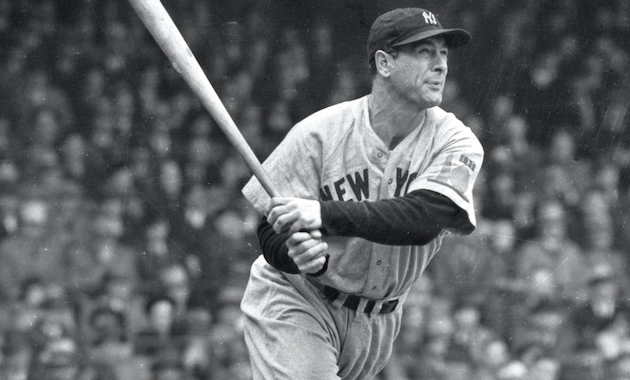
Lou Gehrig, known as “The Iron Horse,” is one of the most iconic and revered figures in Major League Baseball history. His career with the New York Yankees spanned 17 seasons, from 1923 to 1939, during which he established himself as one of the greatest players to ever grace the diamond. Gehrig’s powerful hitting, remarkable consistency, and exemplary sportsmanship left an indelible mark on the game of baseball. His tragic battle with amyotrophic lateral sclerosis (ALS), which would later bear his name, further cemented his legacy as a symbol of courage and perseverance. We’ll explore the extraordinary MLB career of Lou Gehrig, detailing his statistics, achievements, and lasting impact on the sport and beyond.
Henry Louis Gehrig was born on June 19, 1903, in New York City to German immigrant parents. Gehrig’s upbringing was modest, and he faced several challenges, including the deaths of three siblings in childhood. Despite these hardships, Gehrig excelled in academics and athletics, attending Columbia University on a football scholarship. His prowess on the baseball field, however, soon became apparent.
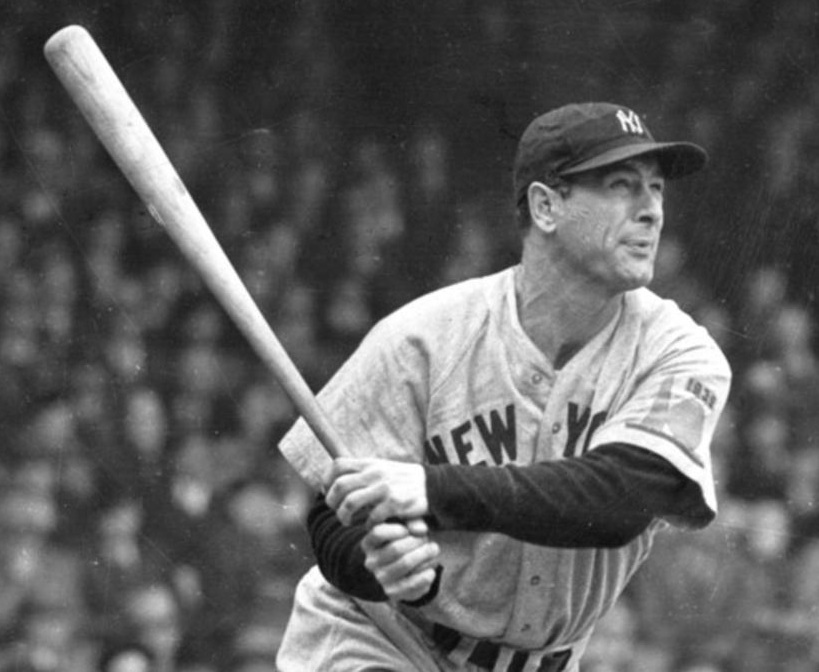
Gehrig’s professional career began when a scout for the New York Yankees noticed his prodigious talent. He signed with the Yankees in 1923 and made his MLB debut on June 15 of that year. Although his early appearances were limited, Gehrig’s potential was undeniable. By 1925, he had secured a regular spot in the Yankees’ lineup, marking the beginning of one of the most storied careers in baseball history.
Lou Gehrig’s defining characteristic as a player was his durability. On June 1, 1925, he began his legendary streak of consecutive games played, replacing Wally Pipp at first base. Over the next 14 years, Gehrig played in 2,130 consecutive games, a record that stood for 56 years until it was broken by Cal Ripken Jr. in 1995. Gehrig’s streak exemplified his toughness and commitment, as he played through injuries, illnesses, and immense physical demands.
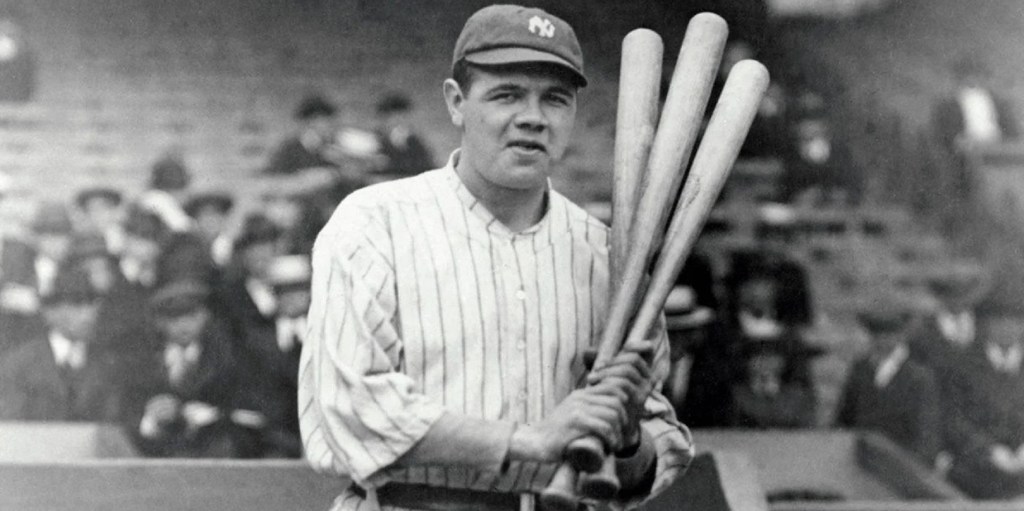
Gehrig’s consistency extended beyond simply appearing in games. From 1926 to 1939, he was one of the most productive hitters in MLB. A cornerstone of the Yankees’ lineup, he was instrumental in the team’s dominance during this era, forming a legendary partnership with Babe Ruth. Together, they created one of the most feared batting orders in baseball history.
Lou Gehrig’s career statistics are a testament to his extraordinary talent and work ethic. Over 17 seasons, he compiled a .340 batting average, 2,721 hits, 493 home runs, and 1,995 runs batted in. His career on-base percentage of .447 and slugging percentage of .632 place him among the all-time leaders in both categories, and his career OPS of 1.080 ranks third in MLB history, behind only Babe Ruth and Ted Williams.
Gehrig was a seven-time All-Star and a two-time American League Most Valuable Player, winning the award in 1927 and 1936. In 1934, he won the Triple Crown, leading the league in batting average (.363), home runs (49), and RBIs (165). His 184 RBIs in 1931 remain a single-season AL record and are second only to Hack Wilson’s 191 RBIs in 1930 for the MLB record.
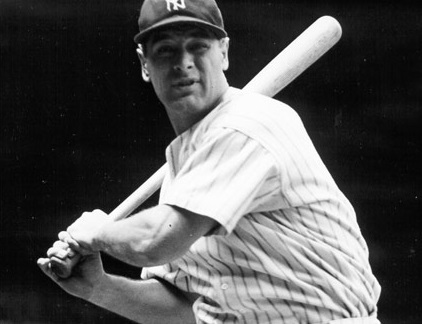
Gehrig’s postseason performance was equally remarkable. In 34 World Series games, he batted .361 with 10 home runs and 35 RBIs, helping the Yankees win six championships during his tenure. His ability to deliver in clutch situations further solidified his reputation as one of the game’s greatest players.
During Gehrig’s career, the New York Yankees emerged as the dominant team in baseball. From 1927—the year of the legendary “Murderers’ Row”—to 1939, the Yankees won seven AL pennants and six World Series titles. Gehrig’s contributions were central to this success. In 1927, widely regarded as one of the greatest teams in MLB history, Gehrig batted .373 with 47 home runs and a league-leading 173 RBIs. His ability to complement Babe Ruth’s prodigious power with his own offensive prowess made the Yankees nearly unstoppable.
Even as Ruth’s career began to decline in the early 1930s, Gehrig remained the cornerstone of the Yankees’ lineup. His leadership and consistency helped the team transition into a new era, setting the stage for continued success with players like Joe DiMaggio. Gehrig’s impact extended beyond his on-field performance; he was a stabilizing presence in the clubhouse and a role model for younger players.
In the late 1930s, Gehrig began to experience a mysterious decline in his performance. Once capable of hitting for both power and average with ease, he struggled to maintain his usual production. By the start of the 1939 season, it became evident that something was seriously wrong. On May 2, 1939, Gehrig voluntarily ended his consecutive games streak, removing himself from the lineup for the first time in 14 years.
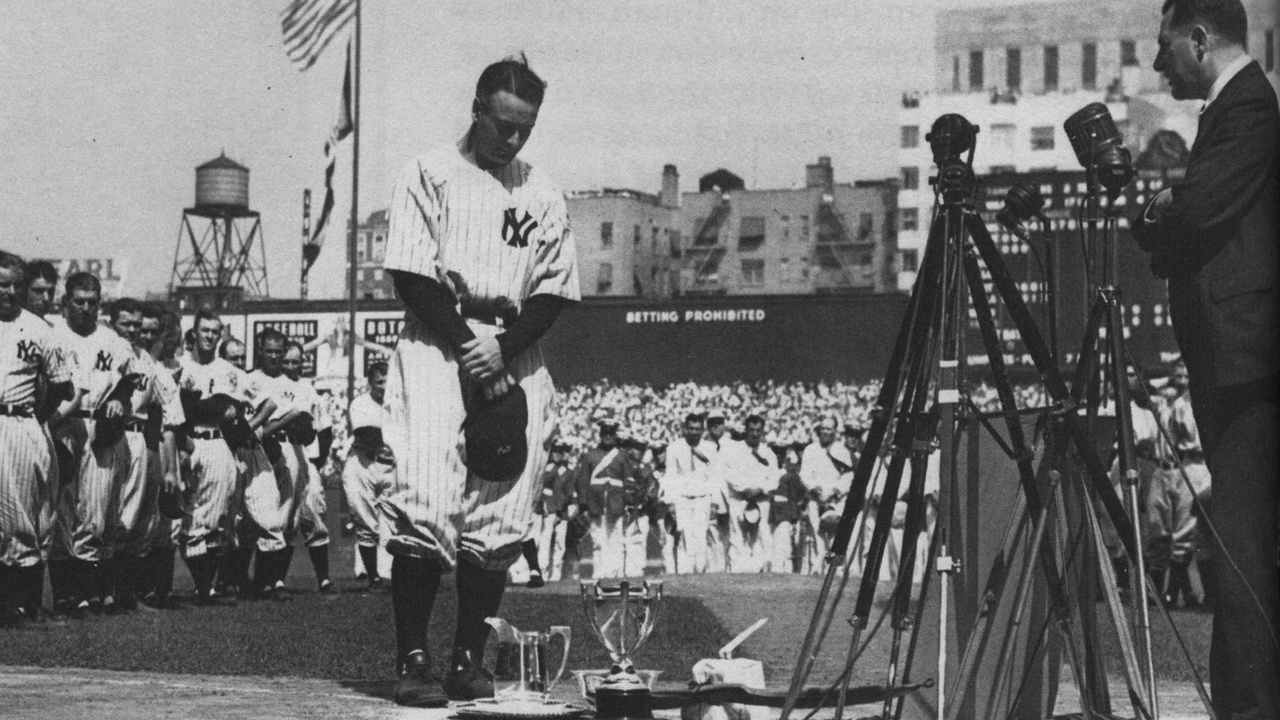
Shortly thereafter, Gehrig was diagnosed with ALS, a progressive neurodegenerative disease. The diagnosis effectively ended his baseball career and cast a shadow over his life. On July 4, 1939, the Yankees held a special ceremony at Yankee Stadium to honor Gehrig. In his now-famous speech, Gehrig declared himself “the luckiest man on the face of the Earth,” expressing gratitude for his teammates, fans, and the game of baseball. The emotional farewell remains one of the most iconic moments in sports history.
Lou Gehrig’s impact on baseball transcends his statistics and achievements. He embodied the values of hard work, humility, and resilience, earning the respect and admiration of fans, teammates, and opponents alike. His streak of 2,130 consecutive games played became a symbol of dedication, inspiring generations of players.
Gehrig’s legacy is also defined by his battle with ALS. His courage in the face of a devastating disease brought attention to a condition that was little understood at the time. Today, ALS is commonly referred to as “Lou Gehrig’s disease” in his honor, and his story continues to inspire efforts to find a cure.
Gehrig was inducted into the Baseball Hall of Fame in 1939 through a special election, bypassing the usual waiting period. His plaque at Cooperstown celebrates his “kindness and unselfishness,” reflecting the profound impact he had on the game and those around him. In 1941, the Yankees retired his uniform number 4, making him the first player in MLB history to receive such an honor.
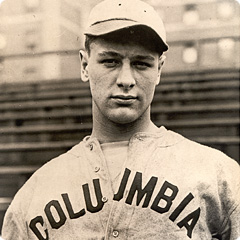
Lou Gehrig’s MLB career is a testament to the power of talent, perseverance, and character. As one of the greatest hitters of all time, his statistical achievements rank among the best in baseball history. Yet it is his sportsmanship, resilience, and grace in the face of adversity that define his enduring legacy. Gehrig’s contributions to the Yankees’ dynasty, his iconic farewell speech, and his association with ALS ensure that his name will forever be synonymous with excellence and courage. In the annals of baseball history, few players have left a legacy as profound and inspiring as that of Lou Gehrig.



 The Baseball Scholar
Leave a comment