
Stan Musial, affectionately known as “Stan the Man,” is one of the most revered figures in the history of Major League Baseball. Over a remarkable 22-season career, all spent with the St. Louis Cardinals, Musial redefined consistency and excellence in the sport. Known for his graceful left-handed swing, sportsmanship, and humility, Musial left an indelible mark on baseball through his remarkable statistical achievements, contributions to the Cardinals’ success, and his enduring legacy as one of the game’s true gentlemen. We’ll delve deep into the life and career of Stan Musial, exploring his MLB stats, statistical accomplishments, and his impact on baseball and society.
Stanley Frank Musial was born on November 21, 1920, in Donora, Pennsylvania, a small steel town that also produced other legendary athletes. Raised during the Great Depression, Musial’s upbringing instilled in him a work ethic and humility that would define his life and career. Initially drawn to baseball as a pitcher, Musial’s athleticism and love for the game quickly became evident. His transition to becoming a position player was a turning point that set the stage for one of the greatest hitting careers in MLB history.

Musial signed with the St. Louis Cardinals organization in 1938 as a 17-year-old. In the minor leagues, he struggled initially as a pitcher, but his hitting prowess became too significant to overlook. A shoulder injury in 1940 effectively ended his pitching career, but it opened the door for his transition to the outfield. Musial quickly adapted, and by 1941, he was making waves in the Cardinals’ farm system with his offensive production. His meteoric rise through the minor leagues culminated in a late-season call-up to the Cardinals in September 1941, marking the beginning of an extraordinary MLB journey.
Stan Musial made his MLB debut on September 17, 1941, and immediately made an impact, hitting .426 in 12 games. His strong start foreshadowed the greatness to come. By 1942, his first full season, Musial had established himself as one of the premier hitters in the league. That year, he batted .315 with 10 home runs and 72 runs batted in, helping lead the Cardinals to a World Series championship. Musial’s performance earned him widespread recognition and his first All-Star selection.
The 1943 season saw Musial ascend to the elite tier of MLB players. He won his first National League Most Valuable Player Award, leading the league in batting average (.357), hits (220), doubles (48), triples (20), and slugging percentage (.562). Musial’s dominance at the plate was instrumental in guiding the Cardinals to another NL pennant, though they fell short in the World Series. His ability to combine power and precision as a hitter made him a nightmare for opposing pitchers.
In 1944, Musial continued his exceptional play, batting .347 with 197 hits and 94 RBIs. The Cardinals returned to the World Series, where they defeated the St. Louis Browns in six games to claim their second championship in three years. By the end of 1944, Musial had firmly established himself as the cornerstone of the Cardinals and one of the brightest stars in the game.
Like many players of his era, Stan Musial’s career was briefly interrupted by military service during World War II. He enlisted in the U.S. Navy in 1945 and served primarily in non-combat roles, which allowed him to maintain his physical conditioning. Though his absence from baseball was relatively short, it was a testament to his character and sense of duty. Musial returned to the Cardinals in 1946, seamlessly resuming his dominance at the plate.
The period from 1946 to 1958 represents the heart of Stan Musial’s career, during which he solidified his status as one of the greatest players in MLB history. His consistency, versatility, and ability to deliver in clutch situations made him the epitome of a franchise player.
In 1946, Musial batted .365, leading the league in hits (228), doubles (50), and slugging percentage (.587). The Cardinals returned to the World Series that year, defeating the Boston Red Sox in a thrilling seven-game series. Musial’s performance earned him his second MVP Award, cementing his place as the face of the Cardinals and a national baseball icon.
Musial’s 1948 season is widely regarded as one of the greatest individual campaigns in MLB history. He won his third MVP Award and came tantalizingly close to winning the Triple Crown. Musial led the league in batting average (.376), hits (230), doubles (46), triples (18), RBIs (131), and slugging percentage (.702). His 39 home runs were second in the league, just one shy of the leader. Musial’s dominance was so pronounced that he also led the league in runs scored (135) and total bases (429). The 429 total bases remain a National League record to this day.
Throughout the 1950s, Musial continued to excel, consistently ranking among the league leaders in virtually every offensive category. He won seven batting titles during his career, a testament to his extraordinary ability to make contact and drive the ball to all fields. His career batting average of .331 ranks among the best in MLB history, and his adaptability as a hitter allowed him to maintain his excellence well into his late 30s.

Musial’s durability was another hallmark of his career. He played in 895 consecutive games from 1952 to 1957, a streak that demonstrated his commitment to the game and his team. Whether playing in the outfield or at first base, Musial’s presence in the lineup was a constant source of stability and production for the Cardinals.
Over the course of his career, Stan Musial amassed a staggering array of statistical achievements that place him among the all-time greats. He retired with 3,630 hits, a total that ranks fourth in MLB history. Remarkably, Musial’s hits were evenly split between home and away games, with 1,815 hits in each setting, a testament to his consistency.
Musial’s 725 doubles rank third all-time, and his 177 triples are among the top ten in MLB history. He hit 475 home runs and drove in 1,951 RBIs, ranking him among the all-time leaders in both categories. His career OPS (on-base plus slugging) of .976 and OPS+ of 159 underscore his status as one of the most effective offensive players of all time.
A 24-time All-Star (thanks to the practice of holding multiple All-Star Games per season during parts of his career), Musial’s accolades include three MVP Awards, seven batting titles, and six seasons leading the league in slugging percentage. His 6,134 total bases are second only to Hank Aaron, highlighting his extraordinary ability to generate extra-base hits over two decades.
Stan Musial’s impact on baseball extends far beyond his remarkable statistics. As one of the most respected and beloved figures in the game, Musial embodied the values of sportsmanship, humility, and consistency. He was known for his friendly demeanor, treating fans, teammates, and opponents with kindness and respect. In an era when professional athletes were often distant figures, Musial’s accessibility and warmth made him a favorite among fans.
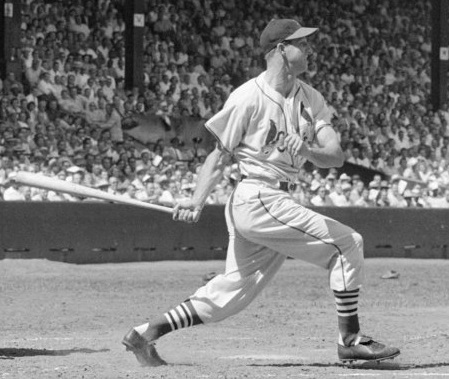
Musial’s contributions to the St. Louis Cardinals franchise are immeasurable. He played a pivotal role in leading the team to three World Series championships (1942, 1944, and 1946) and remains the most celebrated player in the organization’s storied history. His loyalty to the Cardinals, spending his entire career with one team, is increasingly rare in modern professional sports and serves as a testament to his character.
Off the field, Musial’s legacy includes his contributions to the integration of baseball. Although he played before and during the early years of baseball’s integration, Musial was a vocal supporter of Jackie Robinson and other African American players. His inclusive attitude and respect for all players helped foster a sense of unity in the sport during a time of significant social change.
Musial’s legacy has been commemorated in numerous ways. He was inducted into the Baseball Hall of Fame in 1969, his first year of eligibility, receiving over 93% of the vote. His statue outside Busch Stadium in St. Louis bears the inscription “Here stands baseball’s perfect warrior. Here stands baseball’s perfect knight,” a fitting tribute to his contributions on and off the field.
In 2011, Musial was awarded the Presidential Medal of Freedom, the highest civilian honor in the United States, in recognition of his contributions to sports and society. His name remains synonymous with excellence, integrity, and humility, making him a role model for generations of players and fans.
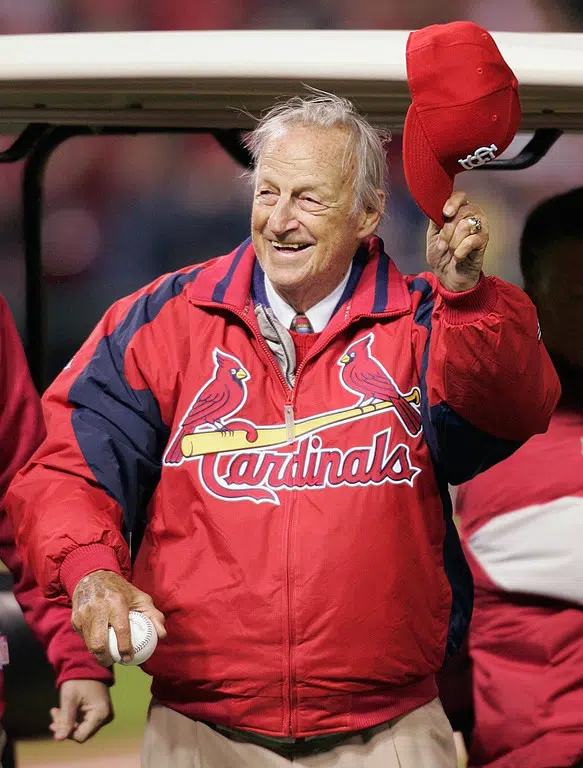
Stan Musial’s MLB career is a story of unparalleled consistency, remarkable achievements, and profound impact. With a career that spanned 22 seasons, 3,630 hits, three MVP Awards, and seven batting titles, Musial’s statistical accomplishments place him among the greatest players in baseball history. Yet it is his character, sportsmanship, and contributions to the game that truly set him apart.
Musial’s legacy endures not only in the record books but also in the hearts of baseball fans. As “Stan the Man,” he remains a symbol of what is possible through hard work, dedication, and humility. His influence on the game and his example of how to conduct oneself on and off the field ensure that his name will forever be synonymous with the best of baseball.




 The Baseball Scholar
Leave a comment