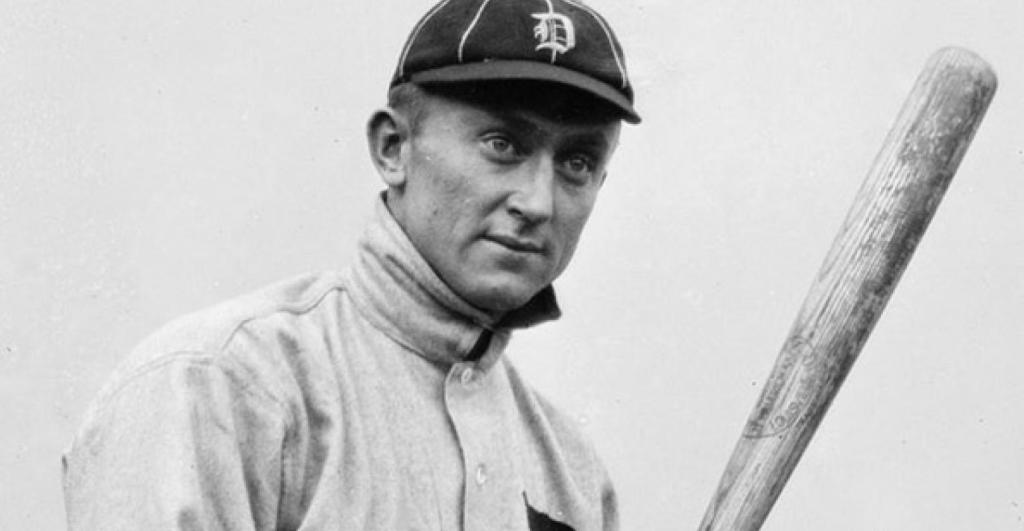
Ty Cobb, often called “The Georgia Peach,” is one of the most iconic and controversial figures in Major League Baseball history. Cobb’s career, which spanned from 1905 to 1928, was defined by unmatched offensive dominance, unparalleled intensity, and a lasting influence on the sport. Playing almost his entire career with the Detroit Tigers before finishing with the Philadelphia Athletics, Cobb’s statistical achievements and aggressive style of play left an indelible mark on baseball.
Cobb’s statistical accomplishments are staggering and stand the test of time. Over his 24-season career, he amassed 4,189 hits, a record that stood until Pete Rose surpassed it in 1985. Cobb’s .366 career batting average remains the highest in MLB history, a testament to his consistent excellence at the plate. He won an astounding 12 batting titles, including nine consecutive from 1907 to 1915, a streak that has yet to be matched. Cobb led the American League in hits eight times, runs five times, and RBI four times, despite not being primarily a power hitter. His speed on the base paths was legendary, as he stole 897 bases during his career, including a league-leading 96 in 1915.

One of Cobb’s most remarkable seasons came in 1911 when he posted a .420 batting average, drove in 127 runs, and stole 83 bases. That year, he also led the league in doubles, triples, runs scored, and total bases, showcasing his all-around offensive dominance. Cobb’s ability to hit for average, disrupt defenses with his base running, and manufacture runs made him one of the most feared players of his era.
Cobb’s style of play was characterized by an aggressive and relentless approach. He was known for his fierce competitiveness and would stop at nothing to gain an advantage over his opponents. His intensity on the field often led to confrontations with other players and even fans, but it also helped establish his reputation as one of the hardest-working and most determined athletes in history. This ferocity extended to his base running, where he was notorious for sliding into bases with his spikes high, a tactic that intimidated defenders.
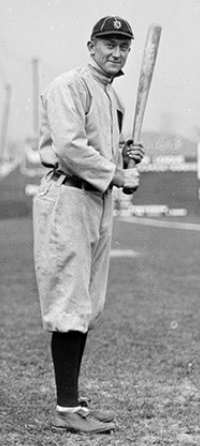
Off the field, Ty Cobb was a polarizing figure. Known for his fiery temper and often abrasive personality, Cobb’s relationships with teammates and opponents were frequently contentious. His attitudes and behaviors, including documented instances of racism and violence, have led to a complicated legacy. While his on-field achievements are celebrated, his off-field conduct has been a subject of intense scrutiny and debate.
Cobb’s impact on baseball is profound. He helped popularize the sport during its formative years and set a standard for hitting that influenced generations of players. Cobb’s emphasis on small ball—hitting for average, stealing bases, and creating opportunities through aggressive play—contrasted with the power-focused approach that later defined the game during the Babe Ruth era. His ability to excel in multiple facets of the game made him one of the earliest examples of a five-tool player.

In 1936, Cobb was one of the inaugural inductees into the Baseball Hall of Fame, receiving 222 out of 226 votes, the highest percentage among the first class of honorees that included Babe Ruth and Honus Wagner. This recognition solidified his status as one of the sport’s greatest figures. Despite the controversies surrounding his character, Cobb’s influence on the game’s history and development is undeniable.
Ty Cobb’s MLB career is a story of extraordinary talent, relentless drive, and complex legacy. His .366 batting average and 12 batting titles remain unmatched in baseball history, underscoring his status as one of the sport’s all-time greats. Cobb’s aggressive style of play and unwavering determination helped define an era and left an enduring impact on the game. While his off-field behavior has cast a shadow over his reputation, Cobb’s contributions to baseball’s growth and his role as a pioneer of offensive excellence ensure that his name will forever be etched in the annals of the sport’s history.



 The Baseball Scholar
Leave a comment