
Walter Johnson, often referred to as “The Big Train,” is one of the most revered figures in Major League Baseball history. Known for his blazing fastball and unmatched dominance on the mound, Johnson’s career with the Washington Senators from 1907 to 1927 set the gold standard for pitchers in baseball’s early days. His remarkable achievements and lasting impact on the game cement his legacy as one of the greatest pitchers to ever play the sport.
Walter Johnson’s statistical accomplishments are unparalleled. Over his 21-year career, he amassed 417 wins, the second-most in MLB history, trailing only Cy Young. Johnson’s career earned run average (ERA) of 2.17 ranks among the best of all time, reflecting his consistent excellence. He struck out 3,509 batters, a record that stood for over half a century until it was broken in the 1980s. Johnson’s ability to dominate opposing hitters was further evidenced by his 110 career shutouts, a record that remains unchallenged to this day. He also led the American League in strikeouts 12 times and topped the league in ERA five times.
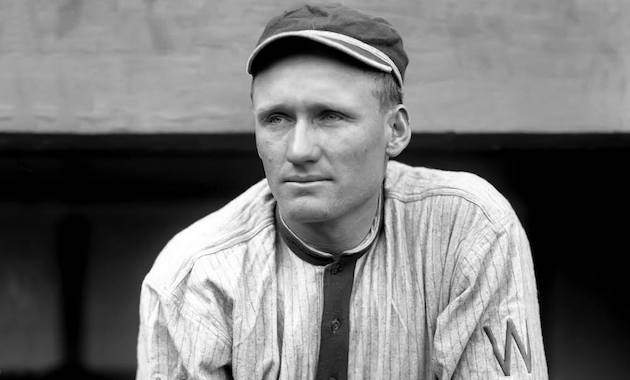
One of Johnson’s most remarkable seasons came in 1913, when he posted a 36-7 record with a 1.14 ERA and struck out 243 batters. That year, he won the Chalmers Award, an early equivalent of the MVP Award, cementing his status as the game’s premier pitcher. Johnson’s durability and endurance were legendary, as he frequently pitched complete games and often threw on short rest. His dominance was not confined to the regular season; he played a pivotal role in leading the Senators to their only World Series championship in 1924. At age 36, Johnson delivered a heroic performance, winning Game 7 in relief to secure the title.
Walter Johnson’s impact on baseball went beyond his statistics. His fastball, described by contemporaries as the fastest they had ever seen, revolutionized the role of the power pitcher in the game. Johnson’s dominance on the mound redefined what it meant to be an ace, setting a benchmark for future generations. His sportsmanship and humility earned him universal respect, even from opposing players. Despite playing for much of his career with a struggling Senators team, Johnson remained loyal and dedicated, becoming synonymous with the franchise.
As one of the inaugural inductees into the Baseball Hall of Fame in 1936, Johnson’s place in the pantheon of baseball greats was firmly established. He was enshrined alongside other legends such as Babe Ruth, Ty Cobb, and Honus Wagner, reflecting his stature as one of the sport’s foundational figures. Johnson’s legacy also includes his role in shaping the image of the pitcher as a cerebral and strategic player, combining power with precision.

Beyond his playing career, Johnson’s influence extended into his post-baseball life. He served as a manager for several teams and remained an ambassador for the game, exemplifying the values of hard work and integrity. His reputation as a gentleman both on and off the field helped solidify baseball’s place as America’s national pastime during its formative years.
Walter Johnson’s MLB career is a testament to unparalleled talent, unwavering dedication, and enduring influence. With 417 wins, 110 shutouts, and a World Series title, Johnson’s achievements on the mound remain a cornerstone of baseball history. His impact on the game, from redefining the role of the power pitcher to embodying the sport’s highest ideals, ensures that his legacy continues to inspire players and fans alike. Walter Johnson was not just a baseball player; he was a transformative figure whose contributions helped shape the game into what it is today.




 The Baseball Scholar
Leave a comment